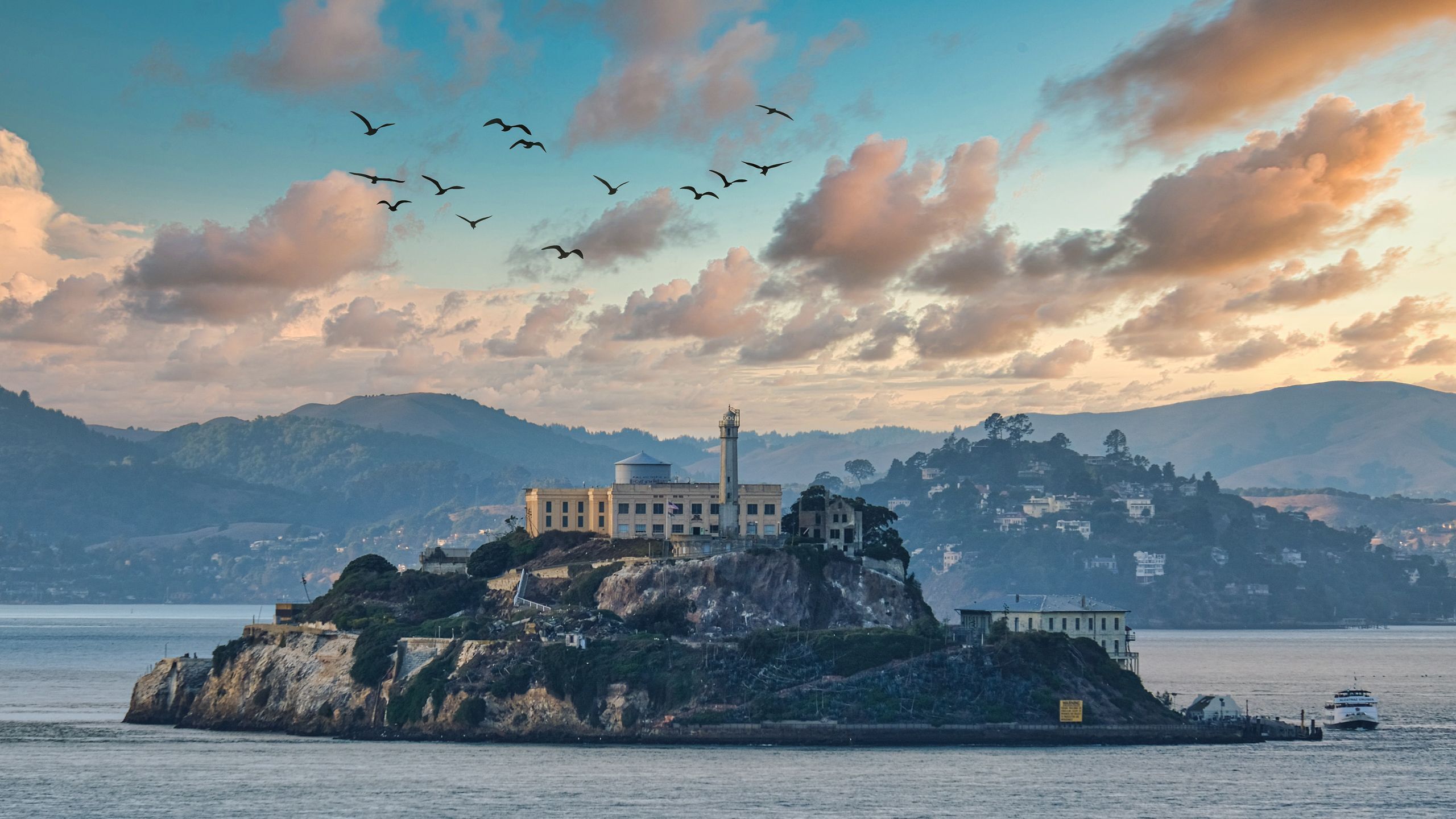
Alcatraz Federal Penitentiary occupies an outsized place in the American imagination. Perched on a wind-scoured island in San Francisco Bay, the prison—active as a federal facility from 1934 to 1963—was conceived as the ultimate destination for inmates deemed too dangerous, disruptive, or escape-prone for other institutions. Yet the story of “The Rock” is more than a gallery of notorious names and thwarted breakouts. It is a layered narrative of engineering and logistics, of shifting penal philosophies, of labour and daily routine, and of the uneasy proximity between extreme punishment and a thriving metropolitan city. Today, as part of the Golden Gate National Recreation Area, Alcatraz is a site of remembrance and reflection, inviting visitors to consider how fear, security, and spectacle shaped one of the most famous prisons in the world.
From Fortress to Federal Prison
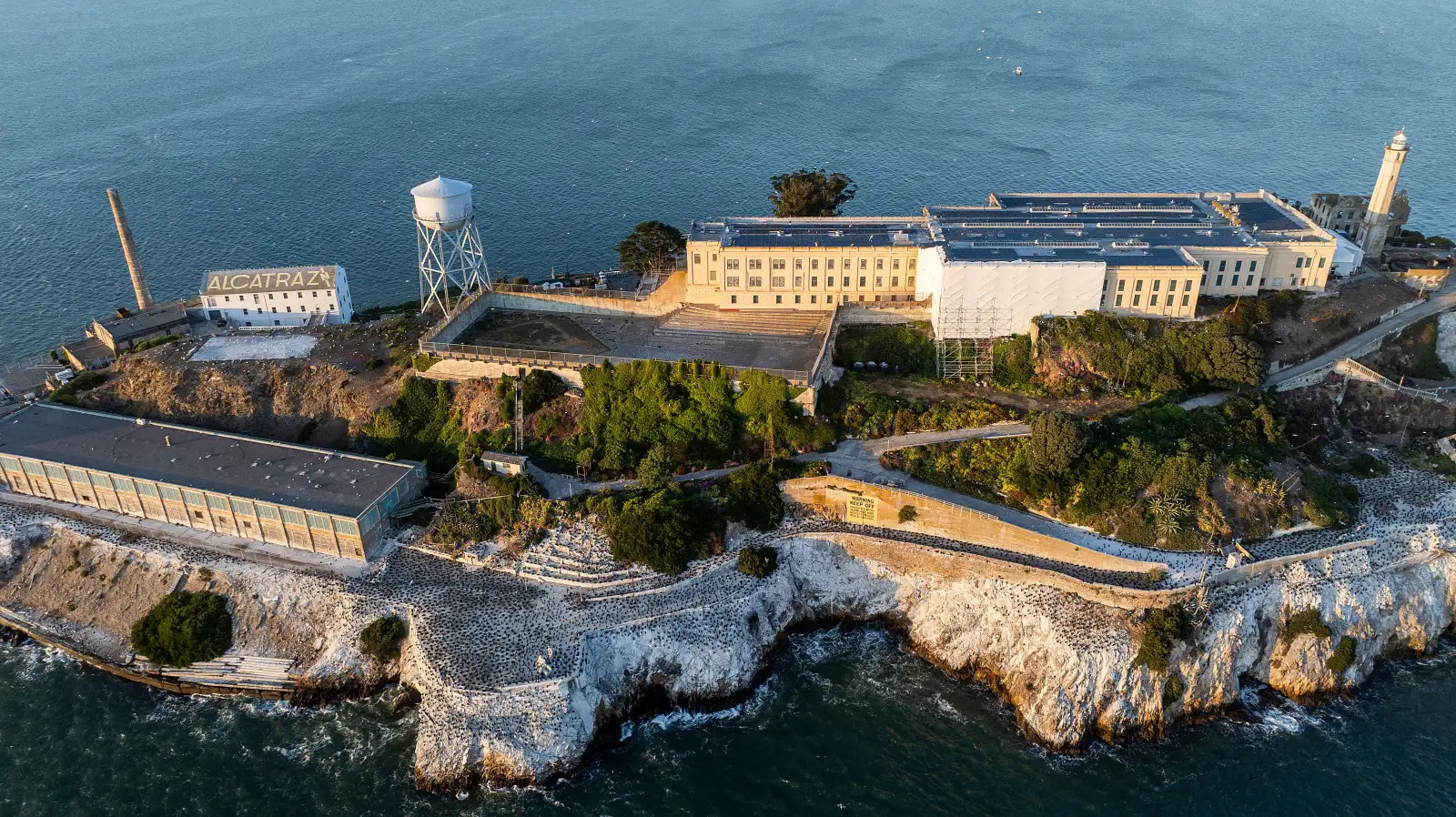
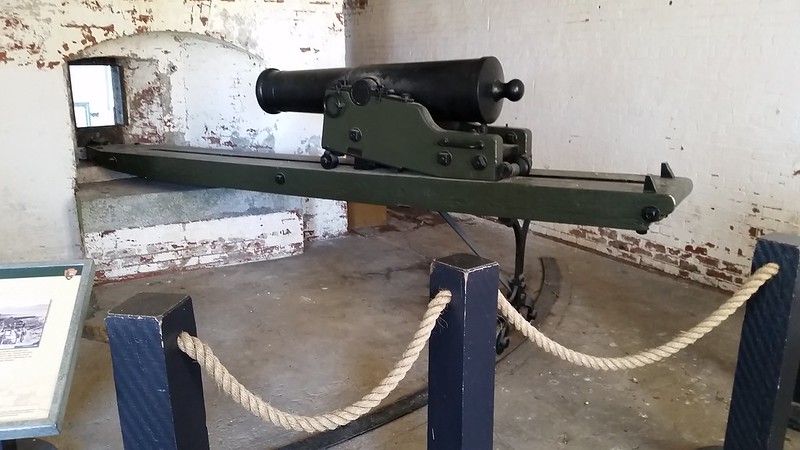
Long before its federal incarnation, Alcatraz was a strategic military asset. Mid-19th-century United States Army engineers fortified the island to protect San Francisco Bay, whose prosperous harbour made it vital to the West Coast economy. Batteries, barracks, and powder magazines appeared along the cliffs, and the island’s isolation—roughly a mile and a quarter from the city—proved equally effective against enemy vessels and unruly soldiers. By the early 1900s, the military had already adapted Alcatraz to hold prisoners, both soldiers and, at times, political detainees. The stark concrete cellhouse familiar from photographs emerged from this military phase, a massive structure built in the 1910s atop the island’s plateau.
When the Federal Bureau of Prisons took control in 1934, the nation was grappling with high-profile organised crime and the public anxiety that accompanied it. Authorities sought a purpose-built symbol of federal resolve, a place to concentrate men who commanded influence even behind bars. The transformation from military prison to federal penitentiary involved extensive reinforcement of the cellhouse, the installation of advanced locking systems, strict procedural regimes, and a philosophy that emphasised control above all. The penological idea was not rehabilitation in the ordinary sense, but containment: remove the most intransigent offenders from the general prison population, neutralise their networks, and minimise opportunities for violence or escape.
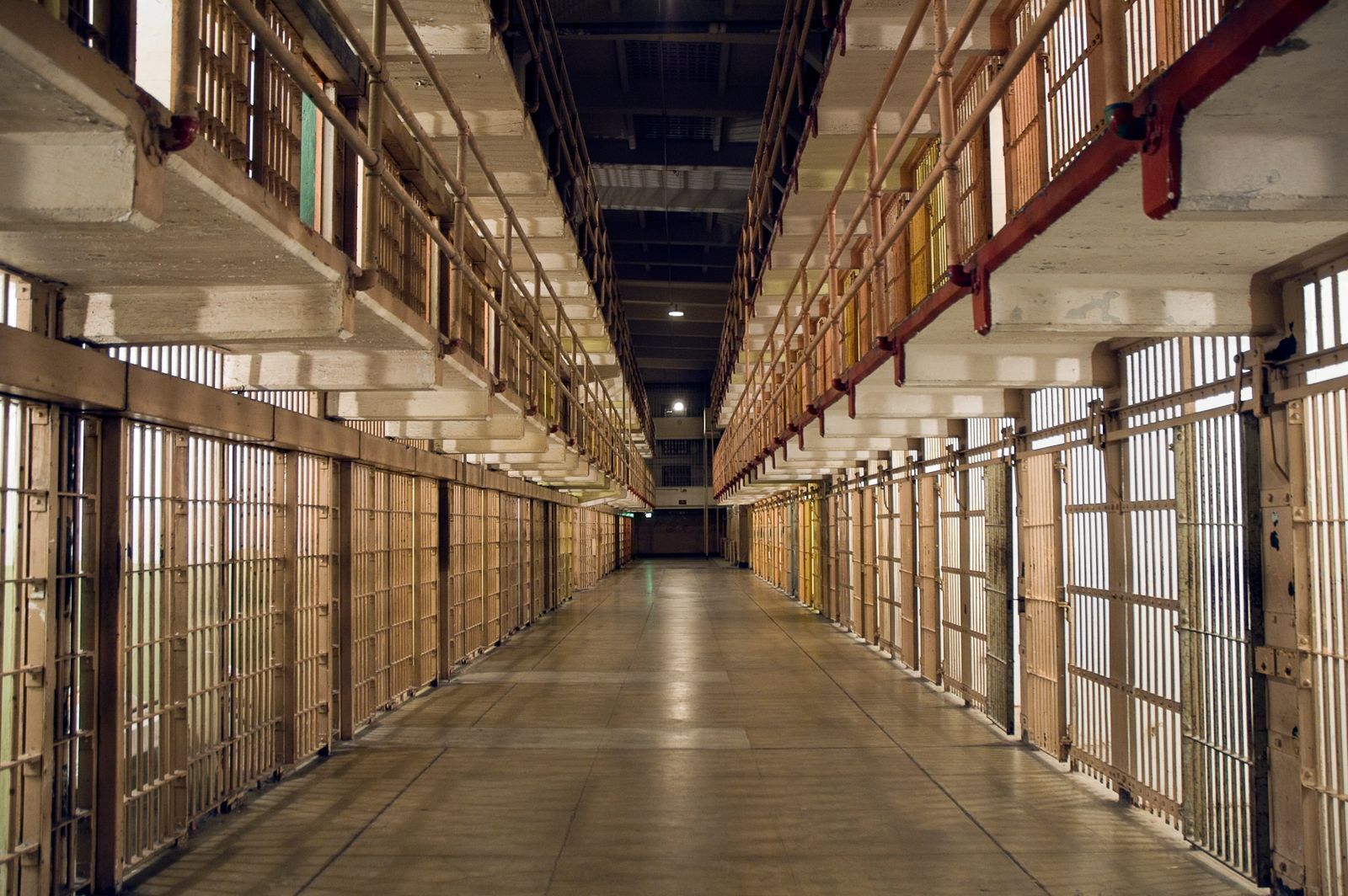
Architecture, Geography, and the Physics of Confinement
The island’s geology—hard rock rising from cold, tidal waters—functioned as an extension of the prison’s architecture. In the cellhouse, four main cell blocks arranged in long tiers created a labyrinthine interior with minimal sightlines for prisoners but strategic vantage points for staff. Cells were compact, typically about one and a half metres by two and a half metres, with a narrow bed, a small desk, shelving, a washbasin, and a toilet. Doors were made of solid bars, allowing constant observation but no privacy. The design was unadorned and utilitarian, the concrete omnipresent, and the acoustics harsh. Sounds of footsteps, keys, and distant foghorns travelled unpredictably, adding a sensory dimension to confinement that many former inmates later described as especially punishing.
Security protocols were equally rigorous. The prison deployed electrically controlled locking systems, metal detectors at key chokepoints, and a carefully choreographed schedule governing movement to mess hall, workshops, and the recreation yard. Guard towers encircled the island, and the perimeter road allowed rapid deployment of armed officers. Yet it was the water that rendered Alcatraz unique. The bay’s cold temperatures, strong currents, and unpredictable winds discouraged even the most daring swimmers, while the distance to the city was tantalisingly close and impossibly far. In that contradiction—San Francisco so visible and yet unreachable—lay a psychological burden more potent than walls.
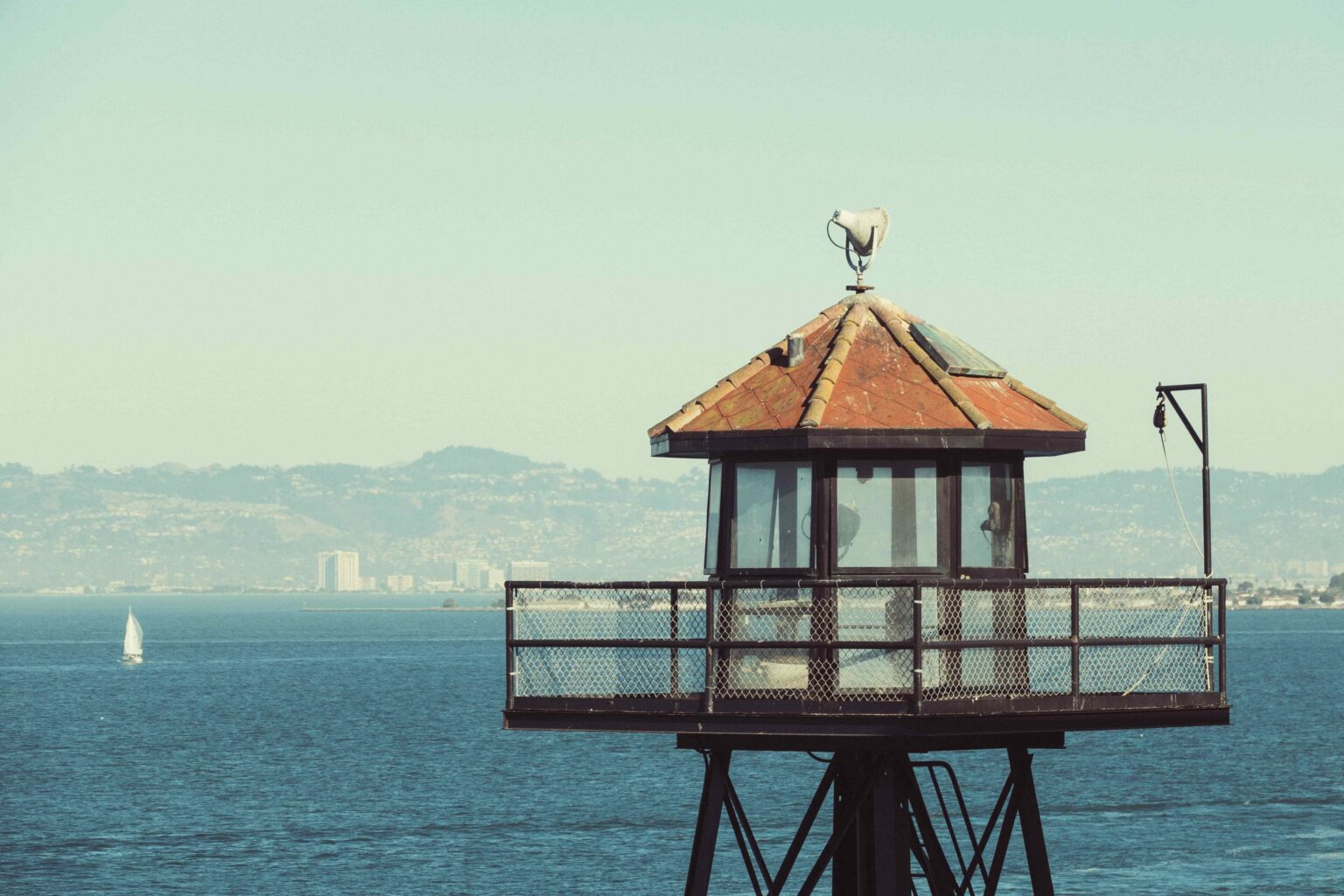
Daily Life on The Rock
The routine at Alcatraz was strict, but not gratuitously brutal. The Bureau of Prisons prided itself on providing clean facilities, structured work, and dependable meals, on the premise that predictability and order would reduce tension. Wake-up calls were early; cells had to be kept immaculate; inspections were relentless. Prisoners ate together in the mess hall, where silence or near-silence was often enforced, and where the potential for conflict demanded that cutlery be carefully counted. Food, by contemporary accounts, was better than in many other prisons, another pragmatic measure to maintain stability. Work assignments included laundry, metal shops, clerical roles, and kitchen duties, each tightly supervised. The recreation yard offered limited relief: card games, chess, and handball punctuated by fog, gulls, and the salt smell of the bay.
The famous “Alcatraz Rules and Regulations” codified a regime where privileges were to be earned, not assumed. Books and periodicals could be borrowed from a well-stocked library; music lessons and small in-cell hobbies were sometimes permitted. For many inmates, the most significant privilege was speaking. Conversation was restricted and could be withdrawn as punishment. Discipline ranged from loss of privileges to confinement in the bleak “D-Block,” where isolation cells—some of them in near-darkness—tested the limits of human endurance. Correspondence and visitation were allowed but limited, each letter and meeting closely monitored.
Notorious Names and Ordinary Men
Alcatraz’s fame owes much to a roster of inmates who were already national figures when they arrived. Alphonse “Al” Capone, the Chicago crime boss, spent years on the island, stripped of the sycophancy and bribery that had eased his earlier incarcerations. George “Machine Gun” Kelly, the kidnapper popularly associated with the submachine gun, served time as well. Arthur “Doc” Barker, from the infamous Barker-Karpis gang, met a violent end during an escape attempt, and Alvin “Creepy” Karpis—another figure from that gang—became one of the prison’s longest-serving inmates. Robert Stroud, the “Birdman of Alcatraz,” entered the island already notorious for his avian studies in his previous prison, though on Alcatraz he was not permitted to keep birds and lived instead a strictly confined existence.
Yet focusing solely on celebrities obscures the reality that most inmates were not household names. They were bank robbers, repeat offenders, or men who had proved impossible to manage elsewhere. Many struggled with mental illness or the accumulated trauma of years in custody. For them, Alcatraz was less a theatre of notoriety and more a machine of routine, a place where days blurred, marked only by the rhythms of work calls, counts, and lockdowns.
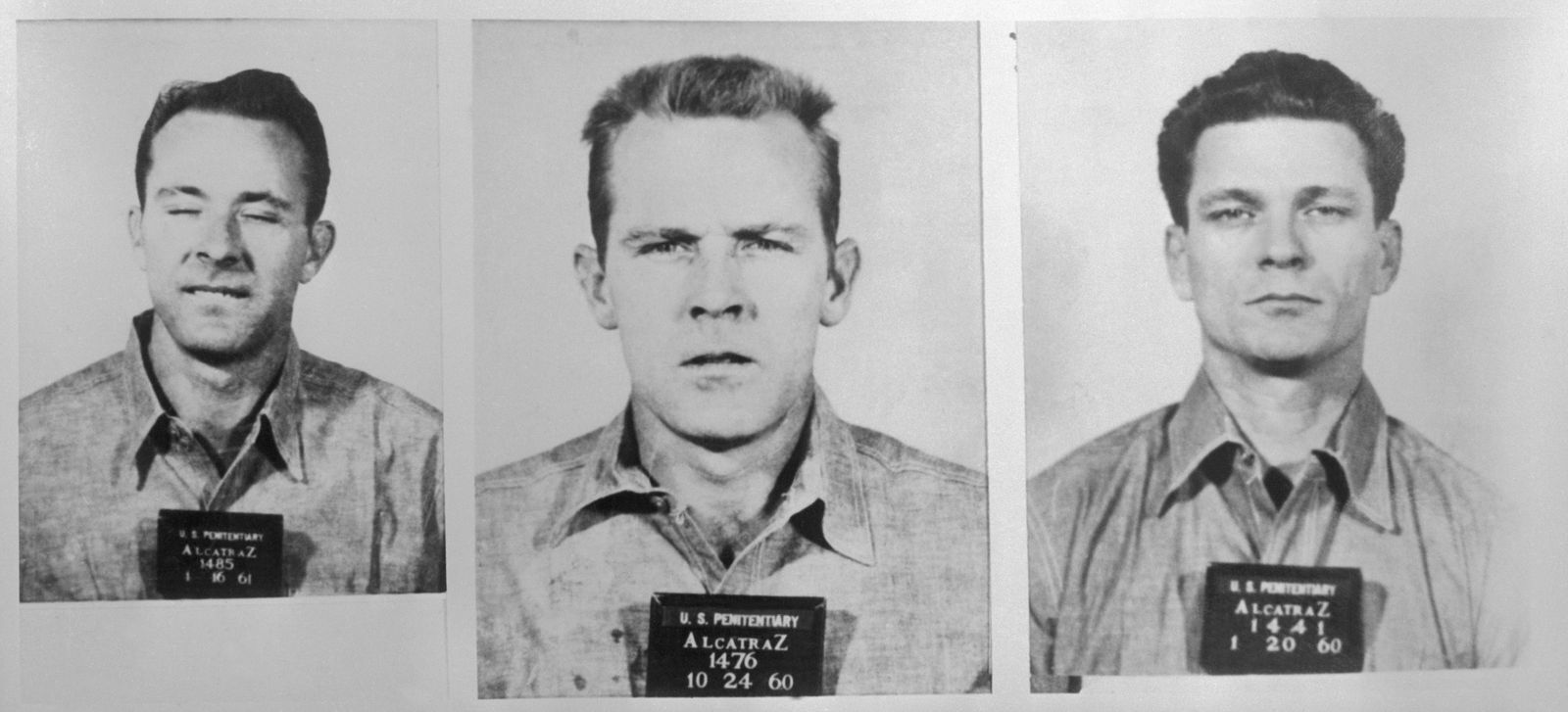
The Escapes: Myth, Method, and the Bay
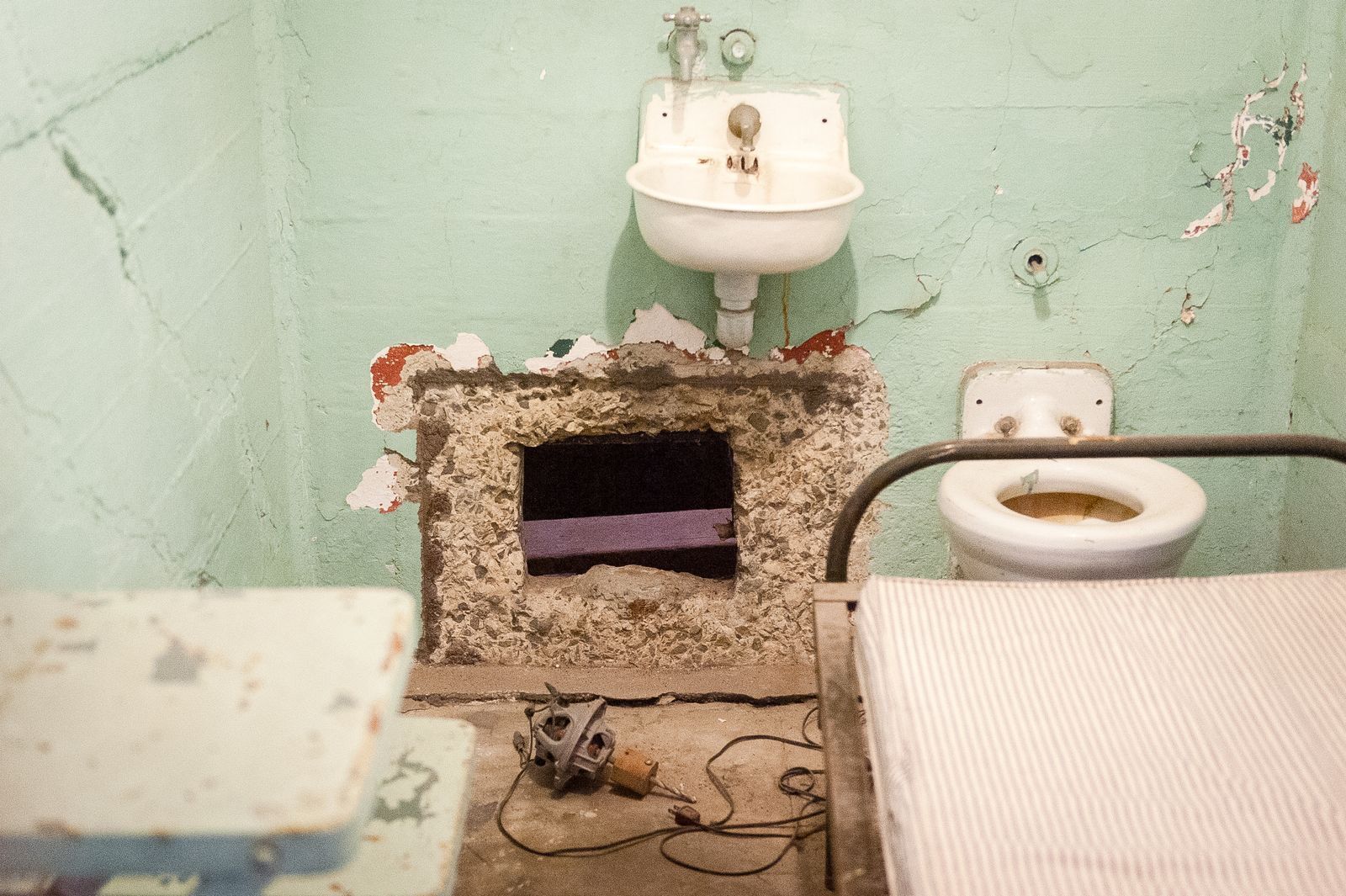
No account of Alcatraz can avoid its escapes, real and imagined. Official records list numerous attempts, some little more than desperate dashes, others carefully engineered operations involving stolen tools, improvised rafts, and elaborate decoys. The best known occurred in June 1962, when inmates Frank Morris and brothers John and Clarence Anglin chiselled through cell wall vents, climbed service shafts to the roof, and launched a raft made of raincoats into the cold, dark waters. Papier-mâché heads, crafted from soap, concrete dust, and paint, lay on their pillows to fool guards at night-time counts. Whether the trio survived remains a subject of speculation. Debris thought to be from their raft was recovered, and a variety of later anecdotes and family claims have kept the mystery alive. The official position for many years held that they likely drowned; others argue that the currents, while dangerous, could have aided a landing if timed correctly. The ambiguity contributes to the legend, reinforcing Alcatraz’s paradoxical identity as the “inescapable” prison from which some may have escaped.
Other attempts ended more conclusively. In 1946, the so-called “Battle of Alcatraz” saw a violent takeover of parts of the prison by a small group of inmates who obtained weapons but failed to secure keys to the yard. The ensuing siege involved Marines and resulted in multiple deaths, including correctional officers and prisoners. The event etched itself into institutional memory as a cautionary tale about the consequences of small lapses in procedure cascading into calamity.
The Staff and the Island Community
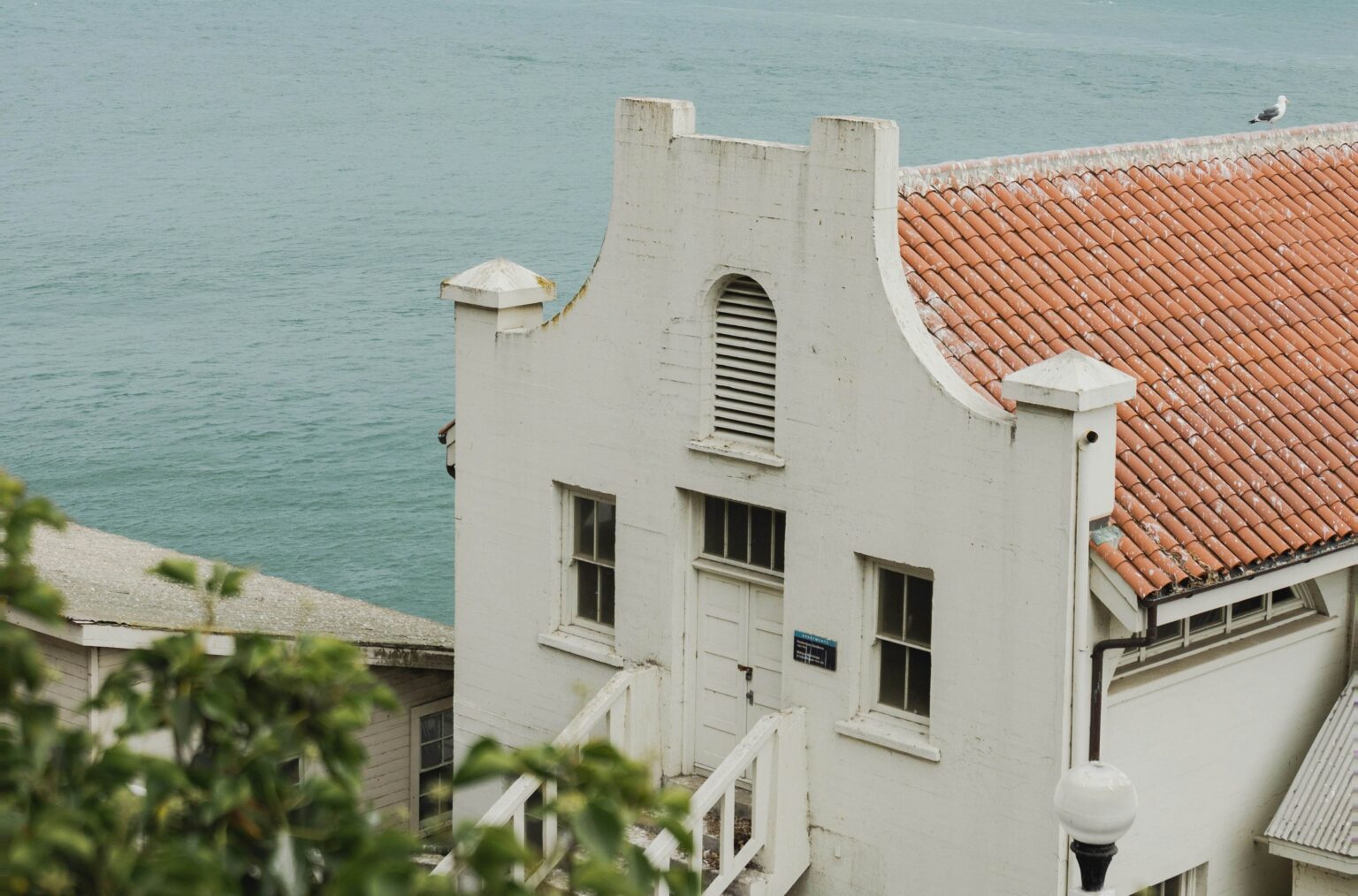
Often overlooked are the officers and their families who made lives on the island. Alcatraz was not solely a prison; it was a small, carefully structured community with quarters, a school for children, and a ferry schedule linking to the city. Staff culture emphasised discipline, discretion, and mutual reliance. Many officers took pride in the professionalism required to run such a volatile institution with relatively few catastrophic incidents. Their children, somewhat incredibly, recall ordinary moments—school days in San Francisco, Friday film nights, Christmas parties—unfolding within sight of cellhouse walls. The juxtaposition of normal domesticity and maximum security remains one of the island’s most striking historical textures.
The Economics and Politics of Closure
By the early 1960s, the rationale for maintaining a high-cost island prison began to falter. The buildings, exposed to salt air and fierce weather, deteriorated steadily, and utilities were expensive to supply. At the same time, the Bureau of Prisons increasingly favoured regional maximum-security units embedded within larger penological systems, where economies of scale and more modern facilities could better serve evolving goals. In March 1963, the federal government closed Alcatraz. Inmates were transferred to other institutions, staff dispersed, and the island fell briefly silent, its cellblocks and corridors left to the wind and gulls.
Occupation, Memory, and Reinvention
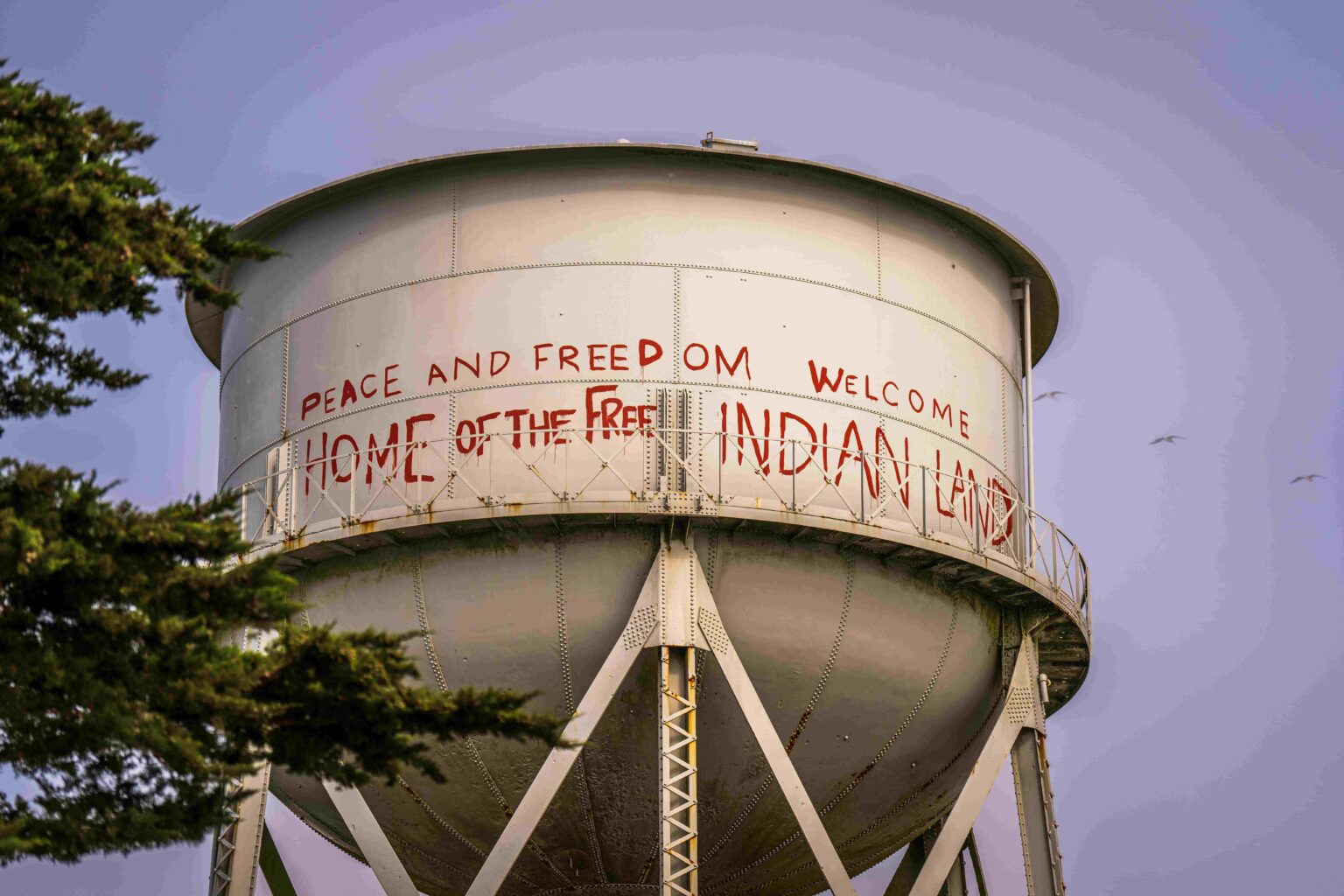
Alcatraz’s afterlife has been culturally dynamic. In 1969, a coalition of Native American activists occupied the island, asserting historical claims and drawing attention to the federal government’s treatment of Indigenous communities. The occupation lasted for months and attracted national attention. Although it ended without the island being transferred, the episode marked a significant moment in the broader American Indian Movement and permanently altered the public’s understanding of Alcatraz, reframing it as a site of political contest as well as penal power.
In 1972, Alcatraz became part of the National Park Service’s Golden Gate National Recreation Area, and public tours soon followed. Visitors walk the same echoing corridors, listen to audio narratives voiced by former officers and inmates, and stand on the recreation yard gazing back at the San Francisco skyline. Exhibitions address not only criminal histories but also the occupation, the military period, and the ecology of the island, whose cliffs host seabird colonies and native plants. The transformation from fortress to museum is more than a shift in function; it is a change in moral valence, asking guests to consider how societies choose to punish, to deter, and to remember.
Alcatraz in Popular Culture
Cinema, literature, and television have amplified Alcatraz’s lore. Films have dramatised escape attempts and embellished the island’s dangers; novels have used the prison as a setting for meditations on guilt, resilience, and ingenuity. Popular treatments, inevitably, simplify. They emphasise spectacular violence or ingenious cunning at the expense of the slow, grinding reality of institutional life. Yet the cultural resonance is telling. Alcatraz is a convenient metaphor for absolute separation, for the gulf between transgression and community, and for the limits of human control in the face of geography and chance. When the fog rolls in and the city fades to a smudge, the metaphor becomes tangible.
Interpreting the Lessons of The Rock
What, then, are we to make of Alcatraz as a historical artefact? One lesson is that physical isolation can both secure and distort. The island’s water barrier and rigid routines did reduce escapes and disrupt criminal networks, but they also magnified the psychological toll of confinement. Another lesson concerns the fragility of systems: the Battle of Alcatraz, the 1962 escape, and lesser incidents all demonstrate how complex institutions depend on myriad small procedures, each a potential point of failure. The final lesson is about narrative. Alcatraz’s fame has often overshadowed the ordinary people—prisoners and staff alike—whose lives were shaped by its daily discipline. Preserving their voices alongside the headline names prevents the prison from becoming merely a backdrop for legends.
Conservation and the Materiality of Ruin
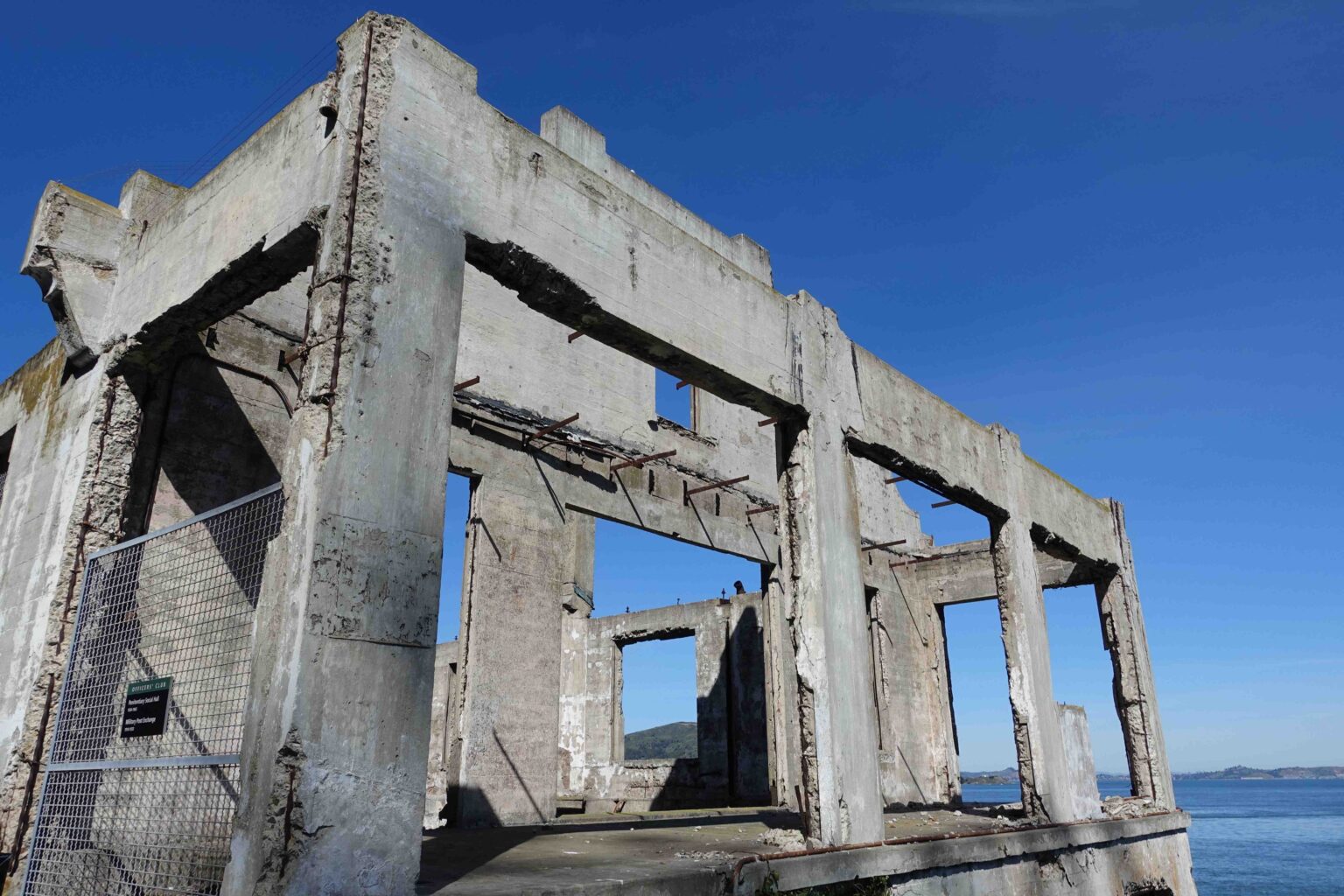
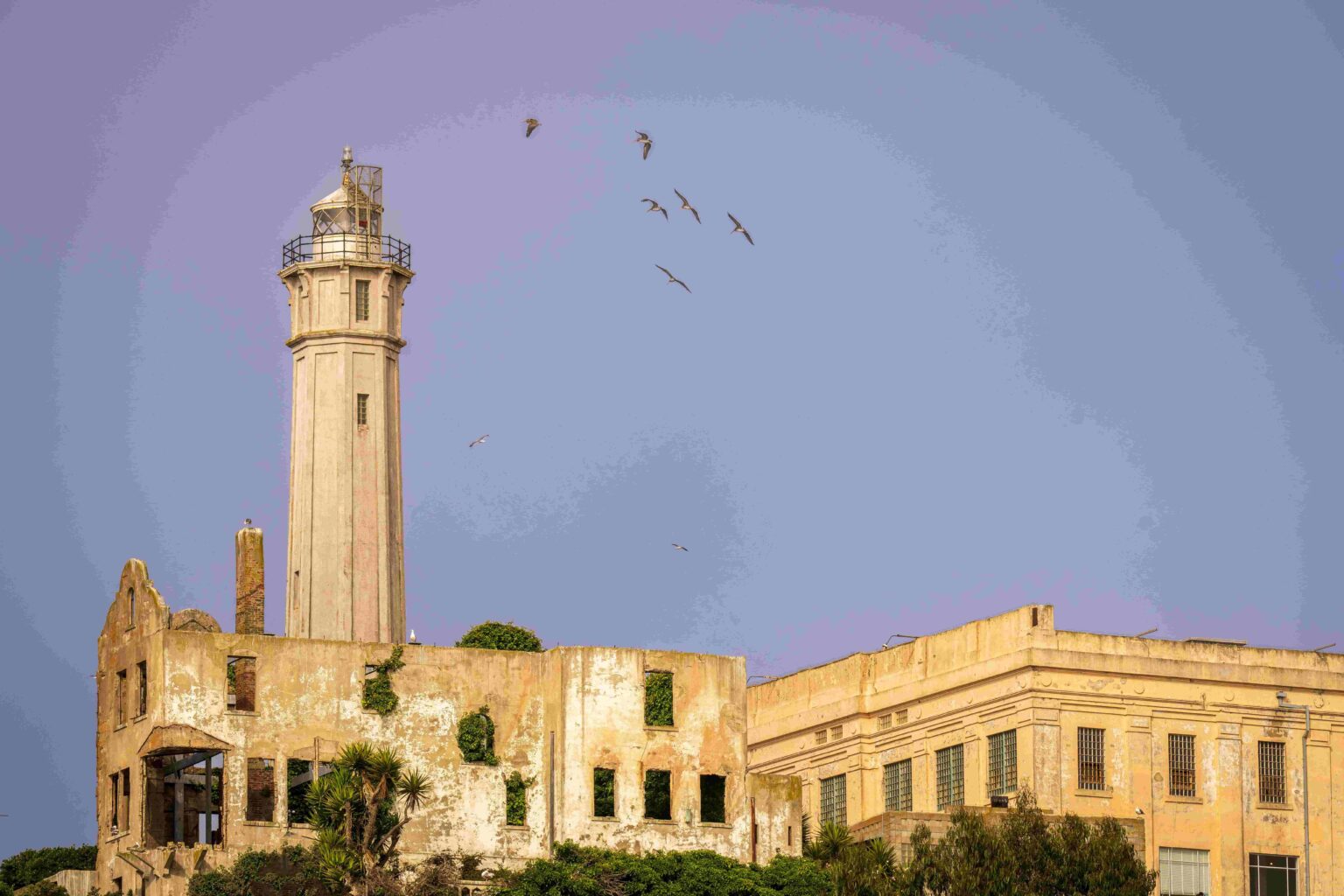
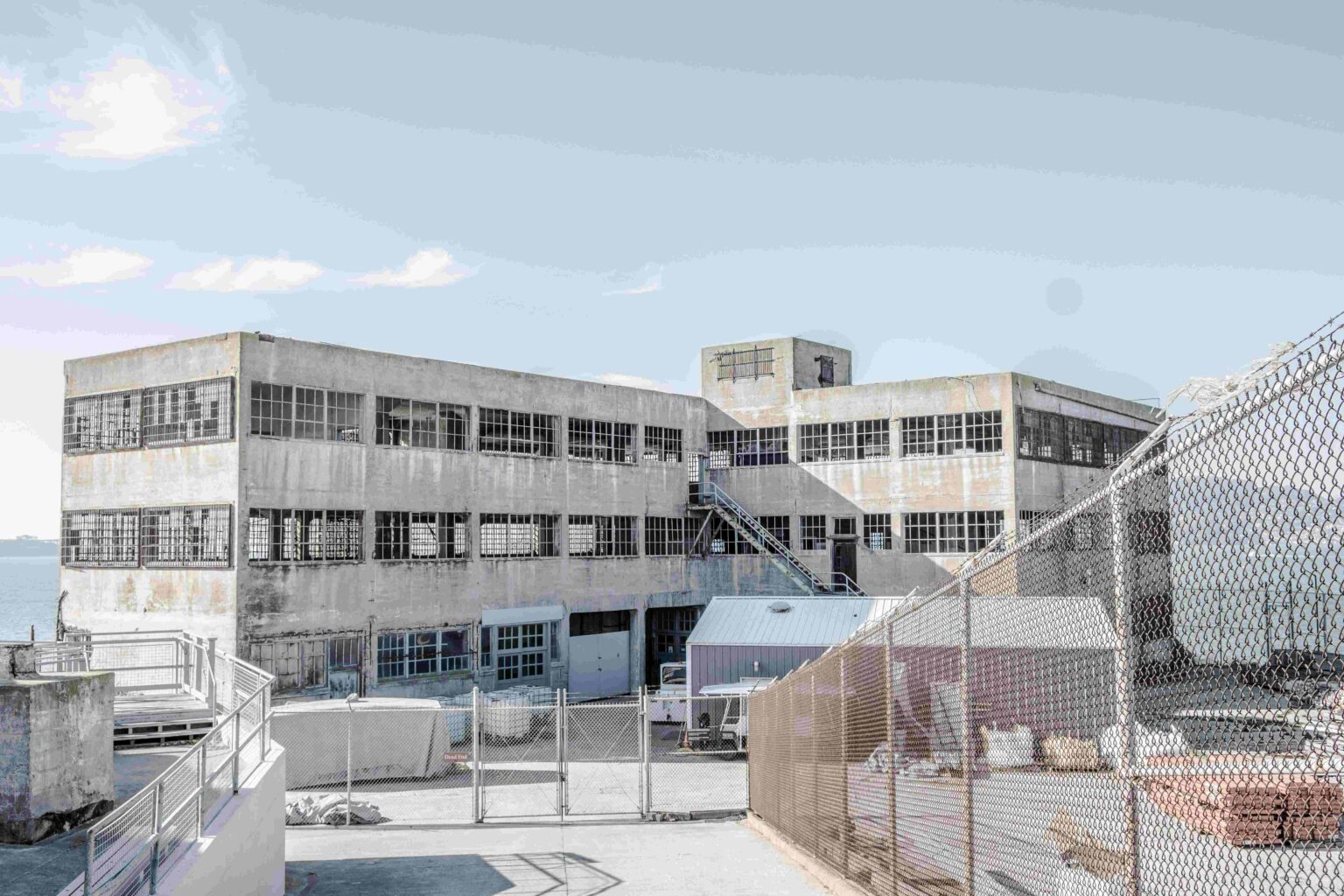
Maintaining Alcatraz today presents a conservation challenge. Salt air corrodes steel and spalls concrete; invasive plants compete with native species; high visitor numbers require safety adaptations that respect historical fabric. Preservationists work to stabilise rather than recreate, to allow erosion and repair to sit side by side as visible layers of time. The cellhouse remains the centrepiece, but outlying structures—industrial buildings, lighthouse, officers’ club—convey the self-contained nature of island life. The goal is not to sanitise the past, but to keep it legible, with all the complexities intact.
Conclusion
Alcatraz Federal Penitentiary endures as an emblem of American penality and spectacle. For nearly three decades as a federal prison, it was the endpoint of a system that sought to isolate its most difficult inmates physically, socially, and psychologically. Its success was measured not in rehabilitation rates but in the containment of threat. And yet the island’s subsequent history—occupation by Native activists, reinvention as a national park, and continuing debates about punishment and security—reveals that no prison is purely about walls and locks. Alcatraz is a conversation made concrete: about power and fear, discipline and humanity, the uses of geography, and the stories we tell about crime and control. Standing in a narrow cell, one hears the distant city and understands the enduring potency of that sound. The Rock remains, austere and magnetic, inviting each generation to measure its values against the hard edges of the past.