Origins & Colonial Ambitions (1919–1925)
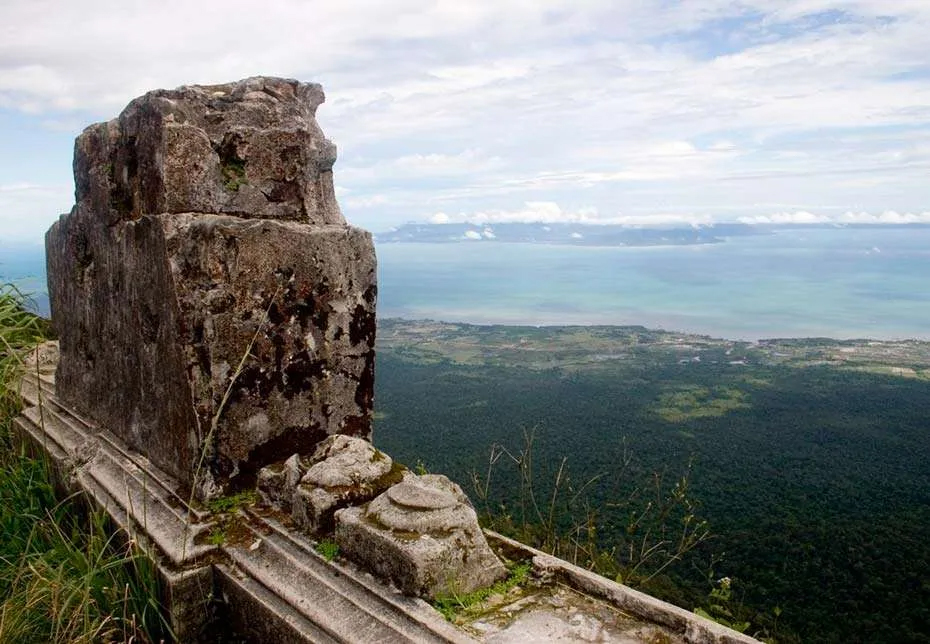
In the early 1920s, the French colonial administration embarked on creating a hill station on Bokor Mountain—an elevated retreat above the heat and humidity of the Cambodian lowlands. Located about 37 km west of Kampot, at nearly 1,075 m elevation, this site offered cooler temperatures (between 17°C and 24°C, occasionally dropping to 10°C) and panoramic views over the sea—nicknamed the “Opal Coast”.
Led by Résident‑supérieur François Marius Baudoin, the project began in 1919 with immense engineering challenges. Colonists deployed convict labor to build an access road and the hotel itself; many laborers succumbed to malaria and exhaustion—881 deaths were later officially recorded during the road and construction project.
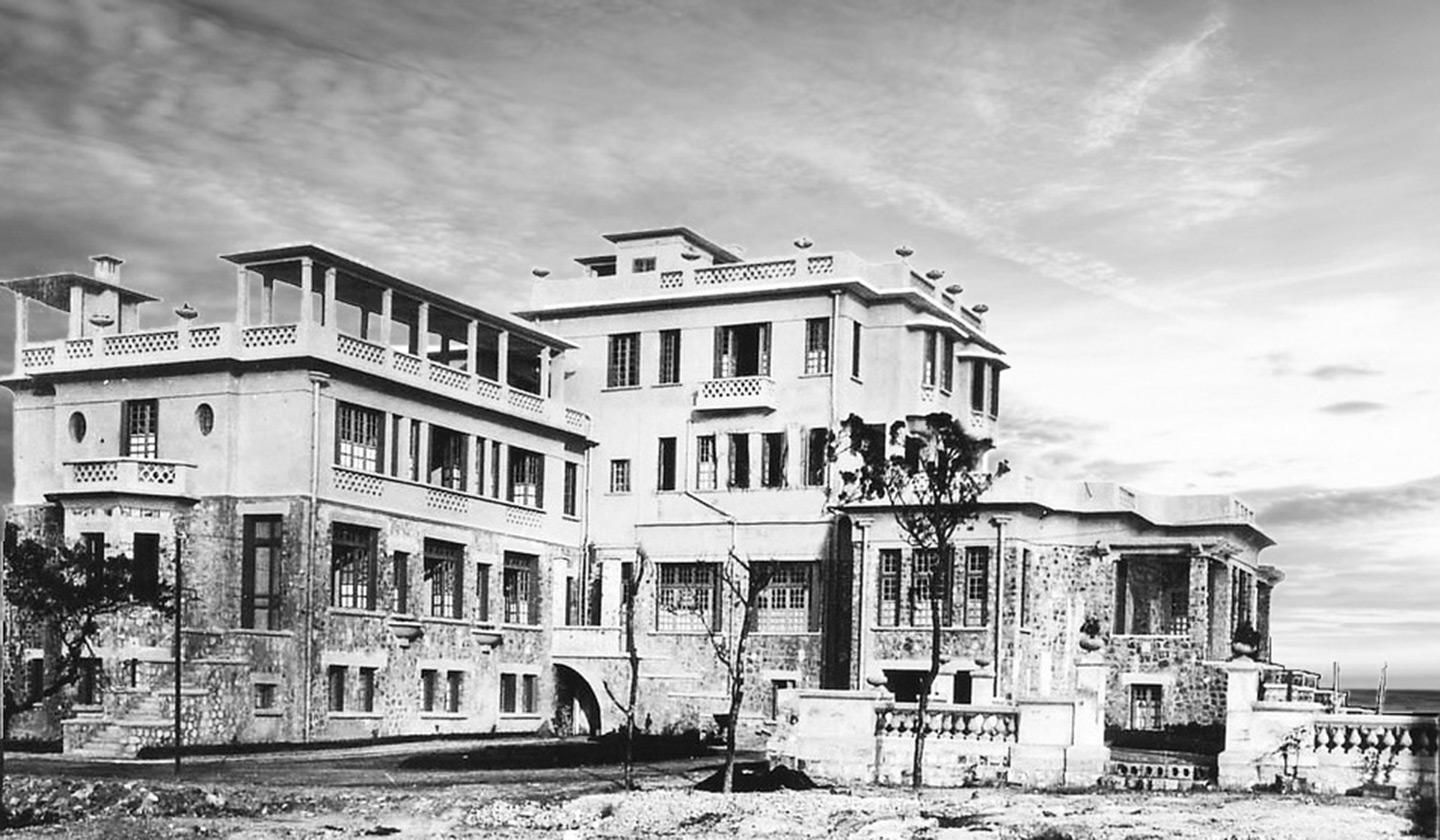
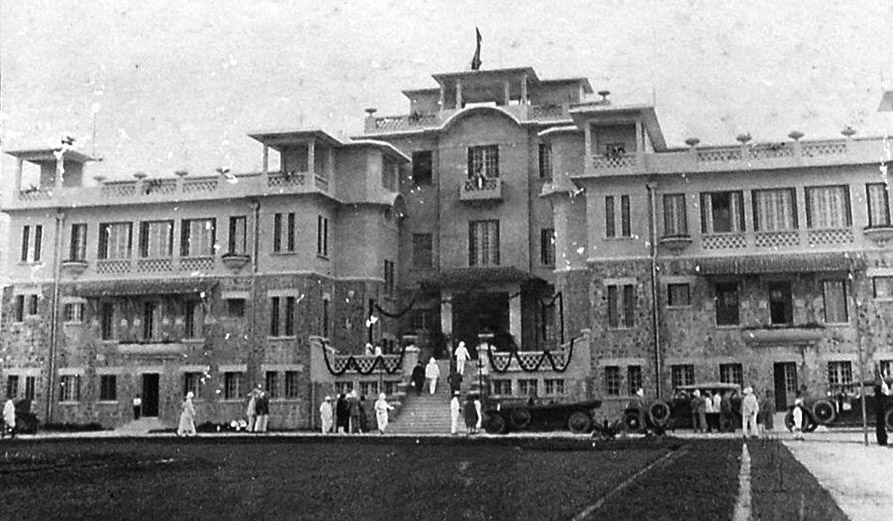
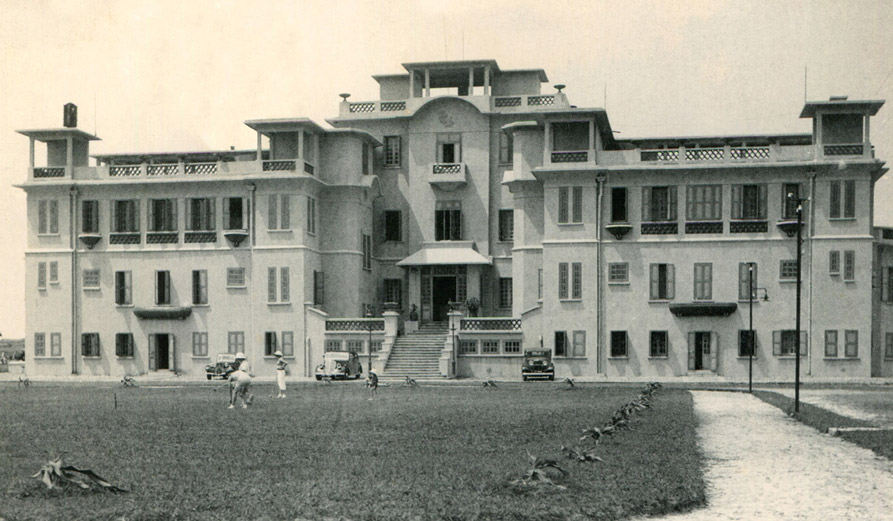
Despite the brutal human cost, the centerpiece hotel rose: Le Bokor Palace, a three‑storey Art Deco and Palladian concrete structure, opening with gala fanfare on Valentine’s Day, 14 February 1925. One account describes a lavish six-course dinner—gazpacho, crawfish à l’Américaine, foie gras, Chantilly‑strawberries—lasting into the wee hours.
The hotel originally featured 38 guest rooms, a grand dining hall, lounge with fireplace, terraces, pergolas, and elegant finishes including Italian‑style tiling and imported furnishings. It was supported by a cluster of ancillary buildings: Hôtel Beau‑Site bungalows, a post office, telegraph station, electricity plant, mission house, and agricultural station supplying produce to guests.
Decline, Abandonment & Reopening (1940s–1960s)
Wartime Collapse
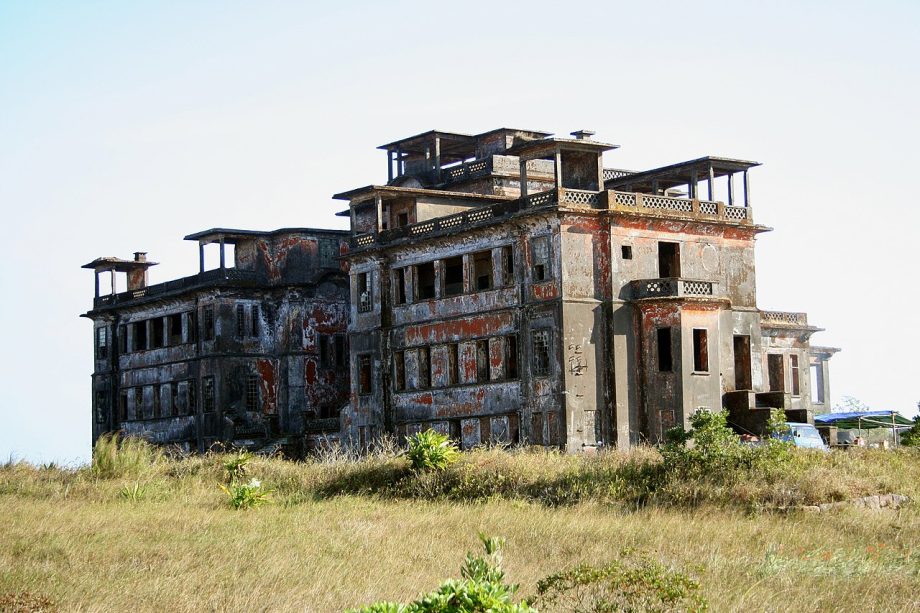
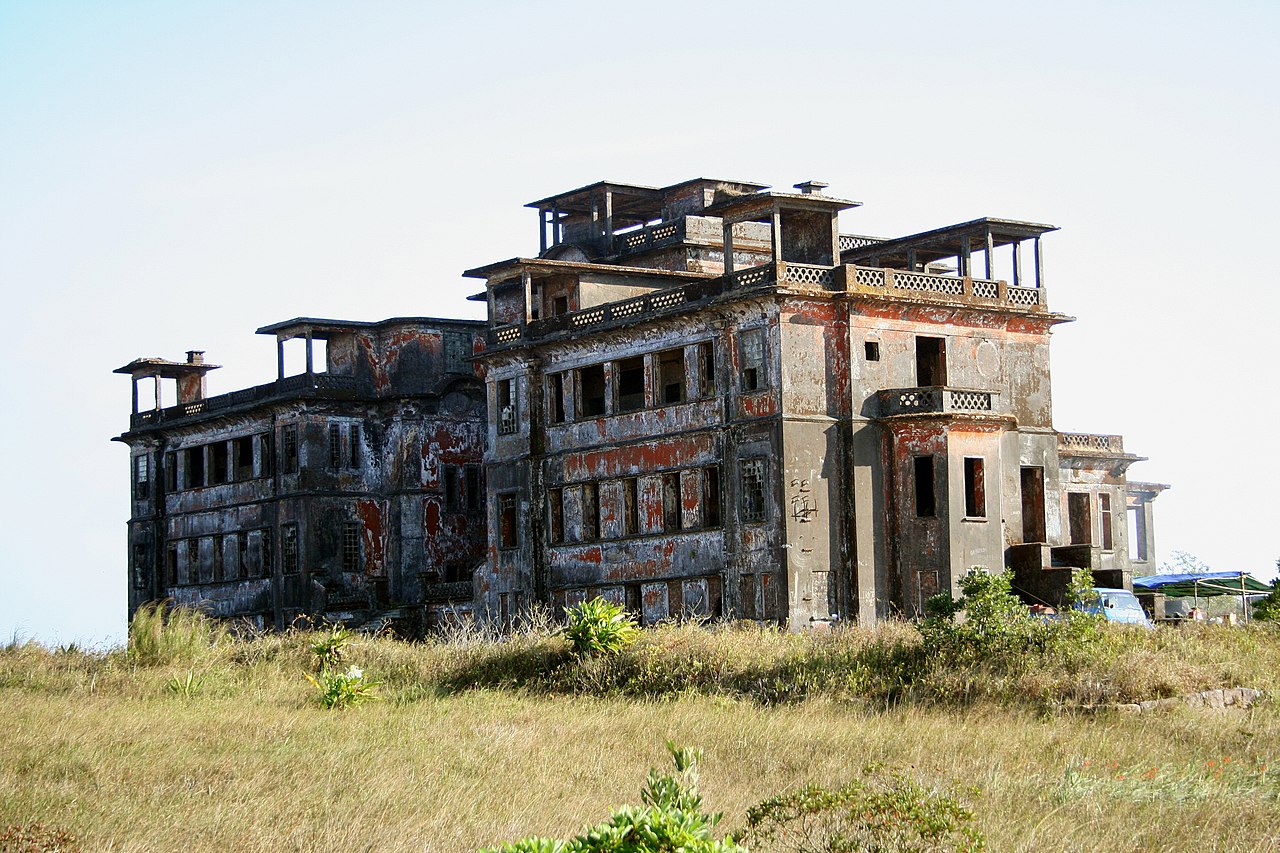
The brilliance was short-lived. During the First Indochina War in 1946, the hotel system was repurposed as a military hospital and then abandoned altogether amid escalating insurgency. In subsequent years, the complex was ravaged by Khmer Issarak forces—nicknamed the “Black Dragon”—and stripped of utilities, falling into ruin again by the early 1950s.
Royal Revival
A renaissance came in January 1962, when King Norodom Sihanouk officially reopened the “Cité du Bokor.” Though the original Palace Hotel did not host a casino, nearby hotels (notably Hotel Sangkum and Hotel Kiri) did, attracting Cambodia’s elites for weekend gambling and elevated social life. The Palace functioned as a stylish retreat with modern amenities including heat, electricity, lounge bars, and 22 rooms plus annex apartments.
However, maintenance lagged—tropical weather and frequent fog accelerated structural decay. The terrace and northern façade required restoration by 1965 due to erosion and rainfall damage.
Khmer Rouge Years and Decay
Following the 1970 coup, the site was abandoned once again. The Khmer Rouge seized Bokor by 1972, turning it into a base. In 1979, Vietnamese troops battled elements of the Khmer Rouge from the Palace and nearby Church, which became a stronghold. The church was heavily damaged in the fighting; remnants of graffiti and bullet holes remained visible decades later.
In the 1990s, French UN peacekeepers occupied the hotel as a communications base, after which the entire hill station lay deserted, transforming into a haunting ruin.
Bokor’s Transformation: Ghost Town & Tourist Magnet
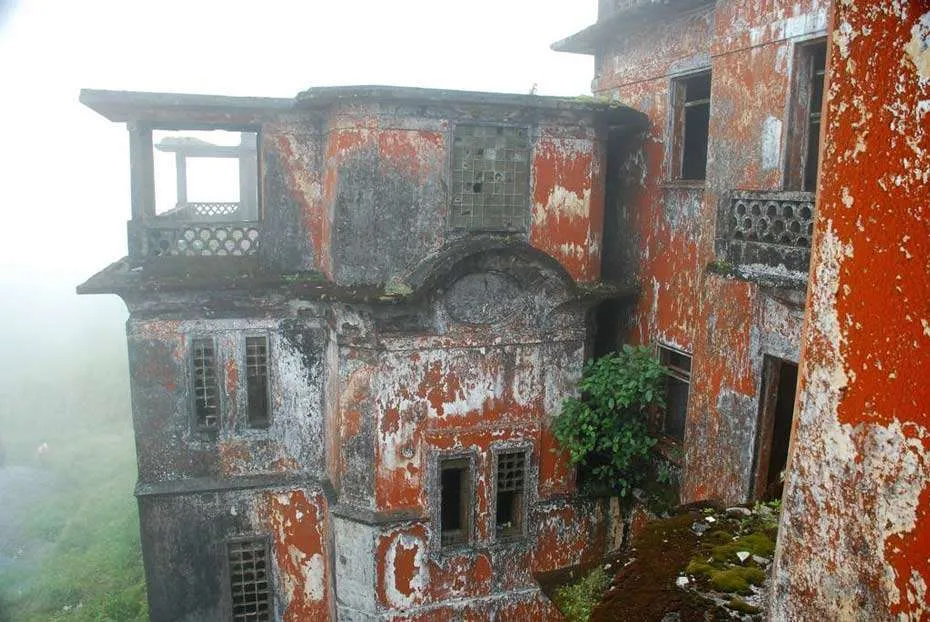
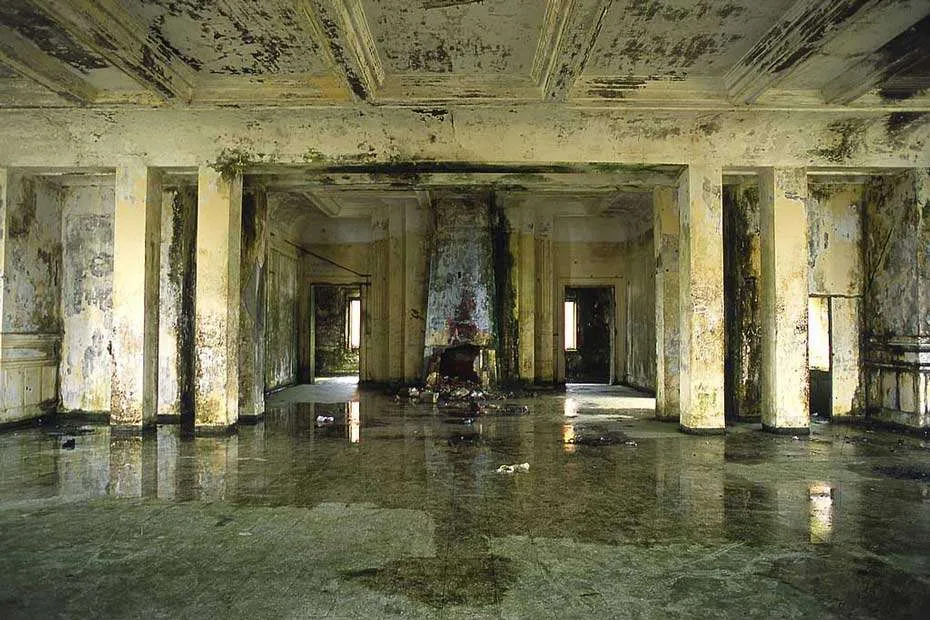
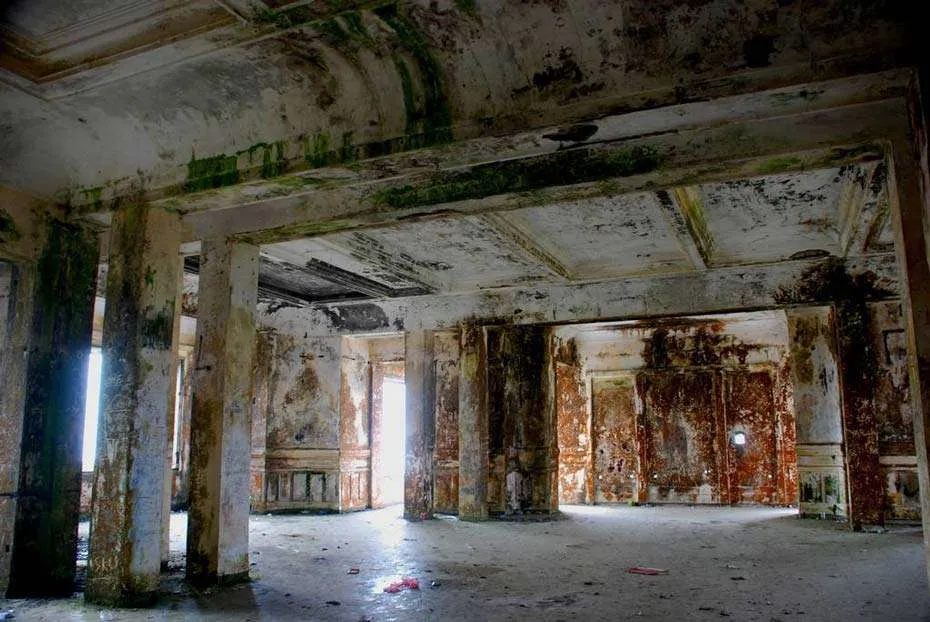
By the mid‑2000s, Bokor Hill Station had become emblematic of Cambodia’s haunting wartime memory. The Palace Hotel’s skeletal ruins, tinged with rust-red lichen and layered graffiti, graced travelogues, photographic essays, and films—most famously as the setting in City of Ghosts (2002) and R‑Point (2004).
Writers describe the site enveloped in mist—creating an atmosphere that felt both paradisal and purgatorial—with chipped marble in the ballroom and melancholy silence. Many locals refer to Bokor as a “ghost city,” haunted by soldiers and laborers who died there.
Urban explorers and Instagram pilgrims scaled the old site, discovering not only the Palace but abandoned villas, a derelict Catholic church, a police station, and the remains of Japanese tea farms and royal residences, all scattered across a plateau within Preah Monivong National Park.
Redemption & Restoration: Le Bokor Palace Reborn (2015–2018)
In 2015, restoration began under Sokimex Investment Group and its hospitality arm, Sokha Hotels & Resorts. By early 2018, the iconic Palace Hotel reopened—as Le Bokor Palace—with 36 renovated rooms and suites, and two restaurants offering French‑colonial and Royal Khmer cuisine.
Sokha preserved original architectural features: interior floor tiles from Spain, bathroom fixtures from Italy, and maintained the façade motifs such as terraces and pergolas—though some upper-level pergola elements were closed off for safety, stirring debate about integrity.
The newly restored hotel offers sweeping views of the coastline, cooler climate, and adventures into nearby waterfalls, forest trails, and colonial ruins. It also incorporates the heritage aspect, positioning Le Bokor Palace as both historic hotel and cultural museum of French‑era architecture.
Architecture, Atmosphere & Ghostly Allure
Le Bokor Palace’s architecture is a striking blend of Art Deco, Palladian symmetry, and Italianate terraces, built in reinforced concrete with strong geometric lines. The southern elevation offers an avant‑corps and sweeping balconies overlooking the sea, while the northern side presents a more formal façade.
Inside, restoration preserved original elements—floor tiles, fireplaces, soaring lounges, and period‑style furnishings—while meeting modern standards. The grand dining room and colonial‑style bar recall the opulence of the 1920s and ’60s rebirths.
Foggy mornings and overcast skies often cloak the mountain in pale mystique, lending the site a cinematic and ghostly ambiance. Many visitors describe the atmosphere as both romantic and eerie—beautiful yet haunted by layered histories.
Cultural Significance & Ethics of Restoration
The restoration raises important questions:
- Historic preservation vs modernization: Some art historians have pushed back on closing pergolas and altering façades, arguing that even modest changes impact authenticity.
- Commemoration of suffering: Given the laborers’ deaths, the Khmer Rouge era, and executions on the cliffs, it remains vital to remember those aspects. Some proposals consider turning parts of the complex into a museum or memorial space .
- Tourist commercialization vs reverence: Le Bokor’s rebirth as a luxury destination attracts tourism and revenue—but some travel writers and Reddit commentators note concerns over overdevelopment or the polished sanitisation of horrid past narratives.
Reflection: Legacy in Stone and Silence
The story of Bokor Palace Hotel traverses colonial ambition, human suffering, leisure, war, abandonment, and revival. As a physical and symbolic landmark, it encapsulates:
- Colonial fantasies of escape and climate control.
- The brutality underpinning those fantasies—including forced labor and half-forgotten deaths.
- Cambodia’s political upheavals—from French rule to Sihanouk’s monarchy, to Khmer Rouge occupation.
- The tension between heritage and commerce in the modern era.
As an architectural relic reborn, Le Bokor Palace stands at the intersection of memory and tourism, promising elegance and nostalgia while reminding visitors of Cambodia’s tragic history.
Le Bokor Palace Hotel is more than just a scenic mountain retreat—it’s a layered narrative. From opulent colonial soirée to war hospital, ghost city, and finally restored icon, its arc reflects Cambodia’s turbulent 20th century. Whether you wander its terraces in the fog or dine in its recreated dining rooms at sunset, Bokor invites contemplation—of beauty, decay, redemption, and the stories that buildings carry.


