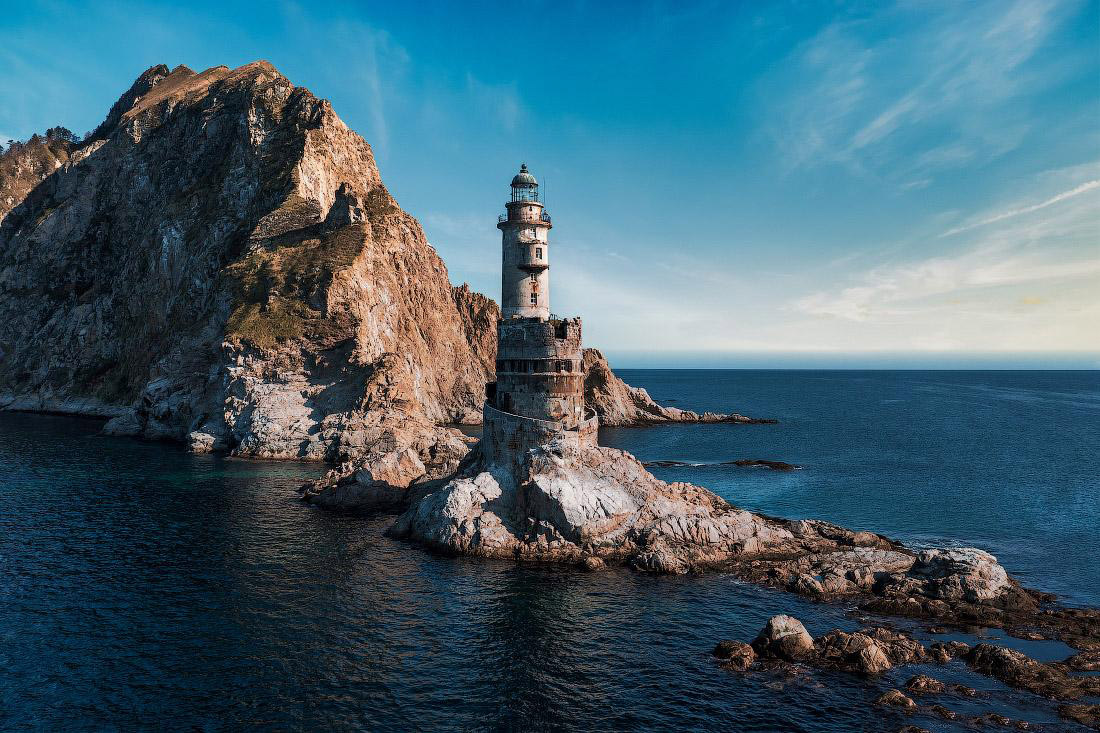
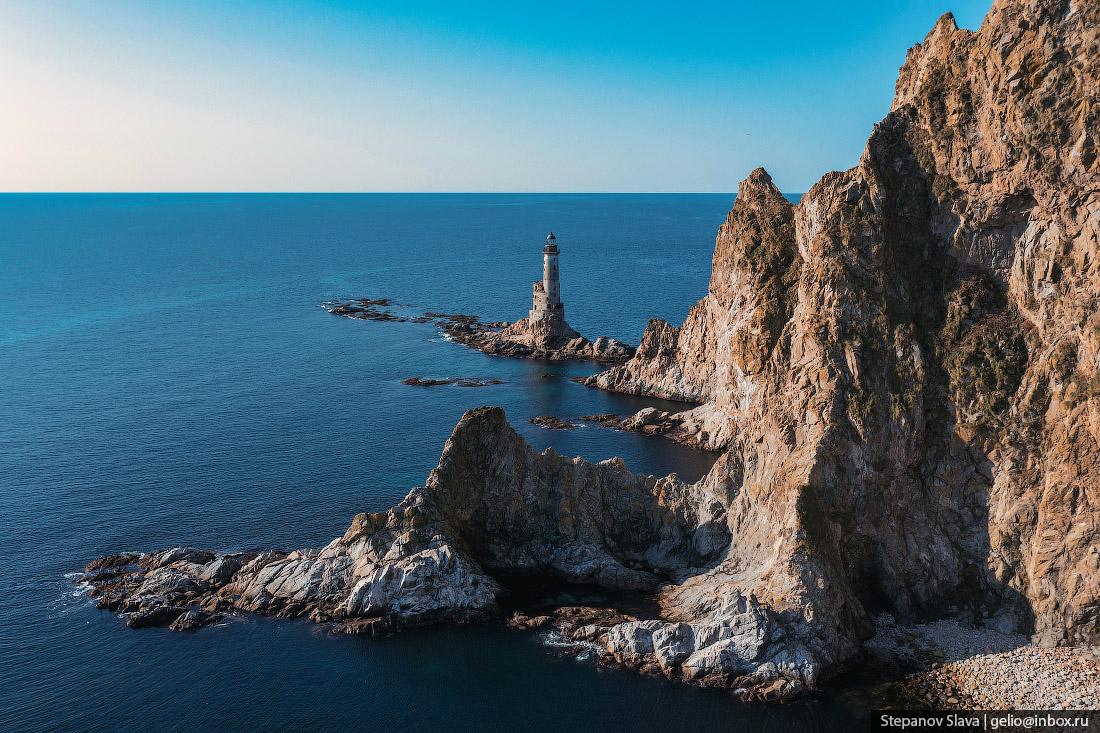
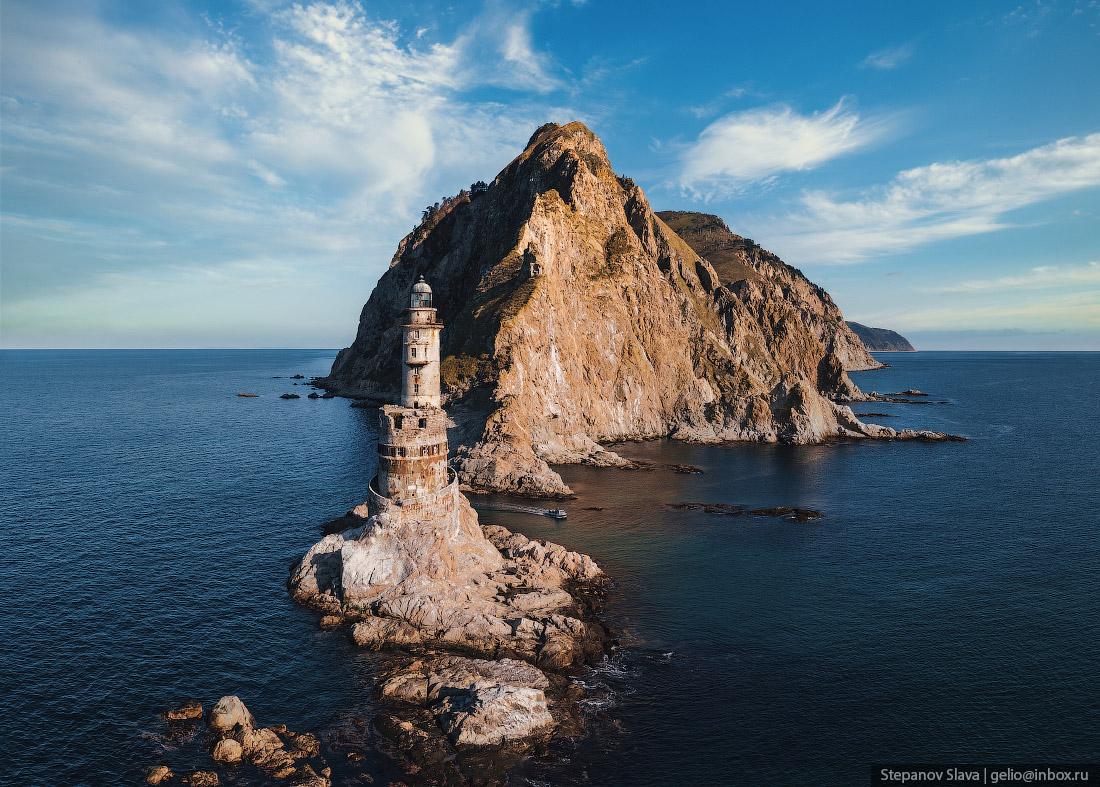
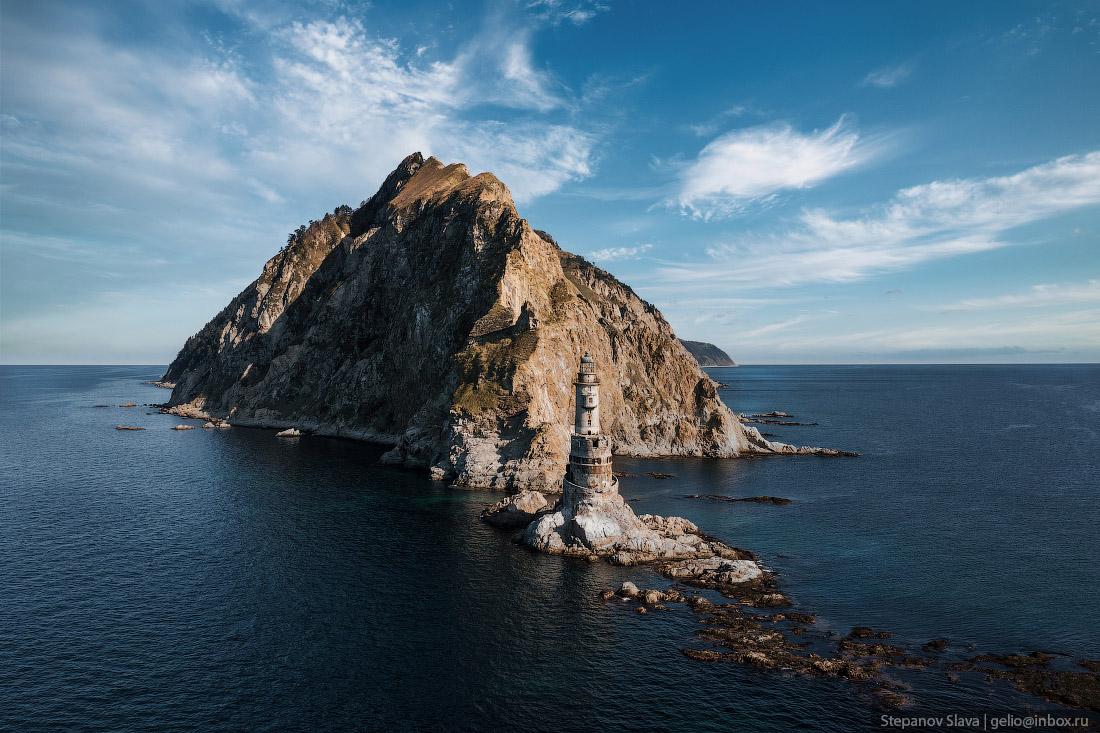
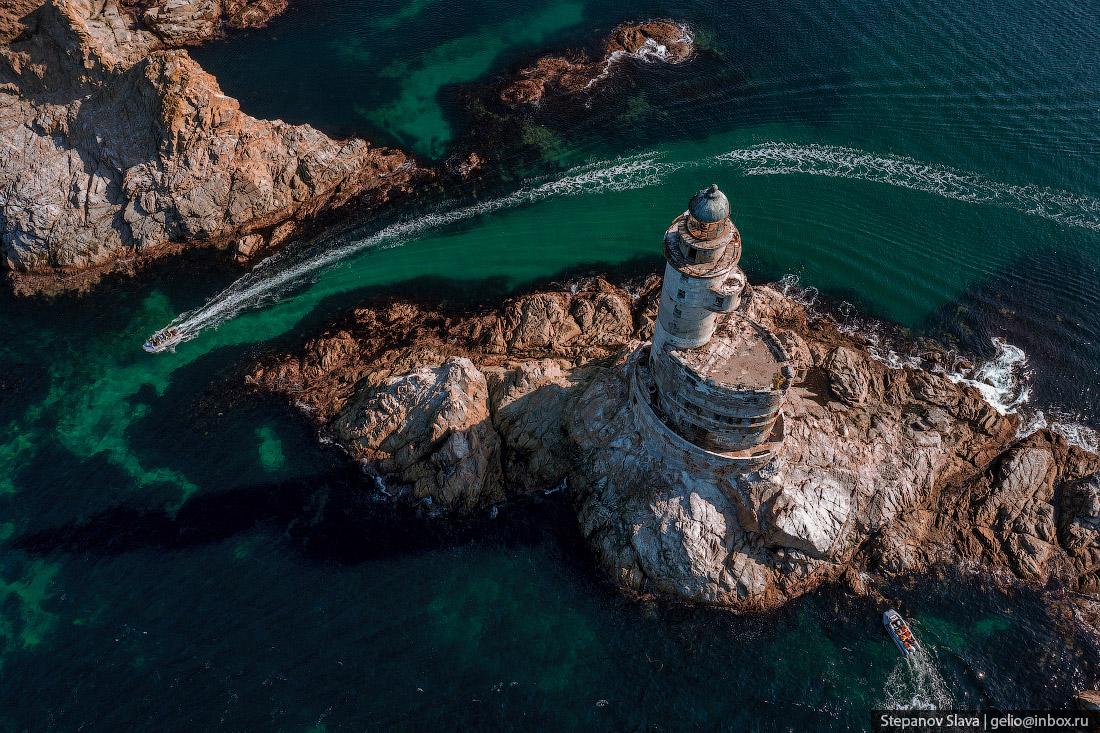
Few lighthouses in the world combine isolation, architectural daring, and geopolitical significance quite like the Aniva Rock Lighthouse. Perched on a solitary outcrop at the southern tip of Sakhalin Island, where the Sea of Okhotsk meets the Pacific Ocean, it has become both a symbol of human ingenuity and a monument to abandonment. For decades, the lighthouse guided ships through treacherous waters, but its story is inseparable from the turbulent history of Russia and Japan, two nations whose ambitions collided repeatedly over Sakhalin. Today, it stands deserted, battered by the elements, and regarded by many as one of the most hauntingly beautiful lighthouses in existence.
The Geography of Danger
The need for a lighthouse on Aniva Rock arises from the geography of southern Sakhalin. Off the island’s southernmost promontory lies a chain of reefs and rocky outcrops that extend into waters prone to fog, storms, and powerful currents. This is La Pérouse Strait, a narrow channel that separates Sakhalin from the northern tip of Hokkaido. The strait is of enormous strategic and economic importance, serving as a conduit for fishing vessels, cargo ships, and naval traffic. Yet it is also notoriously perilous. Sharp reefs lurk beneath the surface, tides shift violently, and sudden fog can reduce visibility to nothing. Countless ships foundered here in the nineteenth and early twentieth centuries, highlighting the need for a permanent navigational aid.
The Russo-Japanese Rivalry
The story of Aniva Rock Lighthouse cannot be told without reference to the contest between Russia and Japan for control of Sakhalin. For much of the nineteenth century, both empires laid claim to the island, leading to treaties that divided and then reunified its territory. Following the Russo-Japanese War of 1904–1905, Japan gained control of the southern half of Sakhalin, known as Karafuto Prefecture in Japanese administration. It was during this period of Japanese rule that plans for a lighthouse on Aniva Rock took shape.
The Japanese government recognised both the strategic value of safe passage through La Pérouse Strait and the symbolic power of asserting a presence at the island’s southernmost edge. Construction began in the early 1930s, at a time when Japan was expanding its influence across East Asia. The project was ambitious, requiring men and materials to be ferried to a tiny, wave-battered rock miles from shore.
Construction and Design
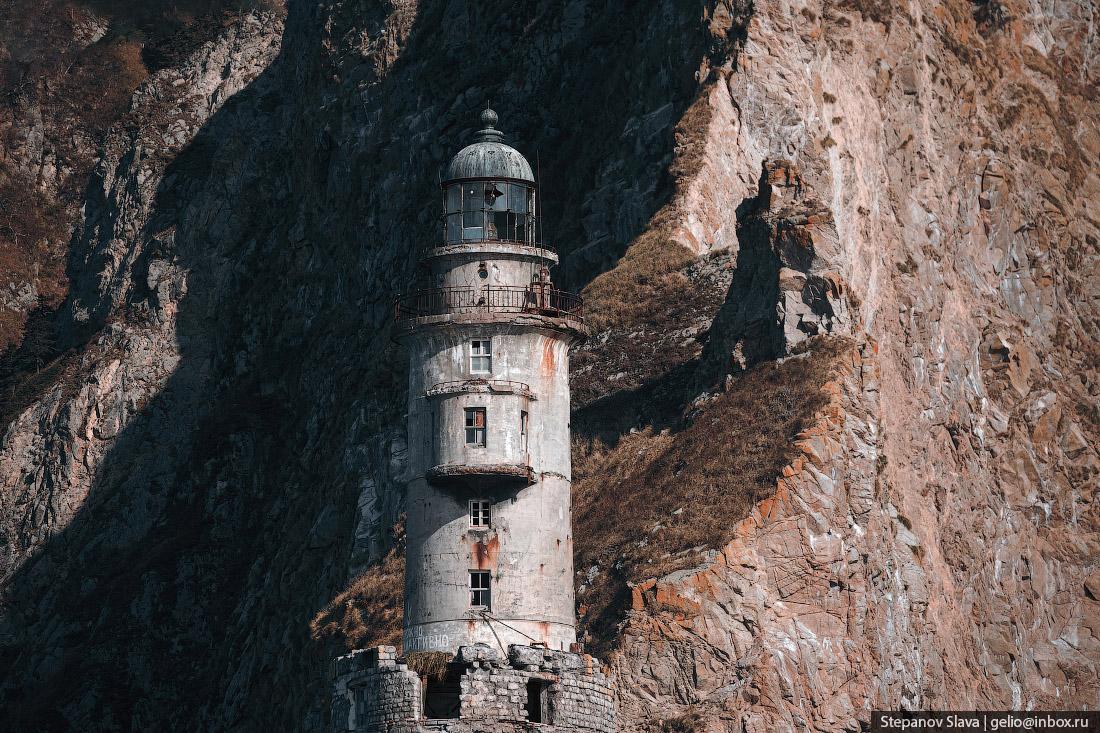
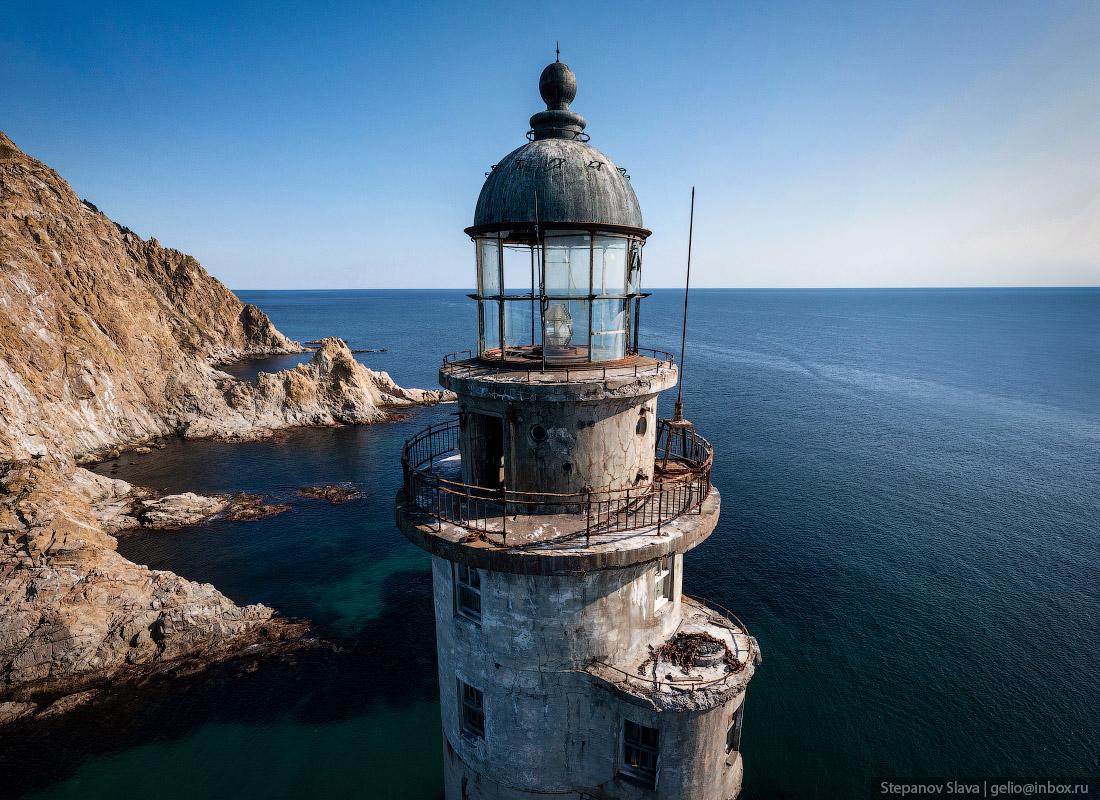
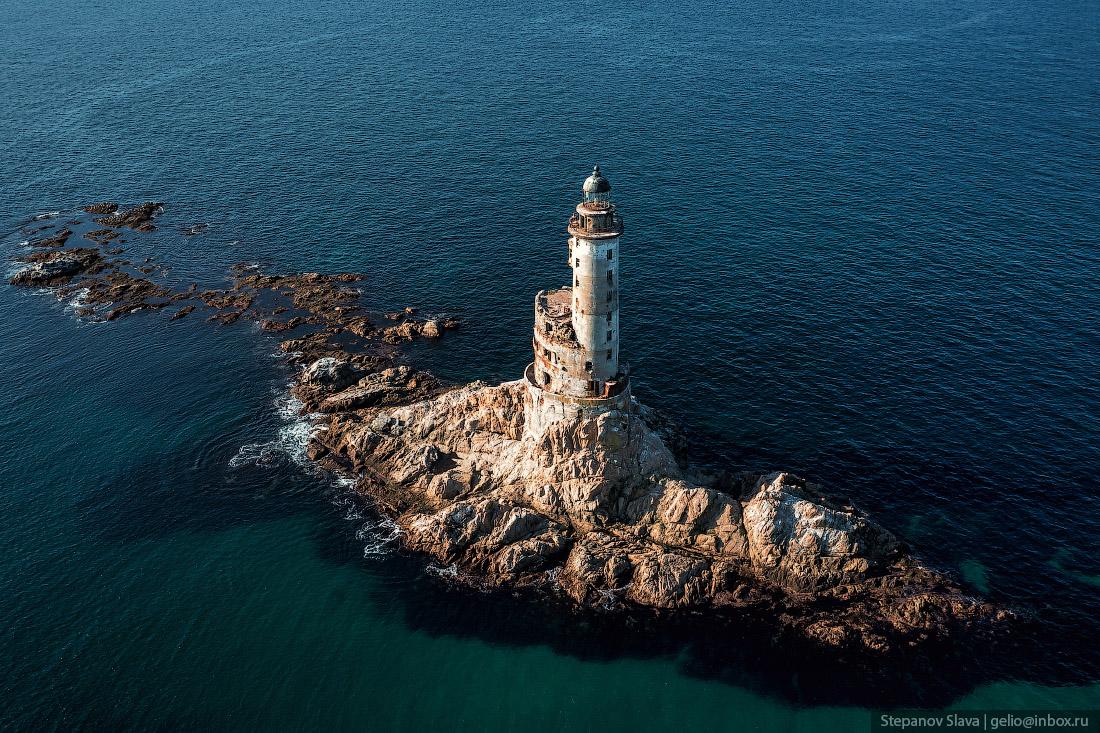
Completed in 1939, Aniva Rock Lighthouse was a remarkable engineering achievement. Rising to a height of more than 30 metres, its tower was built directly onto the uneven granite surface of the rock. The structure was cylindrical, tapering slightly as it ascended, and anchored with thick foundations to withstand the relentless battering of waves and storms. Attached to the tower was a multi-storey building that housed living quarters, storage rooms, and technical facilities.
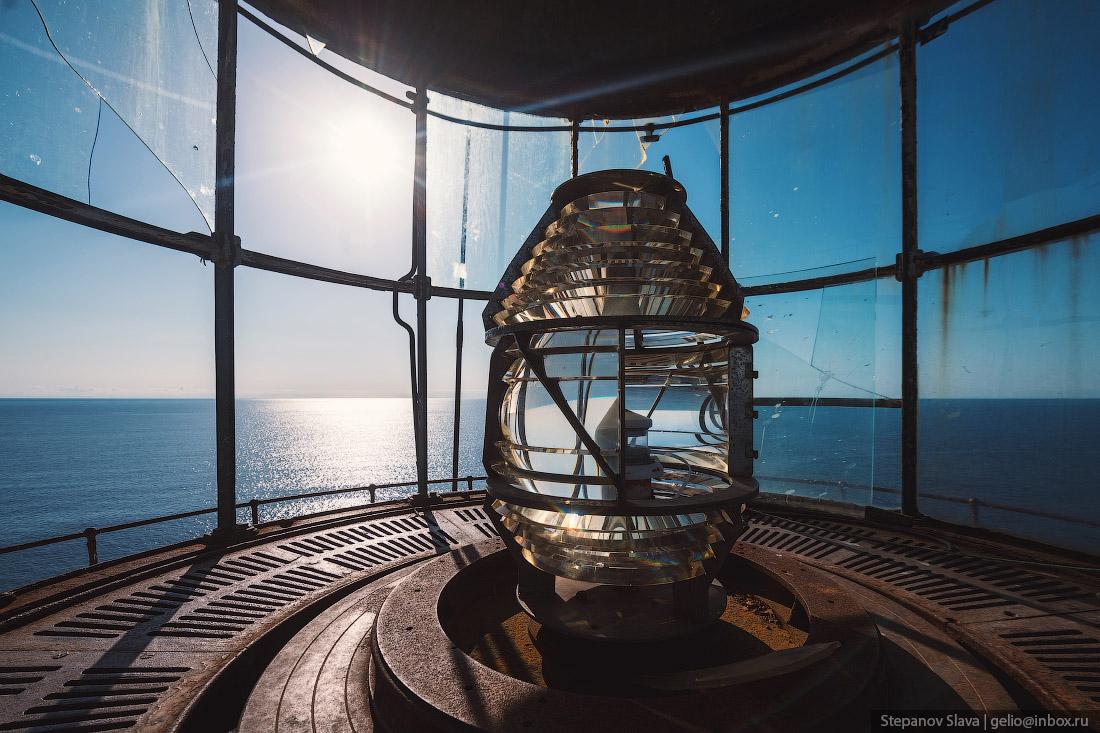
Inside, the lighthouse was equipped with diesel generators, radio equipment, and a powerful Fresnel lens capable of projecting a beam for over 17 nautical miles. The design allowed for accommodation of up to a dozen keepers, who lived in spartan conditions, isolated from the mainland for weeks at a time. Supplies were delivered by boat in calm weather, but when storms struck, the keepers were cut off, relying entirely on the provisions stored within.
Life at Aniva Rock was hard. The rock provided no natural resources, and the sea around it was treacherous for landing. The men stationed there endured long months of isolation, their only connection to the outside world the beam of light they tended each night. Yet despite the hardships, the lighthouse became an indispensable aid to navigation and a proud emblem of Japanese maritime authority.
Soviet Control and Nuclear Modernisation
The Second World War once again transformed Sakhalin’s fate. In 1945, during the Soviet Union’s campaign against Japan in the final weeks of the conflict, Soviet forces invaded southern Sakhalin and the Kuril Islands. After Japan’s surrender, the entirety of Sakhalin came under Soviet control. With it came the lighthouse, now stripped of its Japanese identity and incorporated into the Soviet network of coastal defences.
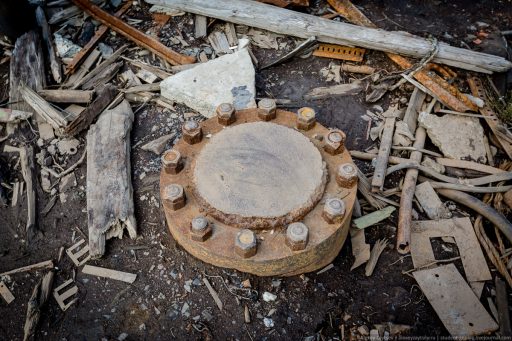
The Soviets maintained the lighthouse much as the Japanese had, with keepers stationed in rotation. However, during the 1950s and 1960s, Soviet authorities sought to reduce the need for human presence in such remote and dangerous postings. Like many lighthouses in the USSR, Aniva Rock was converted to operate using nuclear power. A small radioisotope thermoelectric generator, fuelled by strontium-90, provided reliable energy to power the light and radio equipment for years without refuelling.
This nuclear modernisation allowed the Soviets to withdraw the keepers, leaving the lighthouse to operate automatically. For decades, it continued to guide ships without human presence, its beam flashing across the stormy strait as a lonely testament to technology’s triumph over nature.
Decline and Abandonment
By the late twentieth century, however, Aniva Rock Lighthouse had begun to decline. Advances in satellite navigation, GPS, and modern radar reduced reliance on traditional lighthouses. The Soviet Union’s collapse in 1991 accelerated the neglect of remote facilities, as funding for maintenance dwindled.
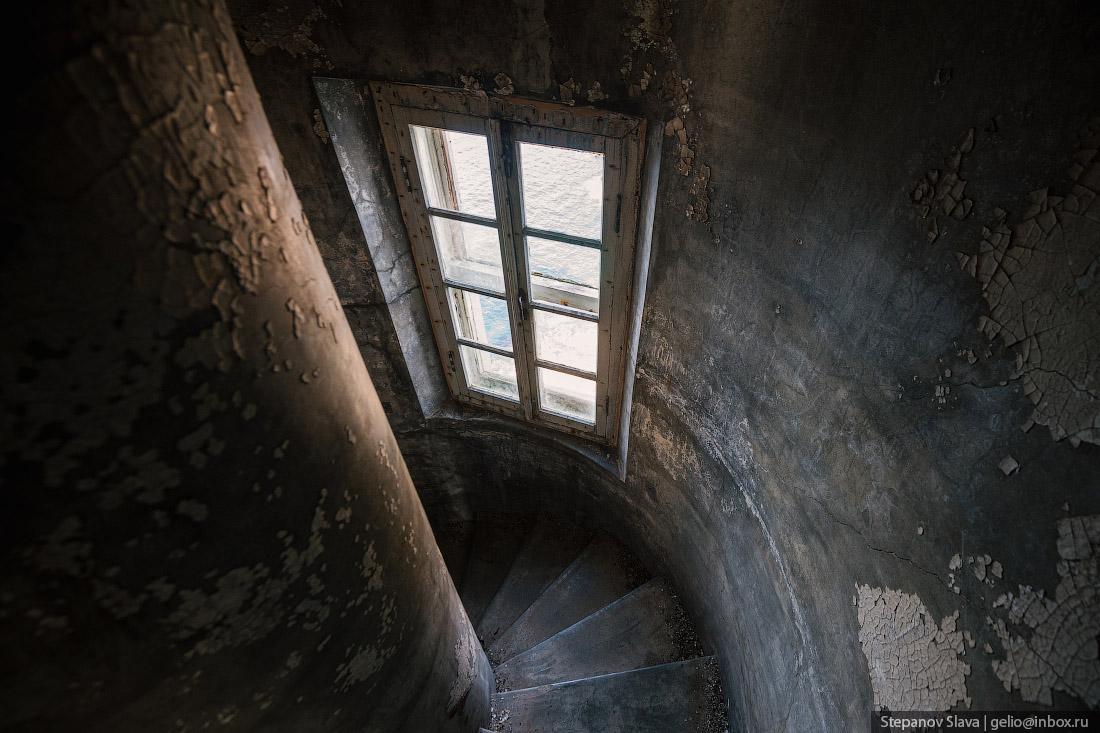
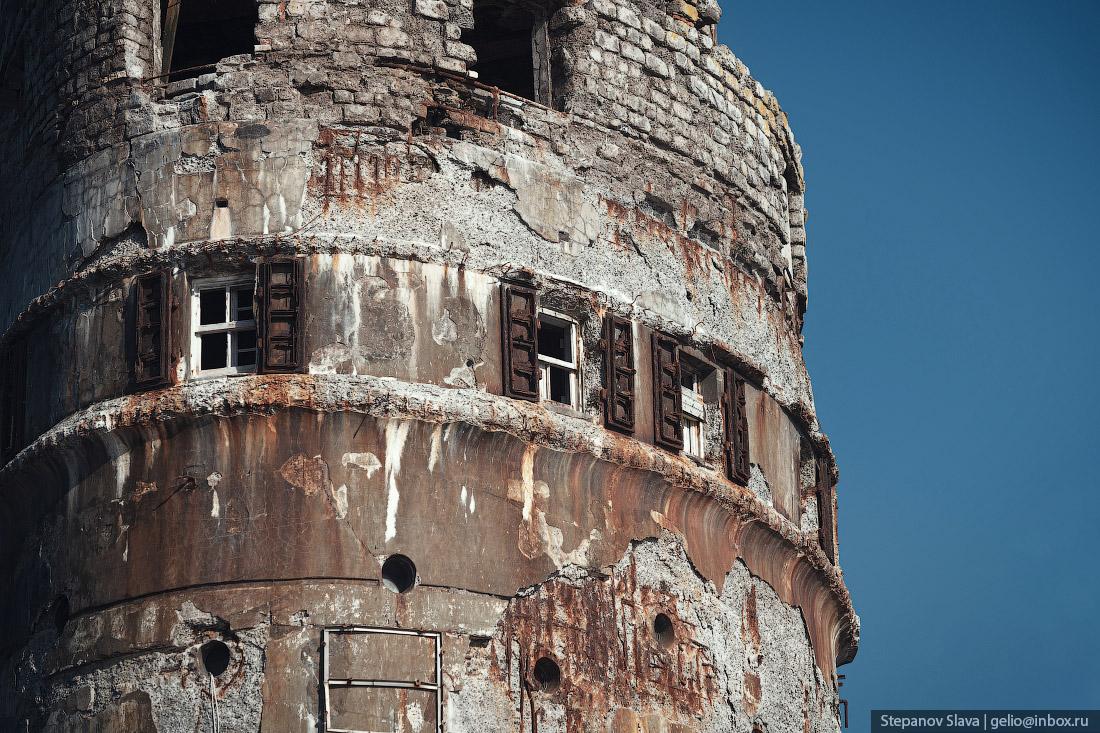
The nuclear generator was eventually removed, leaving the lighthouse dark. Without keepers to maintain it and without a power source to sustain its equipment, the structure fell into disrepair. Windows shattered, metal fittings corroded, and storms stripped away parts of its outer walls. Inside, the once functional living quarters and machinery rooms became husks of their former selves.
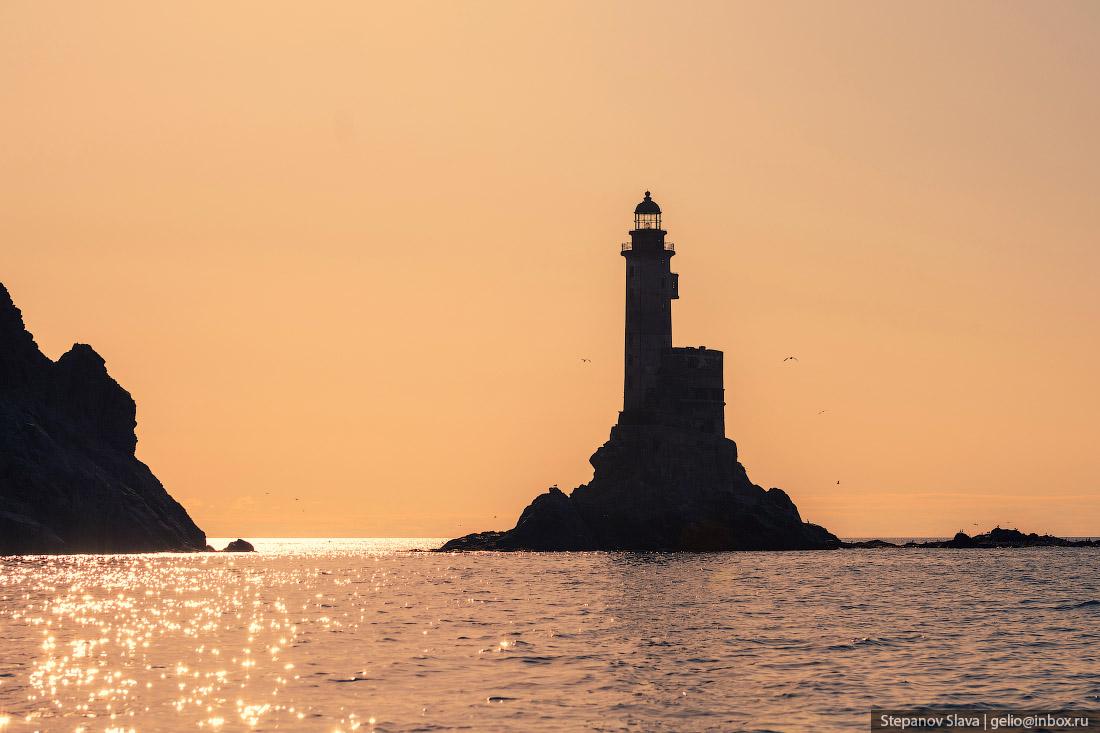
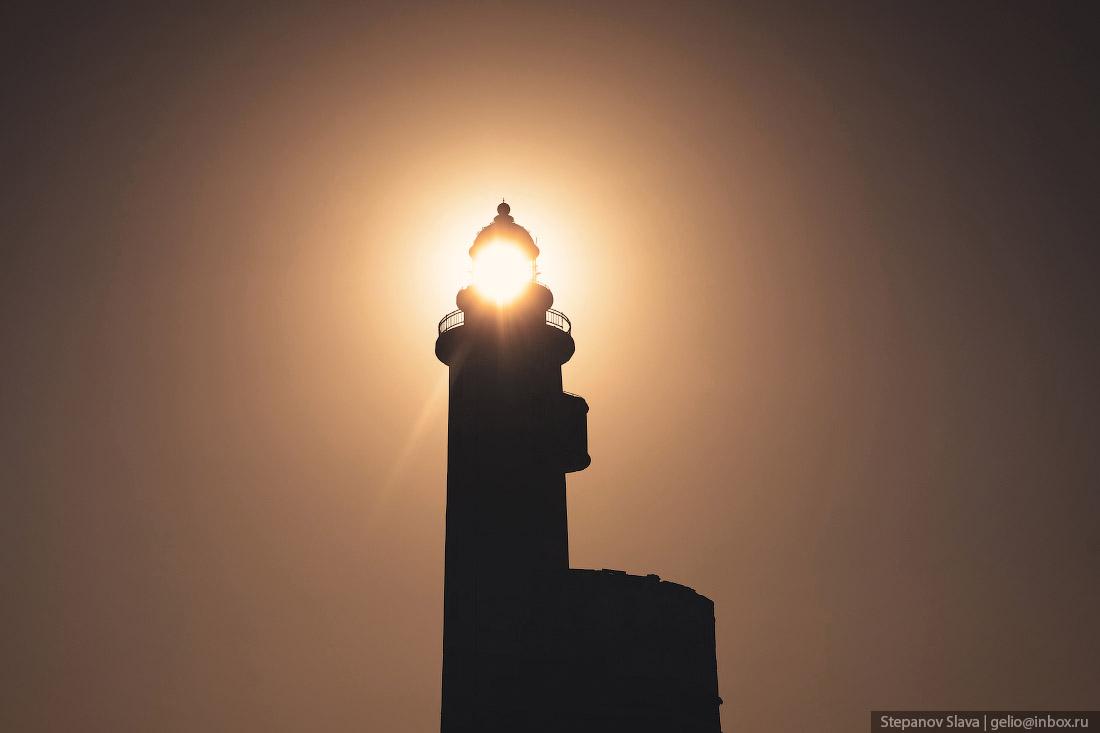
Today, the lighthouse stands abandoned, a ghostly relic of two empires and two eras of maritime history. Graffiti marks its walls, and scavengers have stripped some of its fittings. Yet its concrete tower endures, a defiant silhouette against the endless sea.
Symbolism and Cultural Legacy
Despite its abandonment, Aniva Rock Lighthouse has gained a second life as an icon. Photographers and explorers are drawn to its haunting appearance, perched precariously on its wave-lashed pedestal. Its remote location makes access difficult, but those who succeed in visiting often describe it as one of the most atmospheric and eerie places they have ever seen.
The lighthouse also carries deep symbolic weight. For Russians, it represents the endurance of Soviet engineering and the conquest of hostile environments. For the Japanese, it is a reminder of a past era when Karafuto was part of their empire. For maritime enthusiasts around the world, it is a rare surviving example of early twentieth-century offshore lighthouse construction.
Cultural depictions often cast Aniva Rock as a metaphor for isolation, resilience, and the passage of time. Its presence on travel blogs, documentary films, and social media has brought it international attention, even though it remains largely inaccessible to ordinary tourists.
Prospects for Preservation
The future of Aniva Rock Lighthouse remains uncertain. Its location makes conservation challenging, and the costs of restoring or maintaining it would be immense. There have been occasional proposals to stabilise the structure or to convert it into a heritage site, but none have advanced significantly. The difficulty of reaching the rock, combined with the harsh climate of La Pérouse Strait, means that even basic repairs are logistically daunting.
For now, the lighthouse continues to stand as it has for decades: abandoned, crumbling, yet still commanding. Its endurance in the face of storms and neglect speaks to the durability of its construction and the determination of those who built it.
Conclusion
Aniva Rock Lighthouse is more than a navigational aid; it is a monument to human ambition, resilience, and folly. Built by Japan to assert its control over Sakhalin, maintained by the Soviet Union as part of its coastal defences, and now abandoned to the elements, it embodies the layered history of a contested region. Its haunting silhouette on the horizon reminds us of the lengths to which nations have gone to tame the sea and protect their interests.
Though its light no longer shines, Aniva Rock Lighthouse continues to captivate imaginations. It is a place where geography, history, and architecture converge, a solitary sentinel at the edge of empires. Whether it eventually collapses into the sea or endures for centuries more, its story is etched into the cultural memory of Sakhalin and into the broader narrative of lighthouses as symbols of both guidance and solitude.