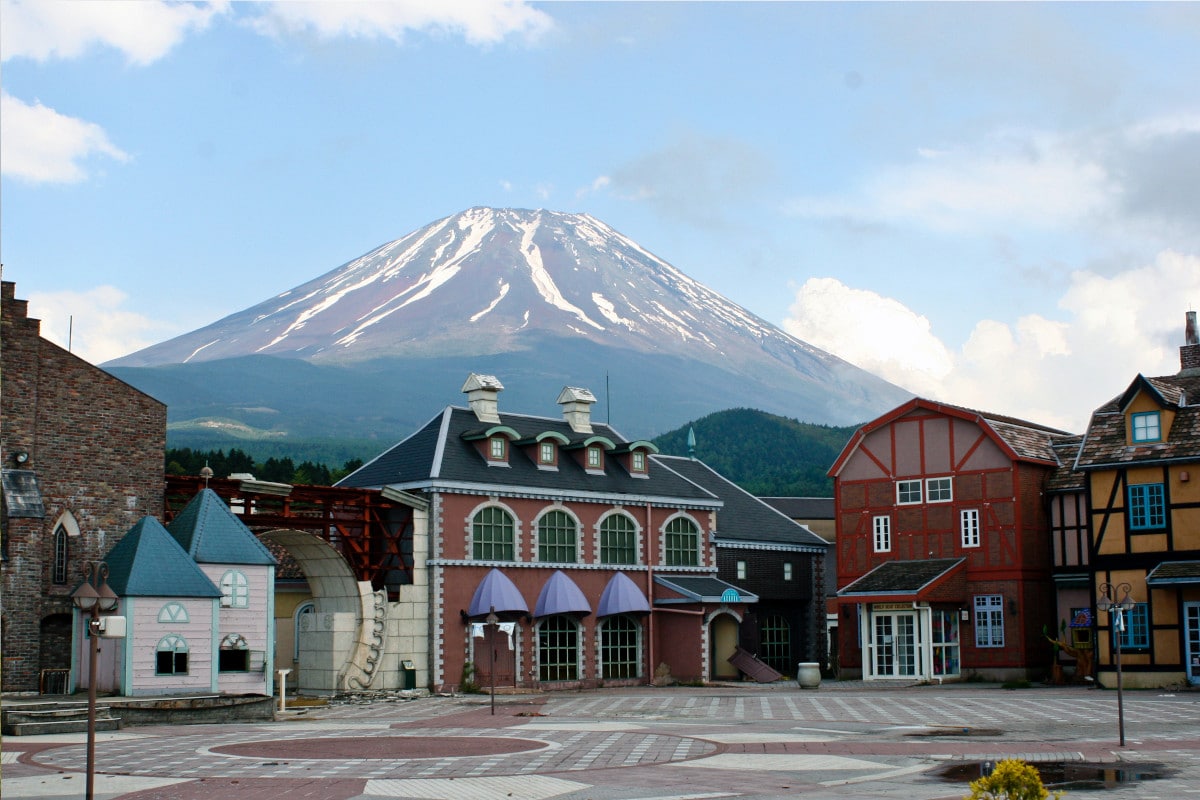
In the shadow of Mount Fuji, nestled in the forested hills of Kamikuishiki village, once stood a theme park that was as bizarre as it was short-lived: Gulliver’s Kingdom. Inspired by Jonathan Swift’s classic Gulliver’s Travels, the park opened in 1997 and shut down just four years later in 2001. Despite its literary roots, Gulliver’s Kingdom quickly became more infamous for its odd location and eerie atmosphere than for its tribute to 18th-century satire.
The Concept: Literary Wonder or Tourist Misfire?
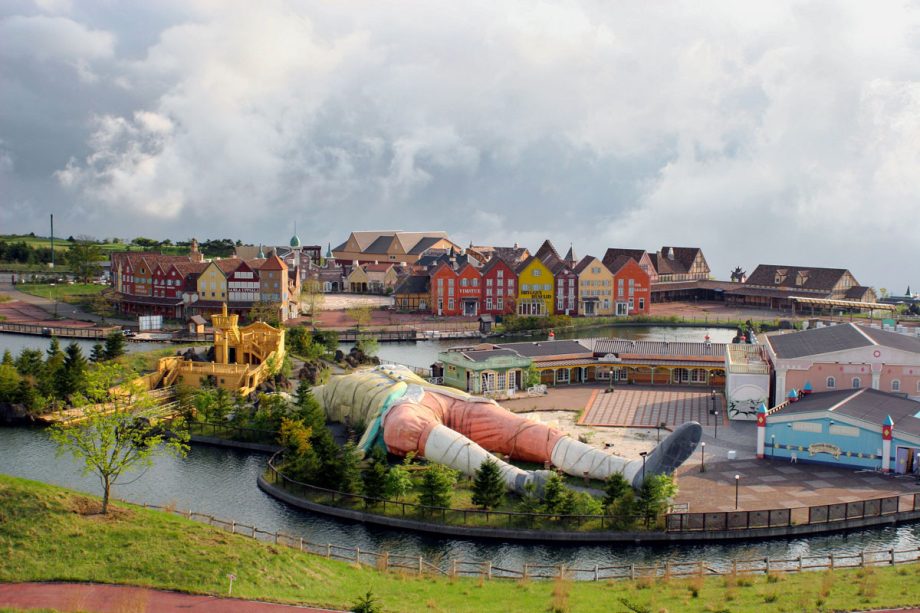
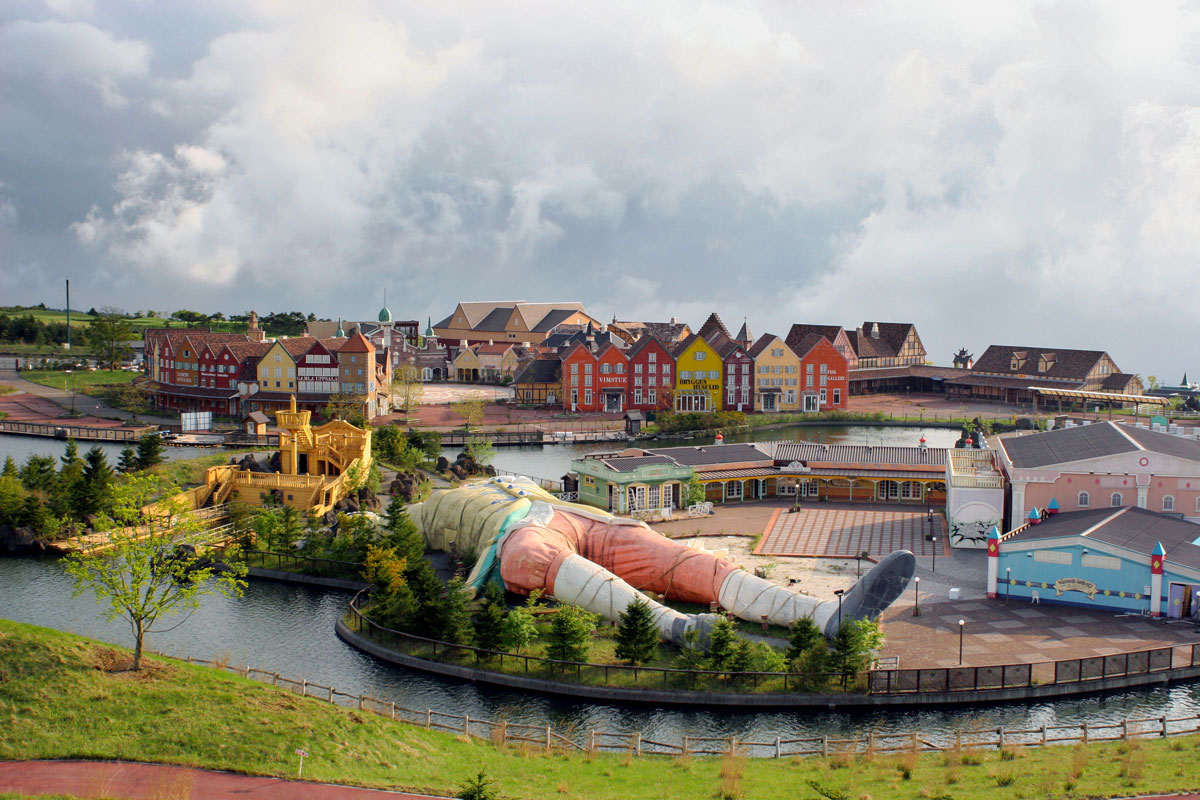
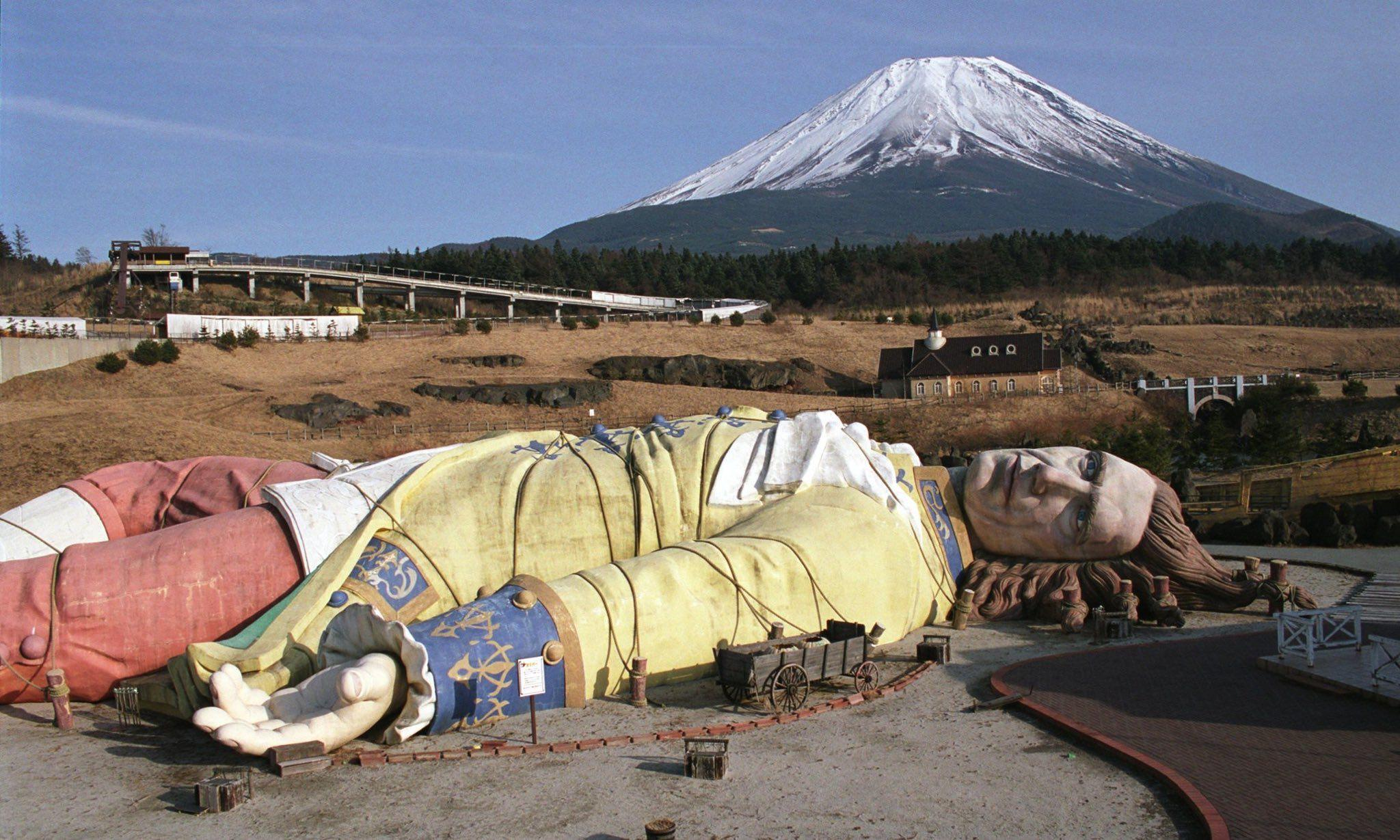
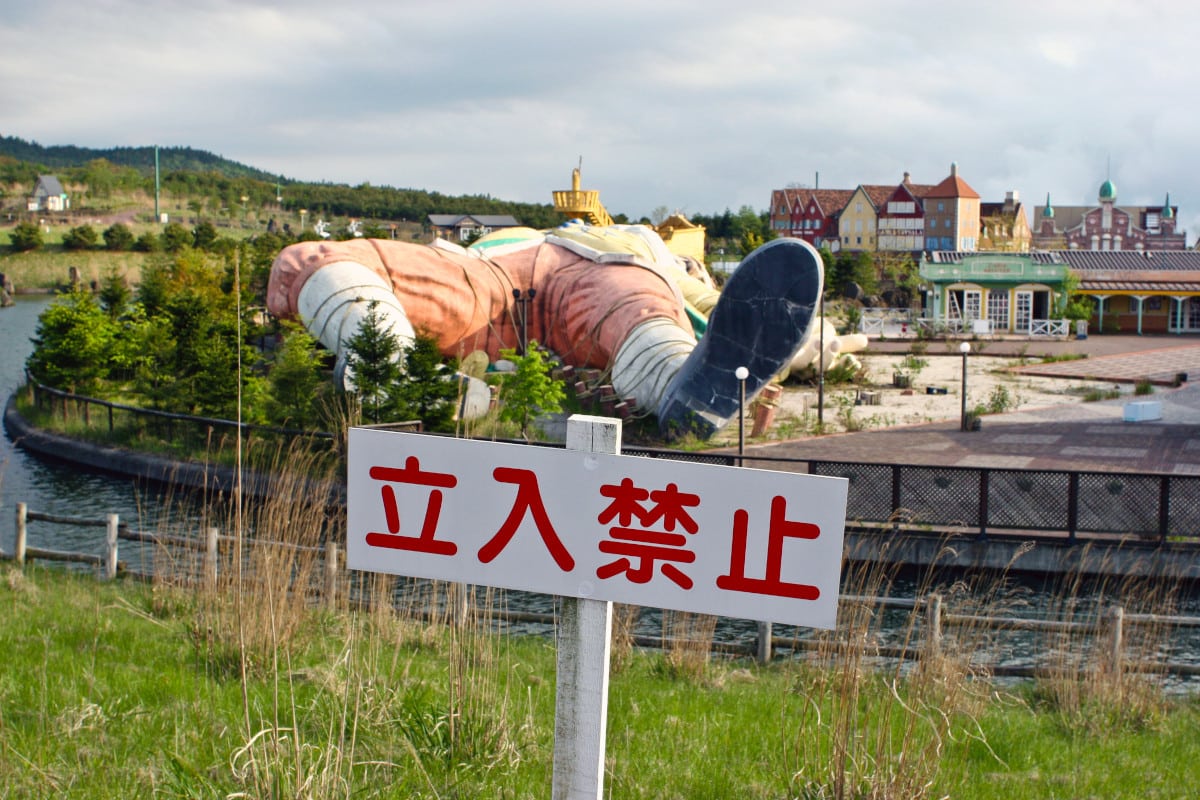
The central attraction of Gulliver’s Kingdom was a massive, 147-foot-long statue of Lemuel Gulliver himself, pinned to the ground by tiny ropes in the style of the Lilliputians. Visitors could walk across him, climb into his ears, and peer into his eyes. It was meant to be whimsical, educational, and family-friendly—a celebration of literature in the form of interactive entertainment.
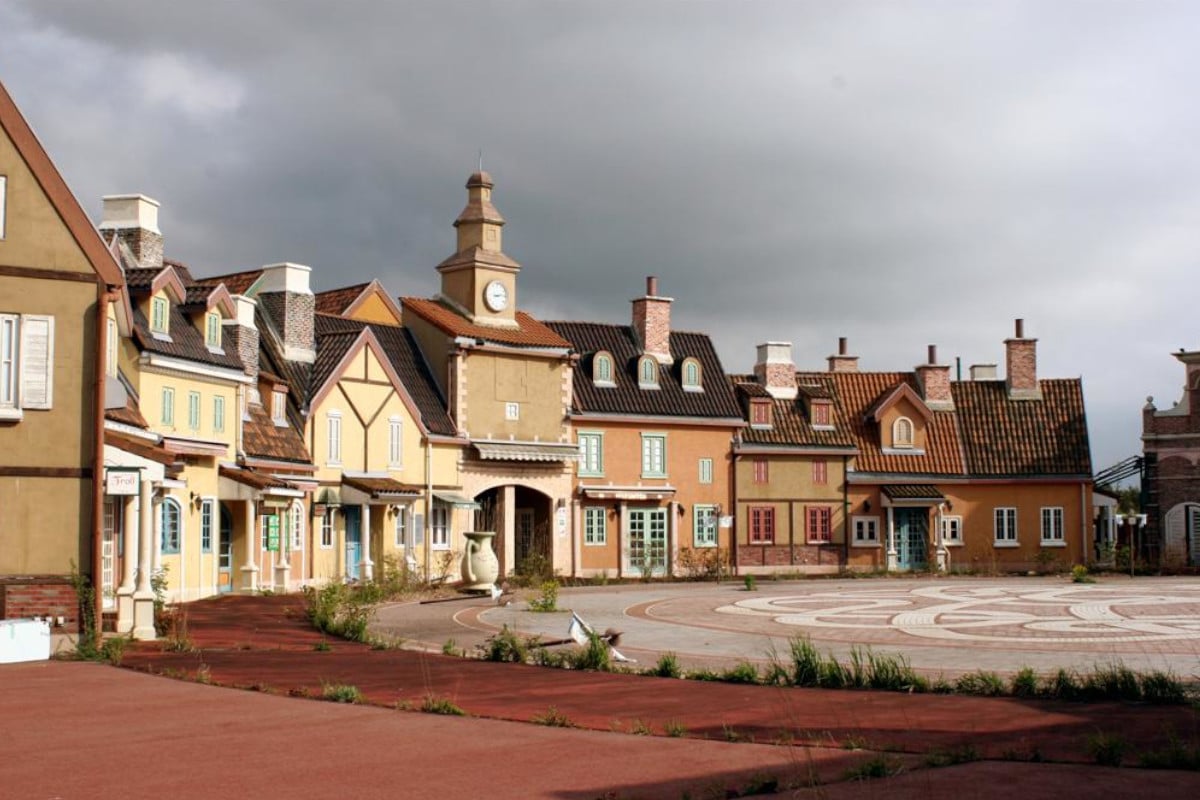
The theme park included other scaled structures and fantasy-themed rides, but the star was undeniably the enormous Gulliver statue. It was ambitious and strange—a surreal blend of storytelling and sculpture meant to draw in both domestic and international tourists.
The Location: A Fatal Flaw
The idea might have worked better somewhere else. But the decision to place Gulliver’s Kingdom in Aokigahara, also known as the Suicide Forest, raised eyebrows from the beginning. This forest, located at the base of Mount Fuji, is notoriously associated with death and paranormal folklore in Japan. Its tragic reputation as a site where many have taken their own lives gave the park an unsettling atmosphere, no matter how family-friendly the rides were.
It didn’t help that Kamikuishiki village was also known for another disturbing reason: it had been a hub for Aum Shinrikyo, the cult responsible for the 1995 Tokyo subway sarin gas attack. Some of the group’s facilities were located disturbingly close to the site of the park.
The Funding: A Questionable Investment
Gulliver’s Kingdom was part of a government initiative to boost tourism in rural areas through public-private partnerships. The project was funded by the Japan Regional Development Agency, with an investment of approximately \$350 million. The intention was noble—revitalize an economically struggling area—but the execution was flawed. Poor planning, minimal promotion, and the choice of an ominous location doomed the park from the start.
The Decline and Abandonment
The park failed to attract enough visitors to sustain operations. Tourists found the location too remote and off-putting. Families, the park’s primary target audience, were particularly deterred by the proximity to the Suicide Forest and the unsettling ambiance of the park itself.
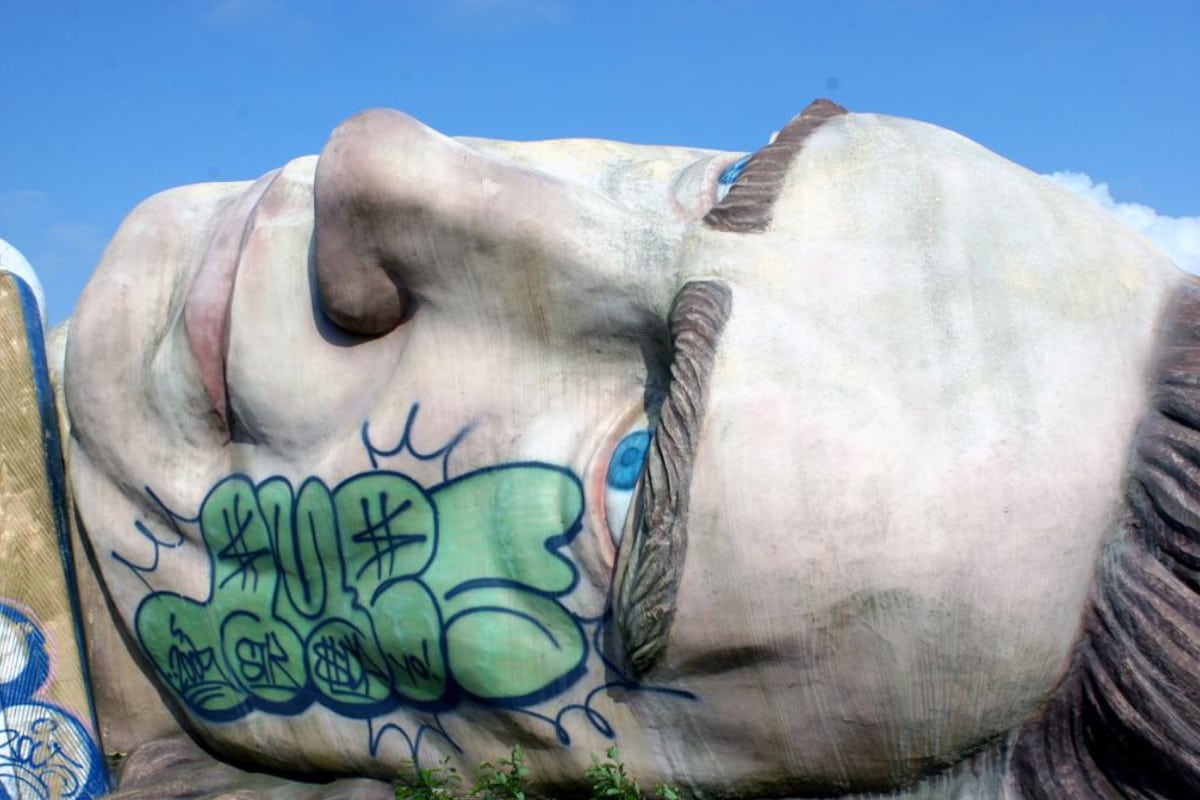
By 2001, just four years after opening, Gulliver’s Kingdom shut down. What was left behind became a surreal landscape of decaying structures, overgrown paths, and a colossal, crumbling Gulliver laying supine and forgotten.
Urban explorers and photographers began documenting the eerie remnants, turning the abandoned park into a cult curiosity online. Images of Gulliver’s moss-covered face and empty-eyed stare went viral, transforming the failed amusement park into a strange icon of abandoned Japan.
Demolition
In 2007, the remains of Gulliver’s Kingdom were demolished. Today, very little evidence of the park remains—just traces in satellite images and a handful of haunting photos circulating on the internet. The land was eventually cleared, but the park lives on as a cautionary tale in tourism development and a footnote in the history of bizarre theme parks.
Gulliver’s Kingdom wasn’t just a theme park that failed. It was a convergence of misplaced ambition, poor planning, and deep cultural dissonance. Despite its whimsical premise, it stood in one of Japan’s darkest areas, and that contradiction ultimately defined its fate. What was meant to celebrate fantasy ended up as an eerie, real-world ruin—a stark reminder that location, context, and cultural sensitivity matter just as much as creativity and investment.