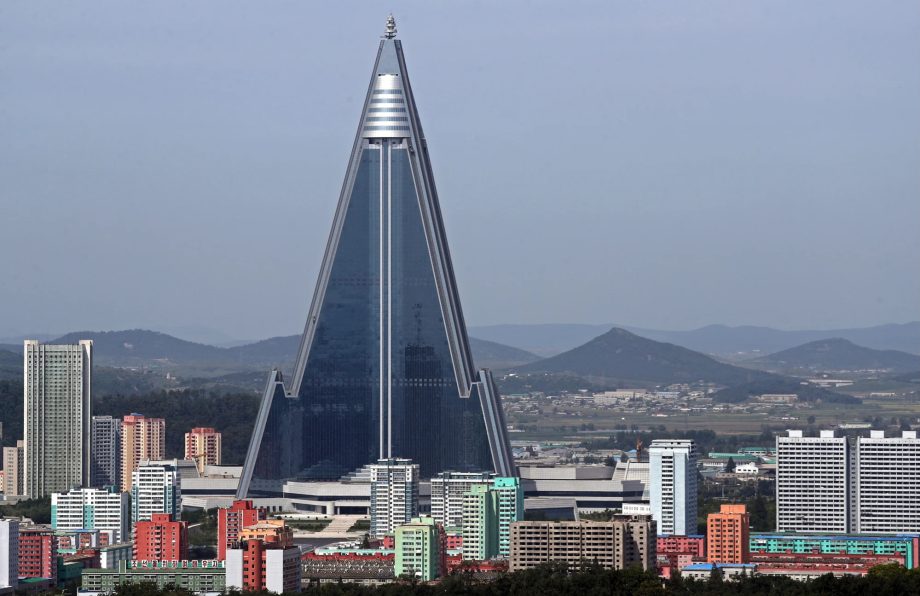
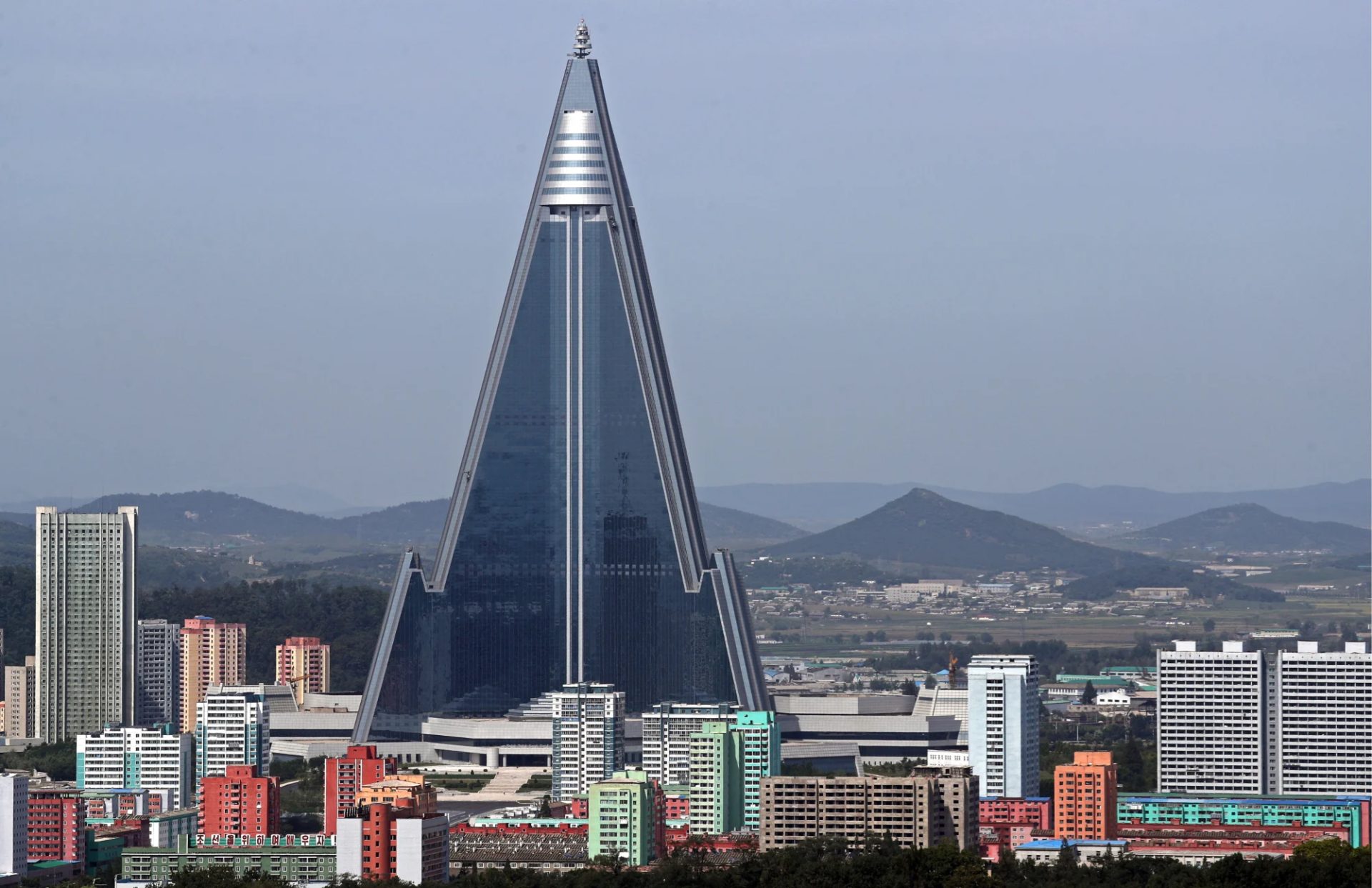
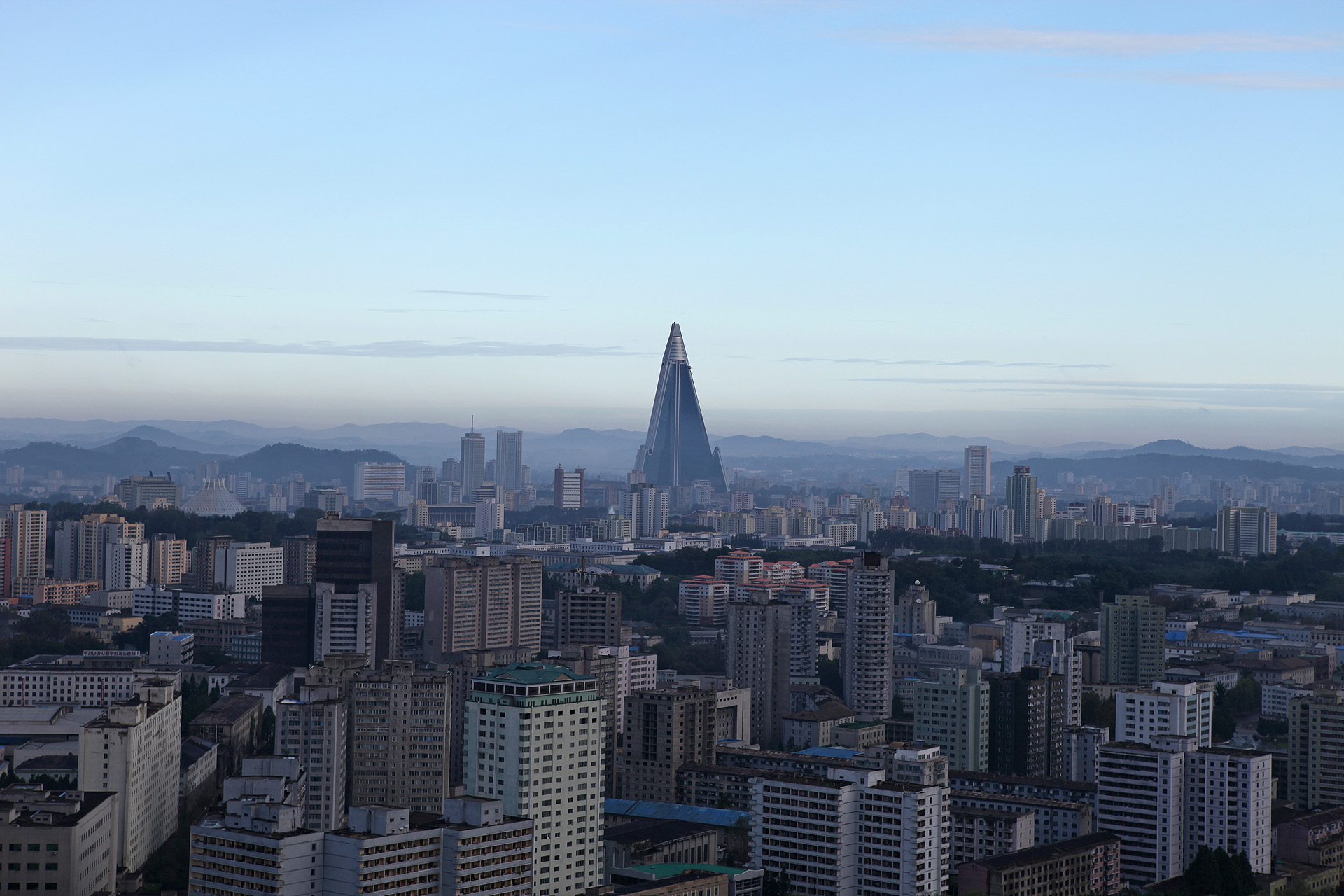
Towering over the skyline of Pyongyang like a relic from a futuristic dystopia, the Ryugyong Hotel has long fascinated architects, political observers, and travelers alike. For decades, this enormous pyramid-shaped skyscraper remained the world’s tallest unfinished building—a silent monument to ambition, isolation, and the enigmatic regime of North Korea. In this blog post, we dive deep into the strange and fascinating story of the Ryugyong Hotel: its origins, its troubled past, and the haunting symbolism it carries to this day.
The Vision: A Mega-Project with a Political Purpose
The Ryugyong Hotel’s story began in 1987, a time of intense rivalry between North and South Korea. South Korea had just been selected to host the 1988 Summer Olympics, a moment of international prestige and affirmation of its rising economic power. In response, Kim Il-sung, North Korea’s founder and then-leader, set out to launch a counter-project that would showcase the technological prowess and architectural ambition of the Democratic People’s Republic of Korea (DPRK).
The result was a bold plan to construct the tallest hotel in the world.
Named Ryugyong, meaning “capital of willows”—an ancient name for Pyongyang—the hotel was intended to have:
- 105 floors
- Over 3,000 guest rooms
- Seven revolving restaurants
- A combination of casinos, nightclubs, and luxury venues to attract international business and tourism
It was a project designed not just to impress, but to outshine. At a projected 330 meters (1,080 feet), it would dwarf hotels around the world and become a bold symbol of North Korea’s global relevance.
But as we now know, things didn’t go according to plan.
Construction Begins—and Then Crumbles
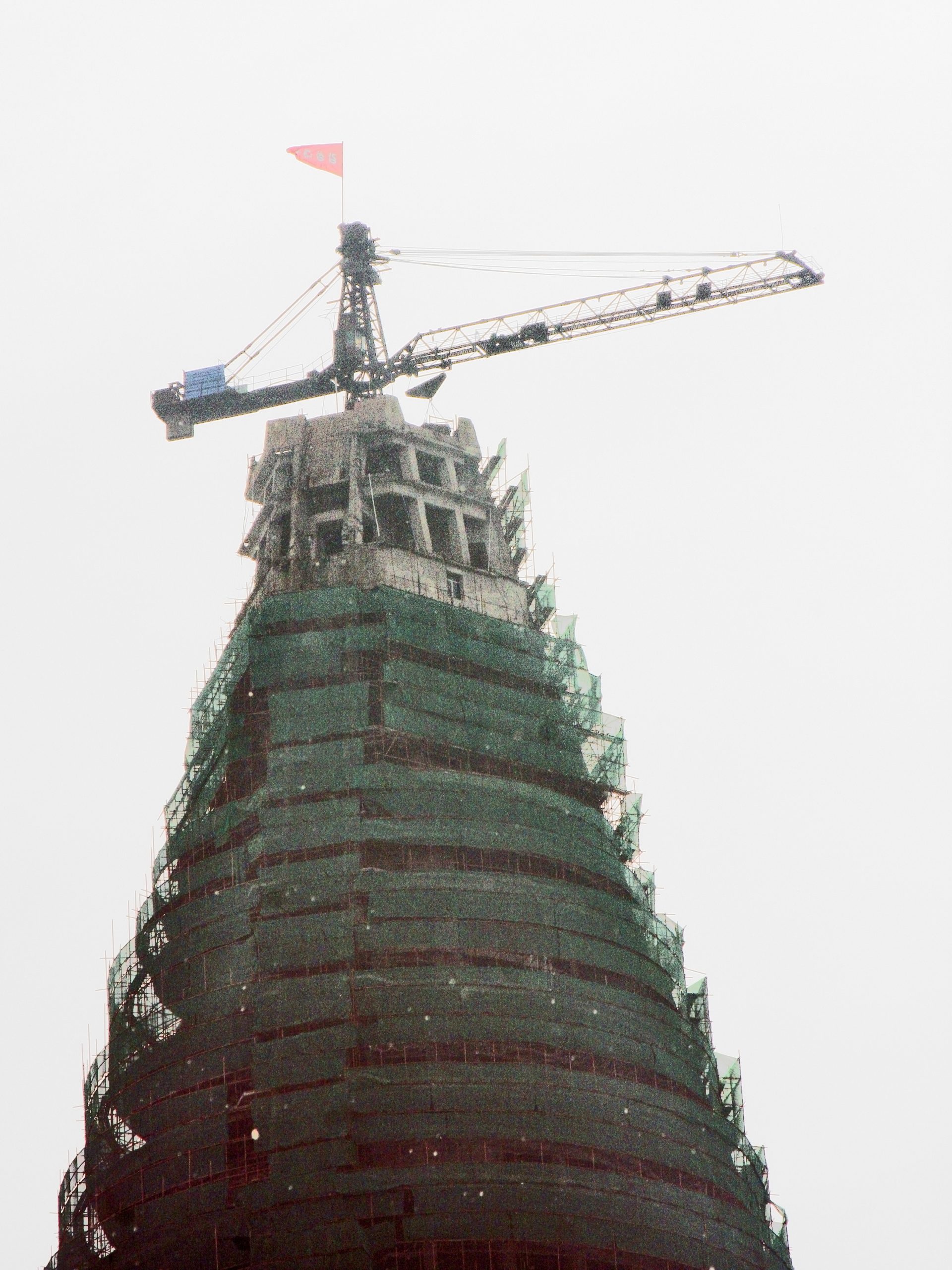
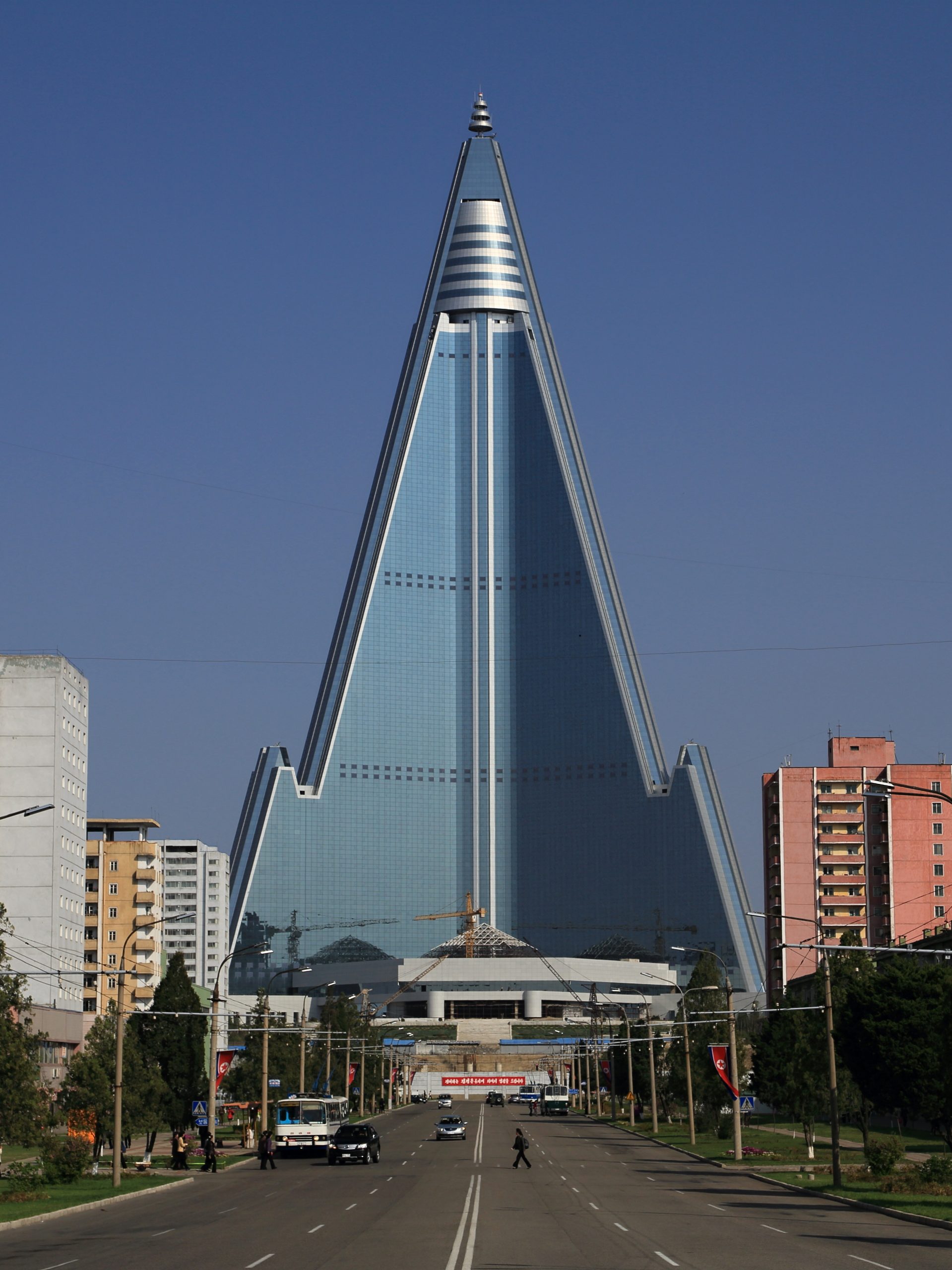
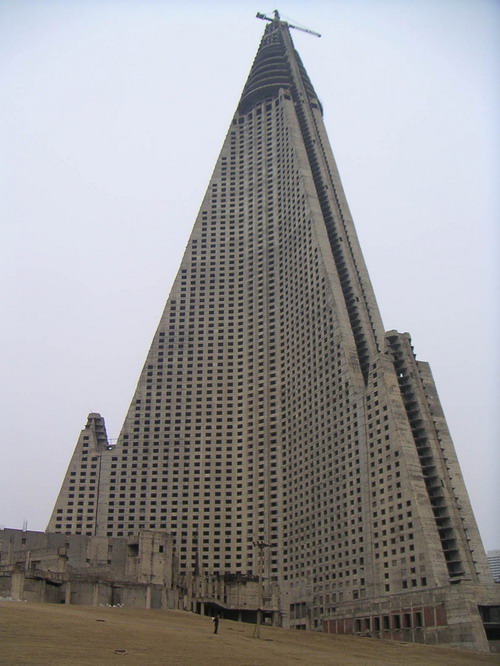
When construction began in 1987, North Korea’s economy was still supported by the Soviet Union and other communist allies. Using concrete rather than steel, workers managed to erect the basic pyramid-shaped structure within five years. By 1992, the outer shell—towering and angular—was complete.
But then the project came to a halt.
In the early 1990s, the collapse of the Soviet Union dealt a devastating blow to North Korea’s already fragile economy. The country entered a period of famine, known as the Arduous March, during which hundreds of thousands of people died. Resources dried up, and with it, any hope of finishing a luxury skyscraper. The Ryugyong Hotel became an unfinished, hollow skeleton on Pyongyang’s skyline.
For over 16 years, the hotel stood completely abandoned, its bare concrete frame a constant and uncomfortable reminder of failed ambition. Curiously, the North Korean regime erased all mentions of the building from official maps and photographs—effectively rendering it invisible to the public.
To the outside world, it became a grim joke. Dubbed the “Hotel of Doom” by foreign media, the Ryugyong stood as a monument to architectural hubris and political delusion.
Resurrection and Reinvention
Then, seemingly out of nowhere, construction resumed in 2008.
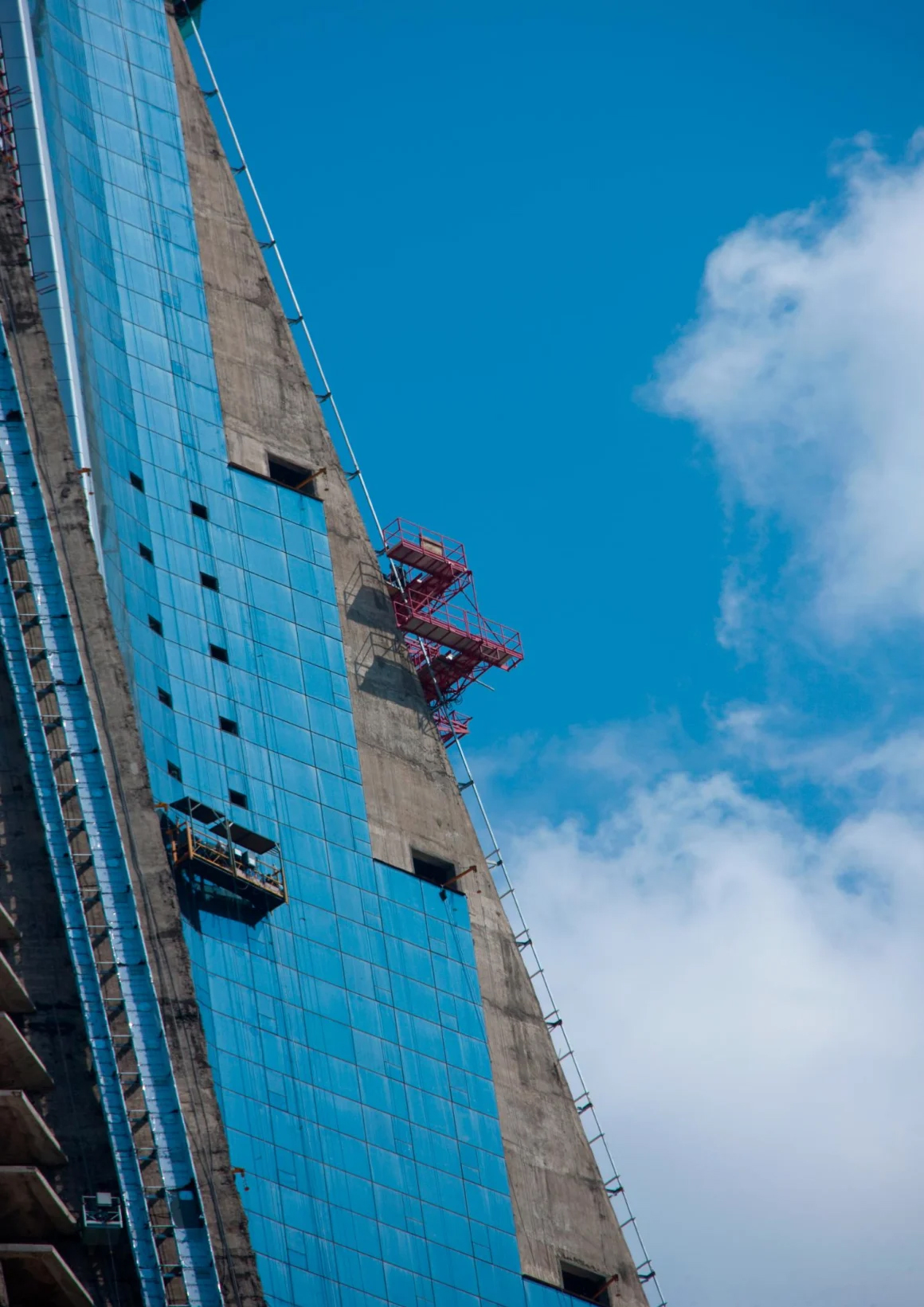
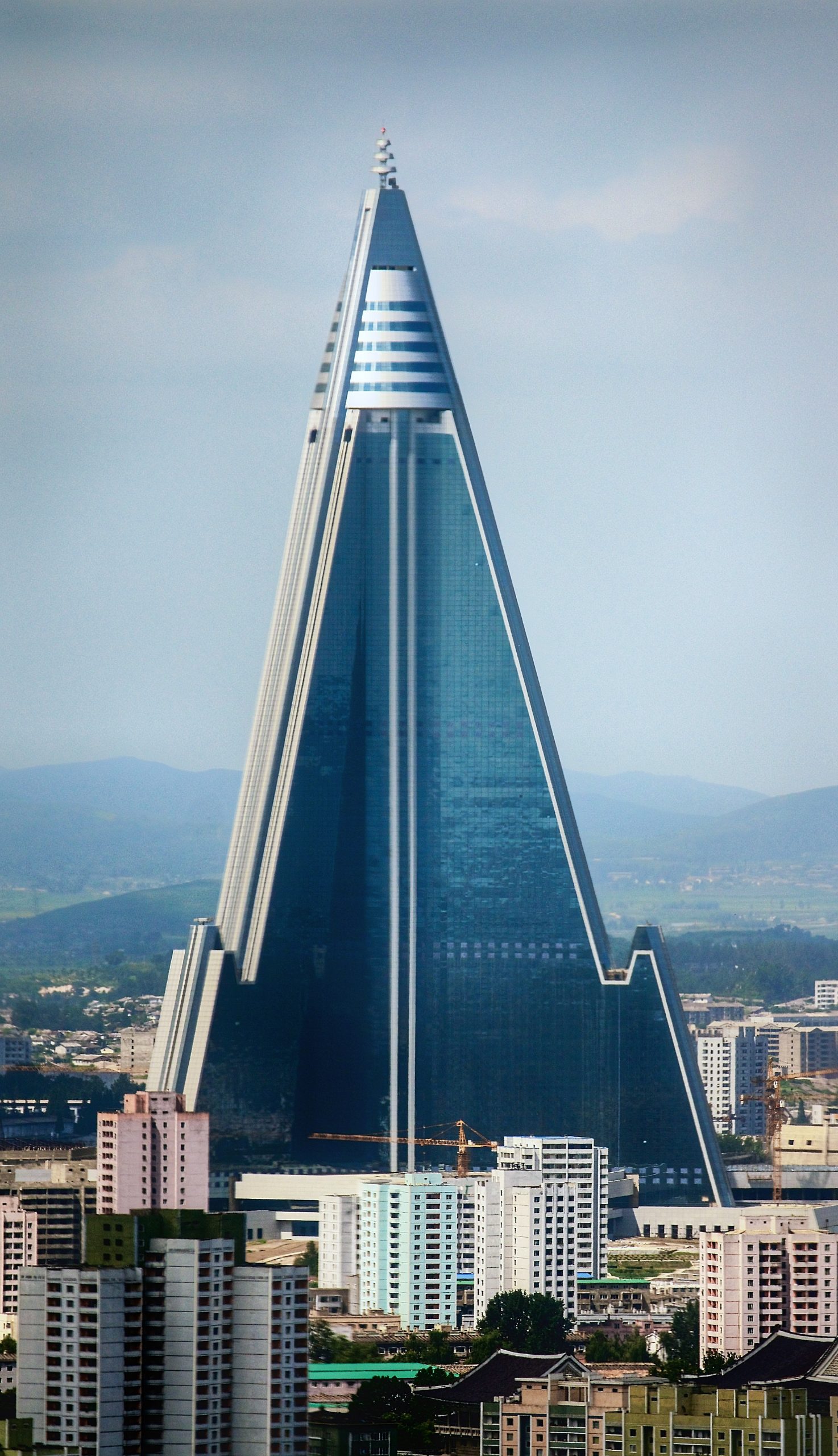
This unexpected development came about thanks to Orascom Group, an Egyptian conglomerate. While building a mobile network in North Korea (Koryolink), Orascom agreed to finish the Ryugyong’s exterior. Over the next few years, the company covered the concrete frame in sleek, modern glass panels, transforming the ghostly ruin into what appeared, at least from the outside, to be a futuristic hotel.
By 2011, the hotel’s facade was fully completed. From a distance, the Ryugyong looked dazzling—its glass reflecting the city lights, its peak shimmering like a beacon of North Korea’s supposed modernity.
There were even rumors of a grand opening. In 2012, North Korea celebrated the 100th birthday of Kim Il-sung, and many believed the regime would inaugurate the hotel as part of the celebrations. A promotional video featuring Kempinski Hotels (a European luxury hotel chain) suggested that the building might open its doors to foreign guests.
But it never happened.
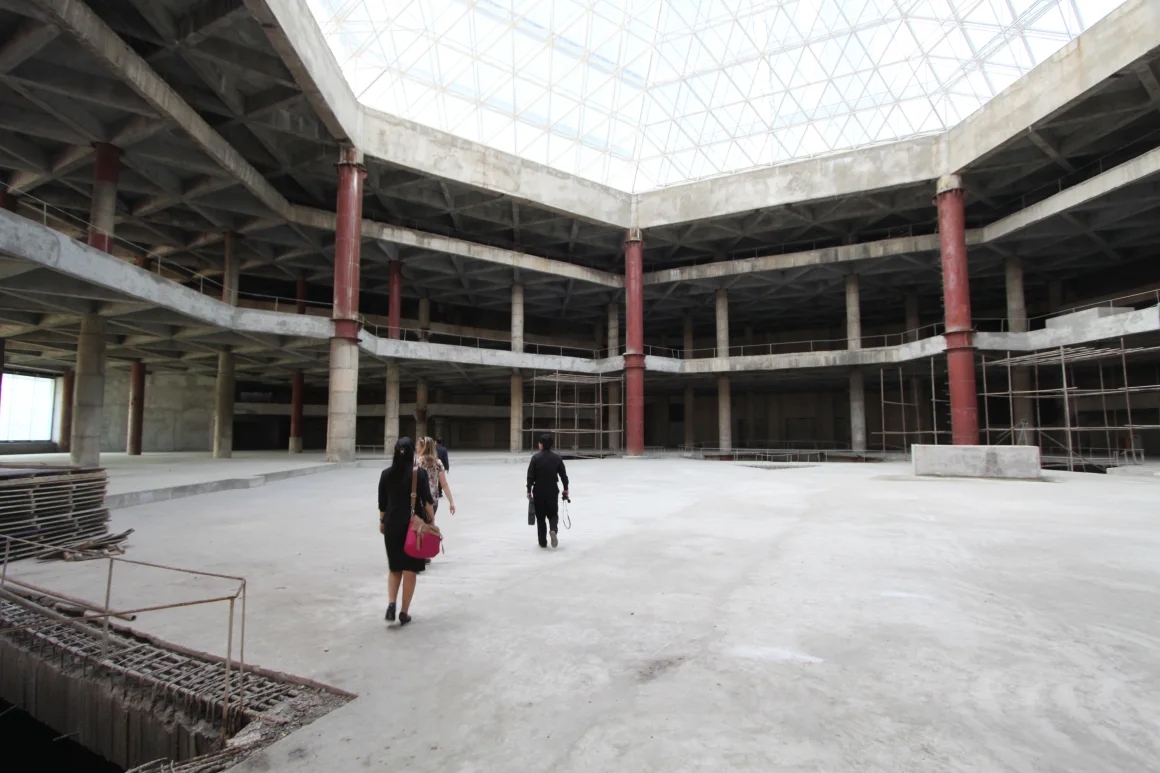
By 2013, Kempinski had pulled out. There was no confirmed occupancy, no grand debut, and no open rooms. The interior, it turned out, remained largely unfinished and non-functional.
What’s Inside the Hotel Today?
The truth is, no one knows for sure.
There are rumors that the lower floors have been partially completed. Some speculate that parts of the building house telecommunications equipment or serve as a military or government facility. There are unconfirmed reports of foreign guests or delegations visiting certain finished areas for diplomatic functions.
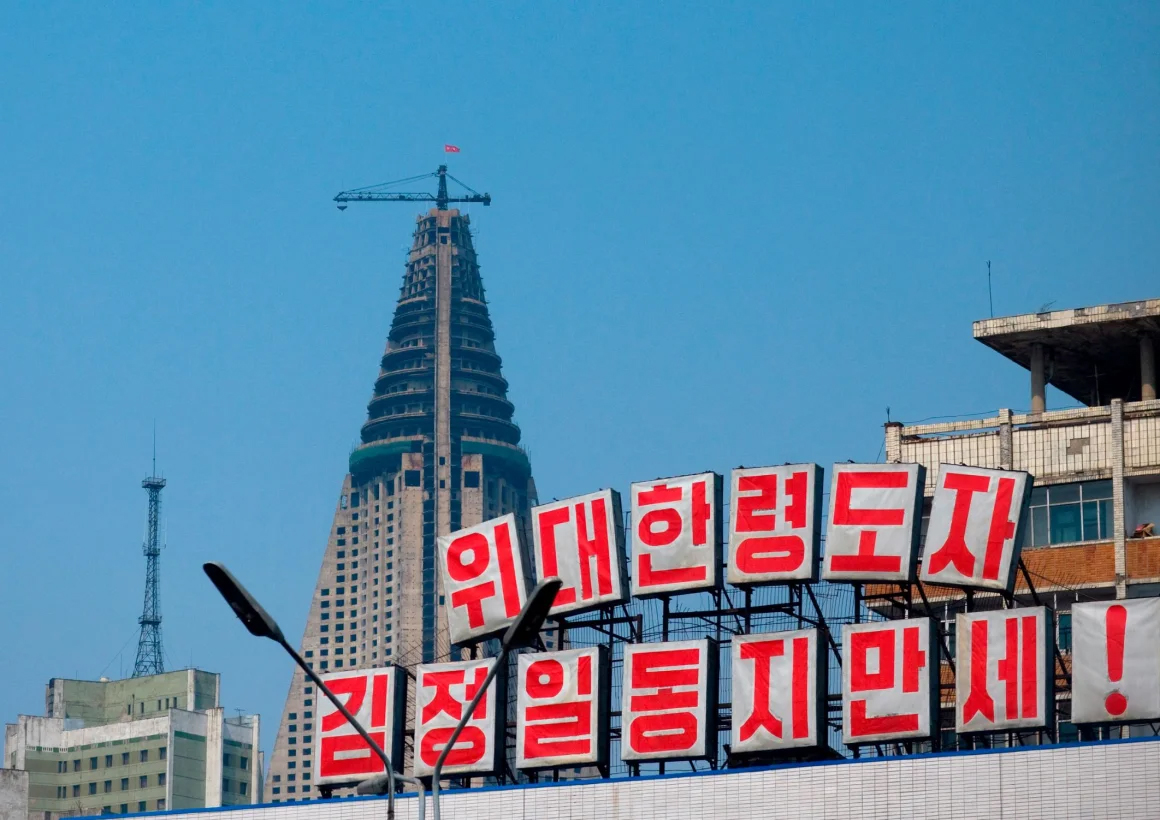
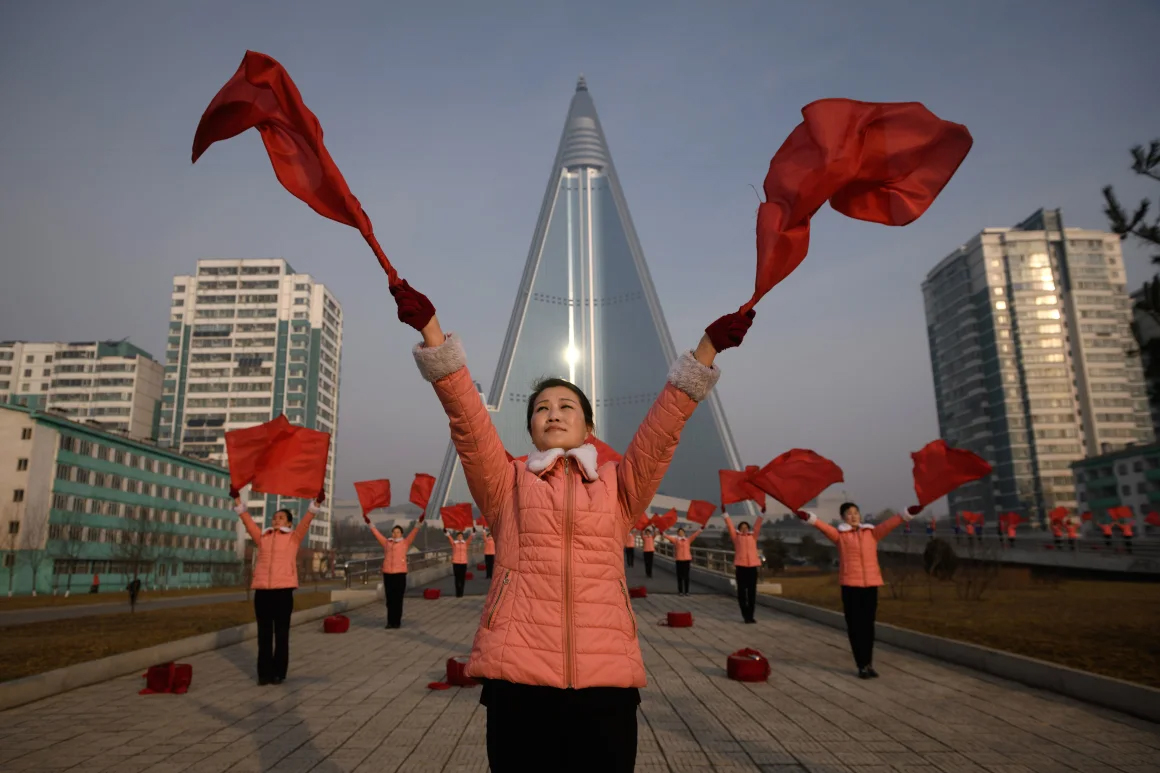
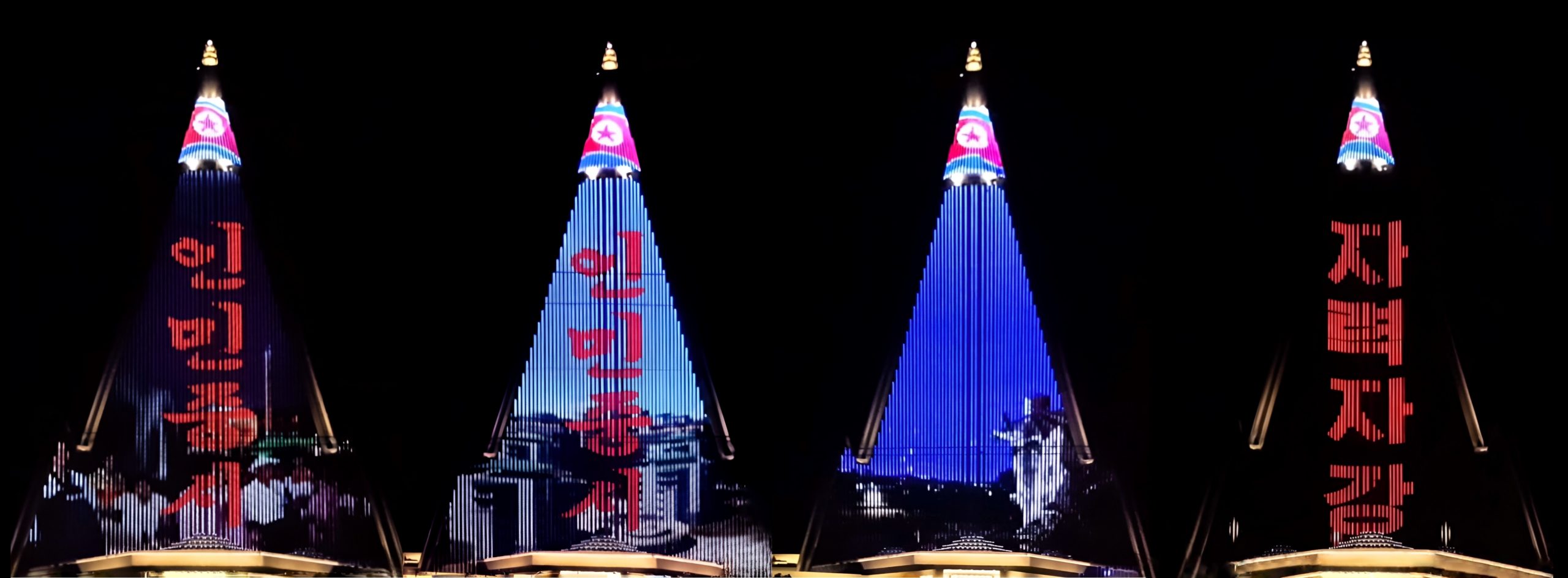
In 2018, the government turned the building into a massive digital display screen using LED lights along its facade. These displays feature dramatic nationalistic animations: North Korean flags, fireworks, propaganda slogans, and footage of military parades. It’s a clever tactic—by transforming the exterior into a propaganda tool, the regime continues to reap symbolic value from a building that still isn’t serving its intended function.
Yet, the hotel remains closed to the public, and its mysterious interior continues to fuel speculation.
Symbolism: What the Ryugyong Really Represents
The Ryugyong Hotel is not just a building; it is a symbol, and like many symbols, it is multifaceted and contradictory.
To the North Korean government, it is a sign of:
- Technological potential
- National strength
- Revolutionary vision
To critics and foreign observers, it is a symbol of:
- Political delusion
- Economic failure
- Authoritarian excess
Architecturally, it is unique—one of the tallest unoccupied buildings in the world, with a shape that has drawn comparisons to:
- A pyramid or obelisk
- A sci-fi spaceship
- A giant missile, given its triangular structure and location in a militarized city
In the end, the hotel reflects the core paradox of North Korea itself: a regime obsessed with grandeur and global recognition, yet trapped by isolation, secrecy, and dysfunction.
The Ryugyong Hotel in Pop Culture and Global Fascination
Over the years, the Ryugyong Hotel has become a kind of internet legend.
It frequently appears in:
- YouTube documentaries on abandoned places
- Reddit threads on “creepiest buildings in the world”
- Architecture blogs and dystopian fiction
Some even refer to it as the “World’s Largest White Elephant”—a massive project with no clear use or function.
Photographers and journalists have tried for years to gain access, but few have succeeded. Drone footage and satellite images give tantalizing glimpses, but no comprehensive tour has ever been made public.
Conclusion: A Monument Still Waiting for a Purpose
So, what does the future hold for the Ryugyong Hotel?
It’s hard to say. Despite its completed exterior, the hotel has never served its original purpose. The building stands tall, casting a long shadow—both literally and metaphorically—over Pyongyang.
In many ways, the Ryugyong is a mirror: what one sees in it depends on perspective.
- To the regime, it’s a reclaimed symbol of glory.
- To critics, it’s a cautionary tale.
- To architects, it’s a structural enigma.
- To the world, it’s a haunting curiosity.
And maybe that’s why it continues to capture the imagination. In a country shrouded in secrecy, the Ryugyong Hotel is a towering mystery—a silent giant, watching over a city that both reveres and ignores it.
Until the day its doors finally open (if they ever do), the Ryugyong Hotel will remain what it has always been: a dream suspended in concrete and glass.


