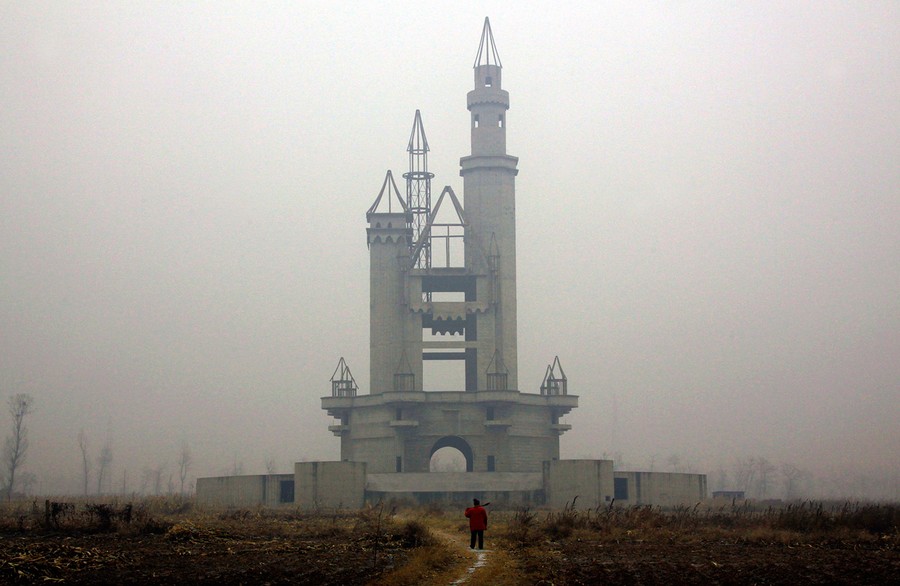
Once envisioned as China’s answer to Disneyland, Wonderland Amusement Park was supposed to be the largest amusement park in Asia. Located about 20 miles northwest of Beijing in Chenzhuang Village, the project aimed to combine fantasy, fun, and commercial power on an epic scale. But today, Wonderland stands as a symbol of ambition gone awry—a half-finished ghost of a dream that was never fully built, never opened, and never fulfilled.
The Vision: China’s Disneyland
In the mid-1990s, Reignwood Group, a Thai-Chinese investment firm, announced plans to construct a 120-acre amusement park on the outskirts of Beijing. With castles, roller coasters, and family-friendly attractions, Wonderland was designed to rival Disneyland in both size and spectacle. Developers hoped it would attract millions of tourists, boost local economies, and become a beacon of modern entertainment in China’s rapidly growing economy.
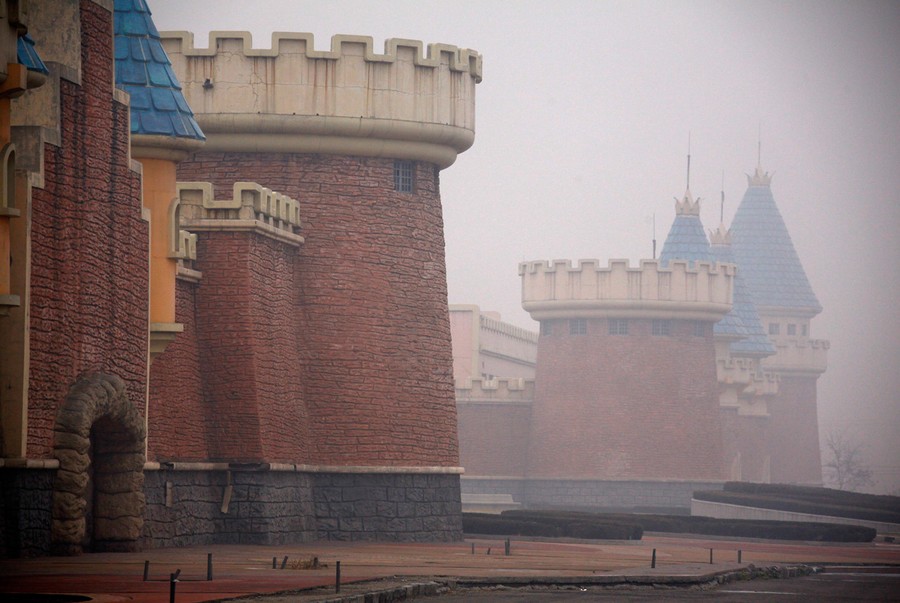
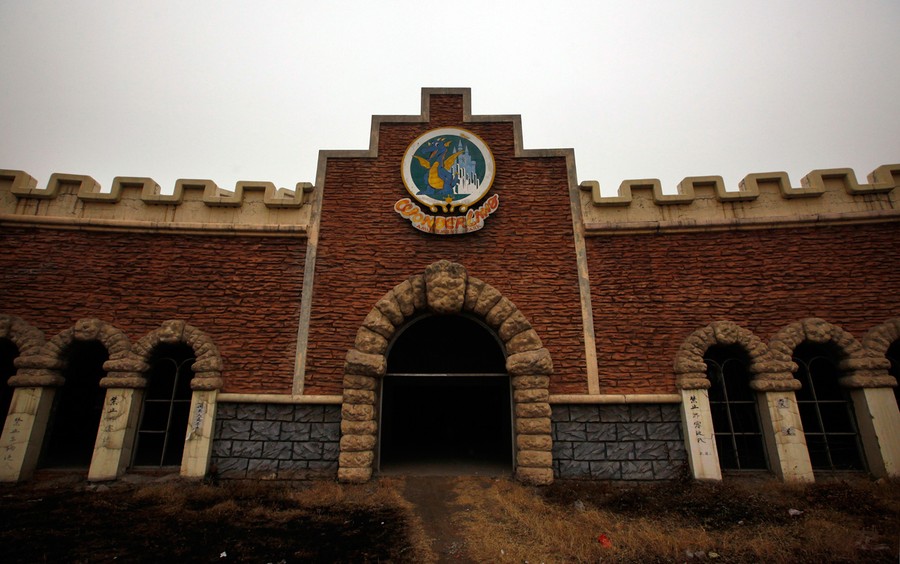
The scale was massive. Fantasy castles and medieval-style buildings began rising from the farmland. The park was to include a shopping district, luxury hotels, and high-end restaurants. It was pitched as a flagship destination for a new era of Chinese domestic tourism.
The Problem: Land, Money, and Politics
Construction halted in 1998, not because of lack of vision, but because of deep-rooted problems in the execution. The primary issue was a land dispute between developers and local farmers. Farmers, whose fields were being bought out and bulldozed for construction, protested unfair compensation and alleged coercion. Some refused to give up their land.
At the same time, there were signs of financial trouble. Developers may have overestimated their access to funding or underestimated the costs. There were rumors of corruption and mismanagement. As disputes dragged on, investors pulled out, and construction ground to a halt.
The Result: A Skeleton Park
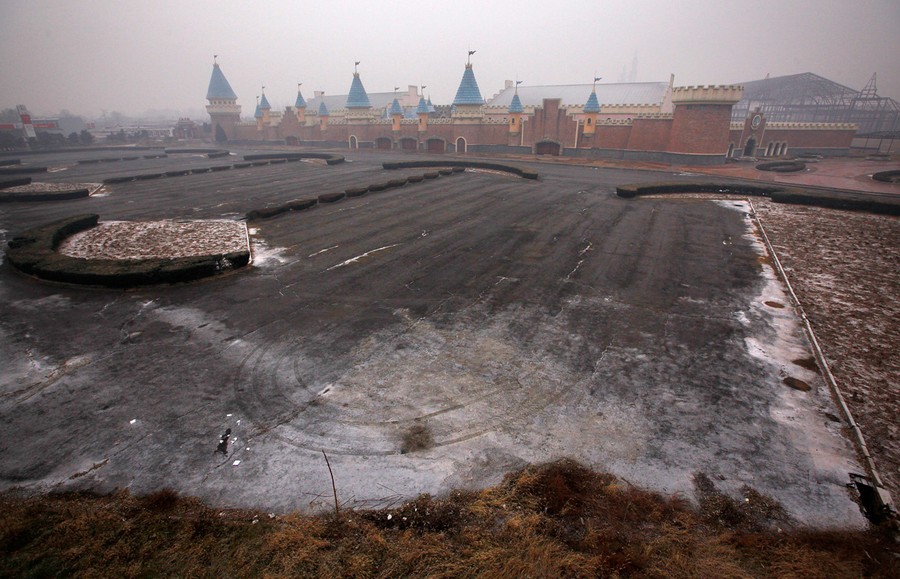
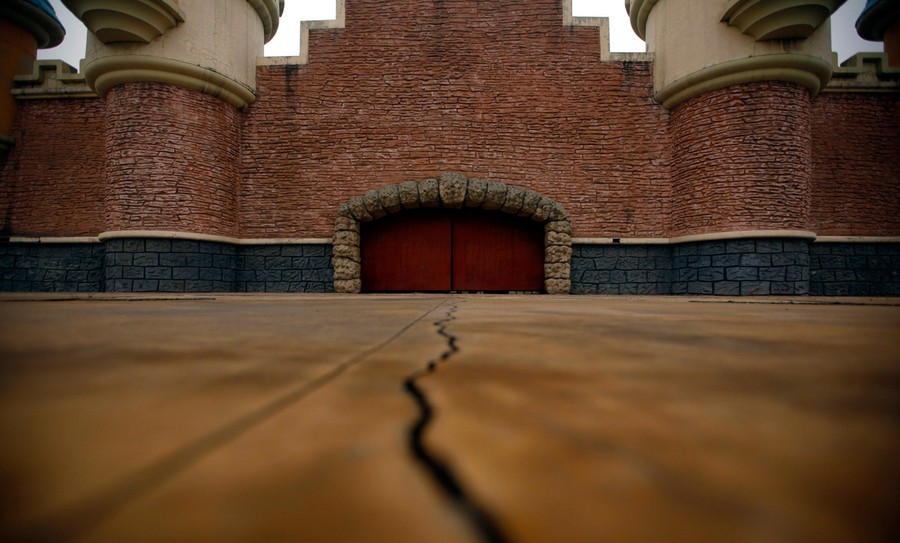
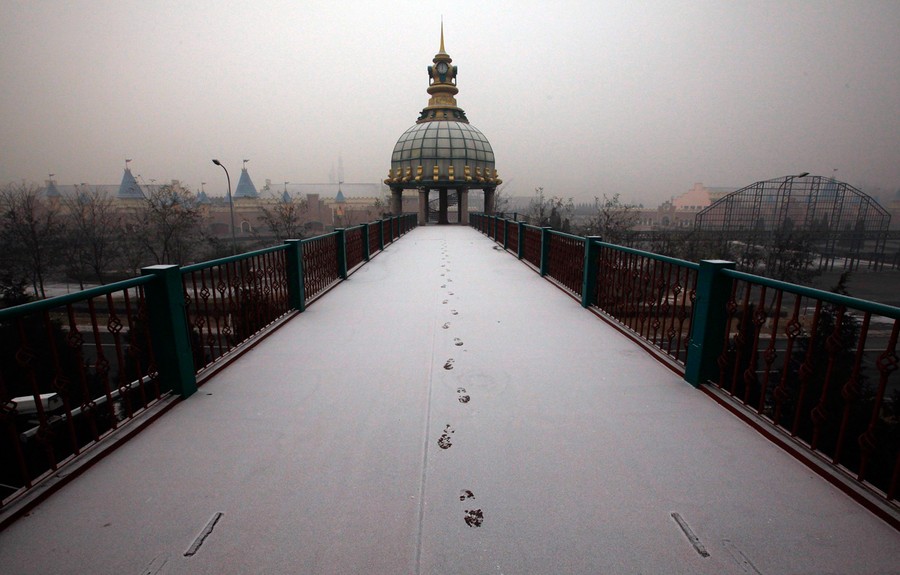
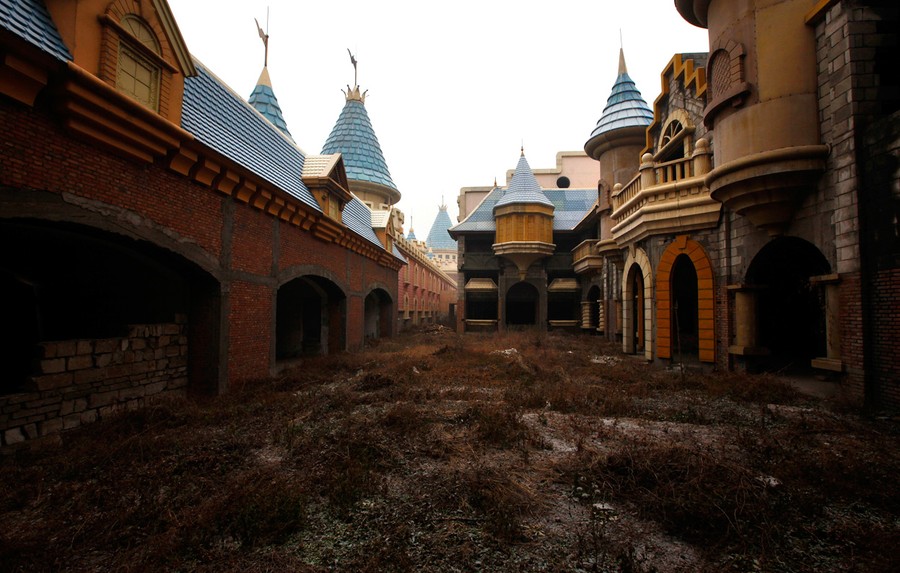
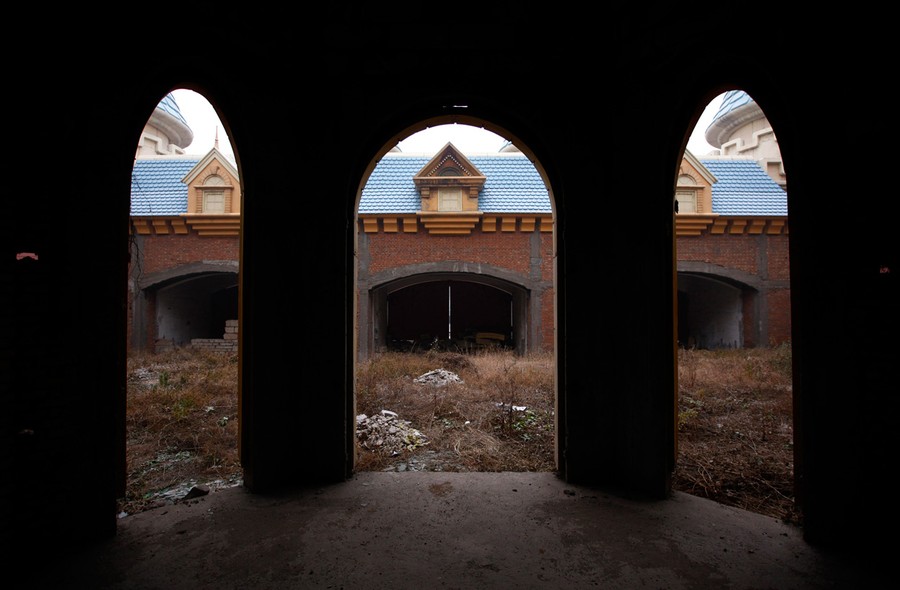
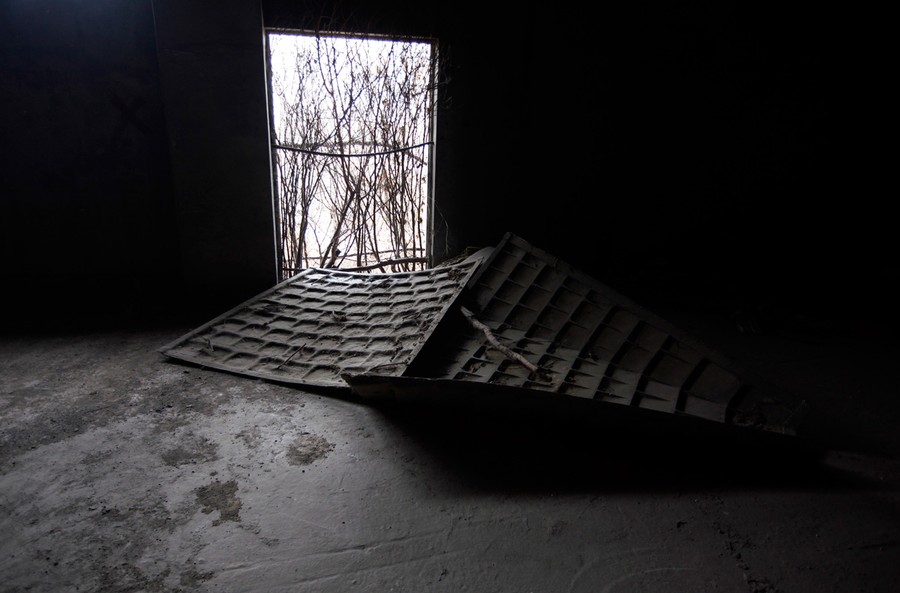
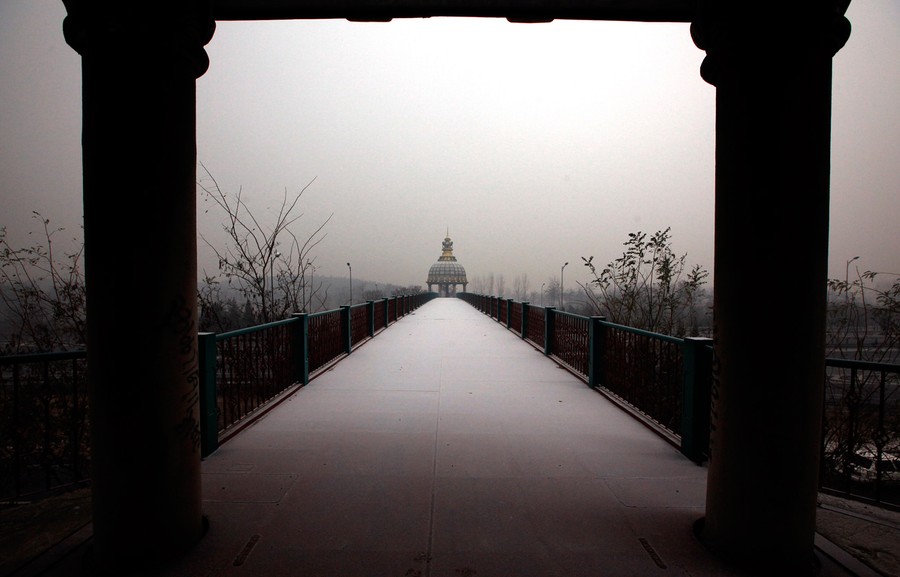
For over a decade, the unfinished husk of Wonderland stood silently against the rural landscape. Giant castle turrets rose above the fields like concrete mirages. Weeds grew in the cracks of wide, empty walkways. Farmers returned to the surrounding land and began growing crops again—some even planted right up to the edges of abandoned rides and parking lots.
The contrast was jarring. Gothic fantasy architecture rotted under Beijing’s grey skies while cabbages and corn thrived nearby. What was supposed to be a symbol of modern progress became a surreal, post-apocalyptic backdrop—a playground that had never seen a single child.
The Afterlife: A Photographer’s Paradise
Though Wonderland never opened, it gained a second life online. Urban explorers and photographers discovered the haunting beauty of its decay. Images of its crumbling castle, rusting steel frames, and overgrown paths became iconic of “abandoned China.”
International media picked up the story, often framing it as a cautionary tale of overzealous development, bureaucratic failure, and the darker side of China’s rapid urbanization.
Some compared it to other failed mega-projects around the world—massive investments driven by hype and image rather than sustainable planning.
The Demolition and Redevelopment
In 2013, the ruins of Wonderland were finally demolished. The land was sold off, and construction began on a new, more pragmatic development: a shopping mall. In a twist of irony, a consumer complex took the place of the fantasy park, reflecting the country’s booming retail economy more than its theme park ambitions.
Today, there is almost no physical trace of Wonderland, only satellite memories and a few scattered photos on the internet. But its story still echoes as part of the narrative of modern China—ambitious, fast-moving, and sometimes recklessly optimistic.
Conclusion: Fantasy Meets Reality
Wonderland Amusement Park never hosted a single guest, but it made a strong impression. It symbolized the clash between fantasy and local reality, where dreams of grandeur ran up against the gritty facts of land rights, budgets, and governance.
It reminds us that bigger is not always better, and that success in development requires more than vision—it requires consent, planning, transparency, and cultural alignment. In the case of Wonderland, the dream was big, but the foundation—literally and figuratively—was weak.
And so, Wonderland became something Disney never was: a monument to the limits of unchecked ambition.


