
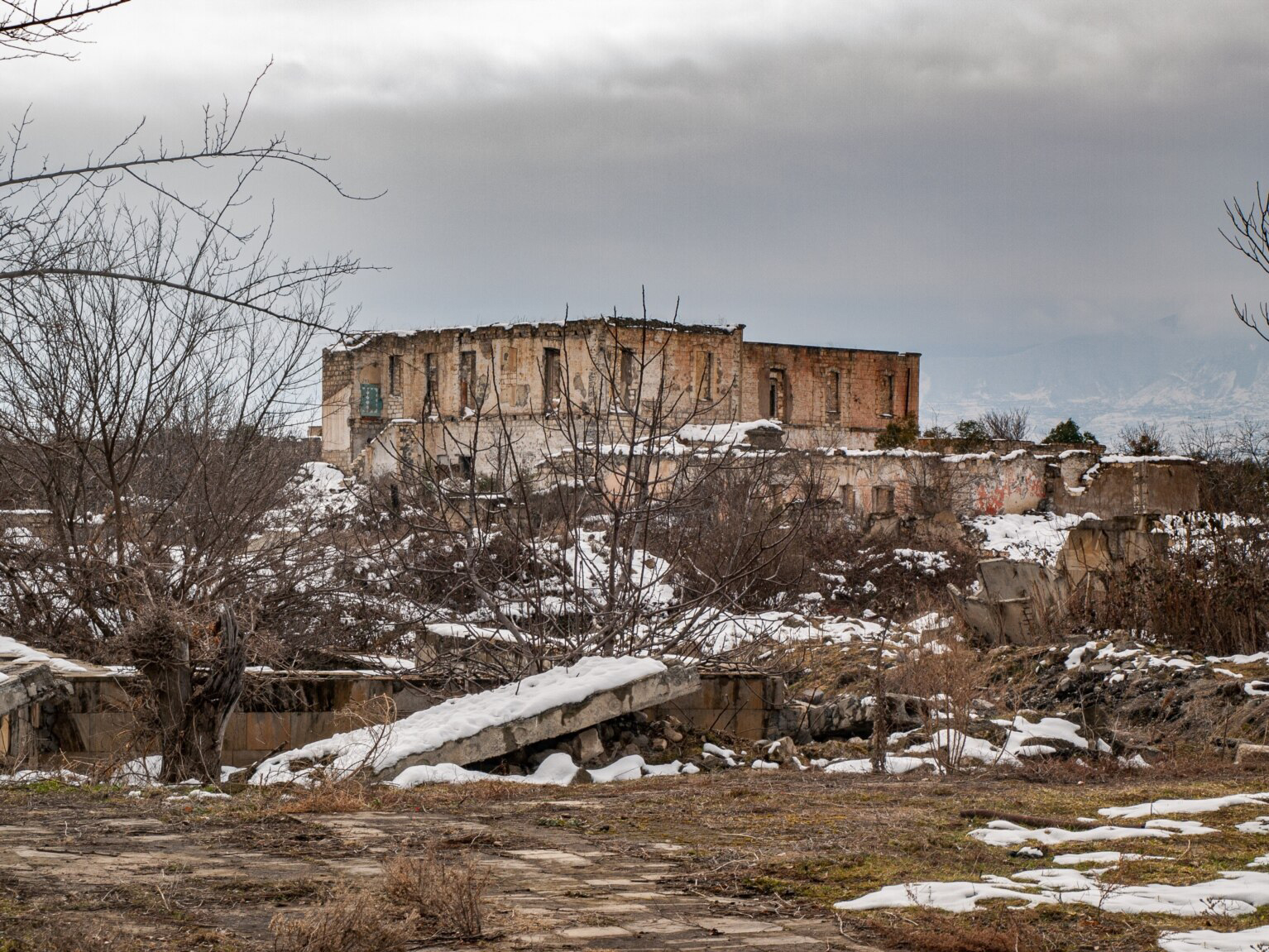
On the plains of western Azerbaijan, not far from the foothills of the Karabakh mountains, lies Agdam (often written Aghdam): a shattered cityscape of roofless houses, broken factories and overgrown streets. Once a lively regional centre with tens of thousands of residents, it became one of the most striking ghost cities of the post-Soviet world after the First Nagorno-Karabakh War. Today, Agdam stands at a crossroads between ruin and rebirth, symbolising both the devastation of conflict and the long, slow work of reconstruction.
Origins and Growth of a Regional Town
Agdam was founded in the eighteenth century and gained official city status in 1828, during the era of the Russian Empire’s expansion into the South Caucasus. Its location on the eastern edge of the Karabakh Range, about 26 kilometres from Khankendi (Stepanakert), positioned it as a local hub between the mountain communities to the west and the flatter agricultural lands to the east.
Under the Russian Empire, and later the Soviet Union, Agdam steadily grew. During the Soviet period it became the administrative centre of Agdam District and developed a mixed economy of agriculture and light industry. By the late 1980s the town had nearly 30,000 inhabitants, predominantly ethnic Azerbaijanis.
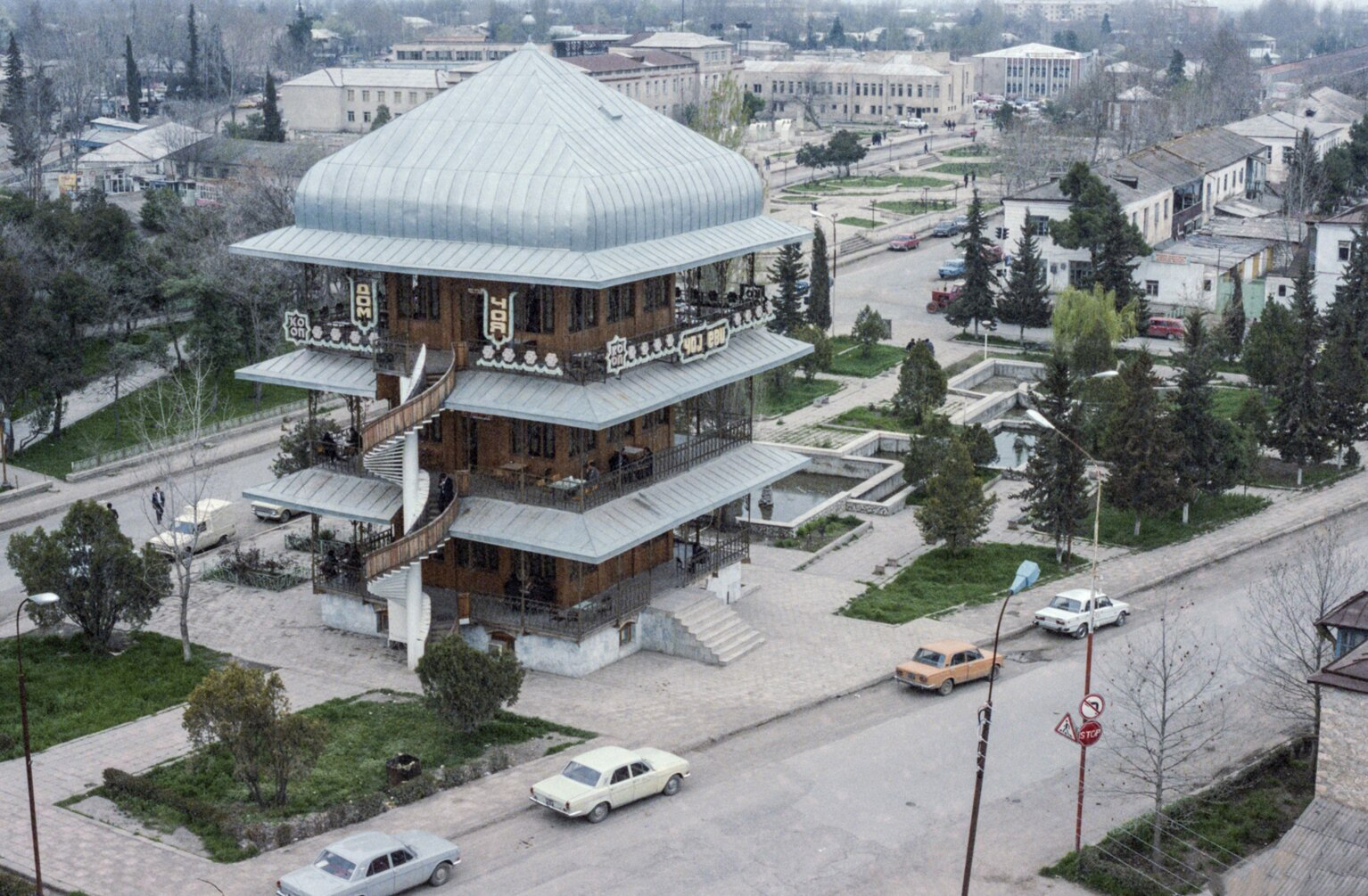
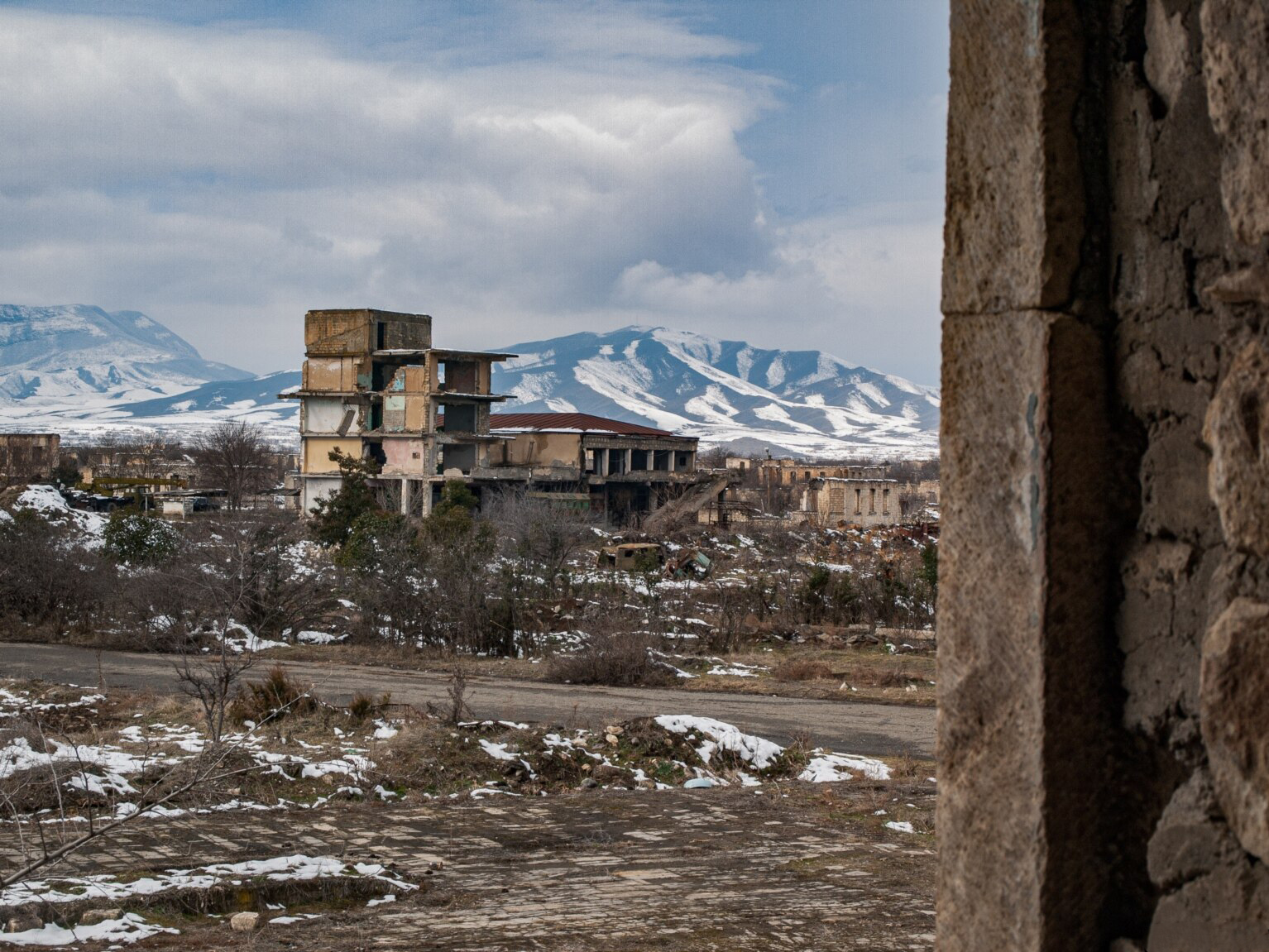
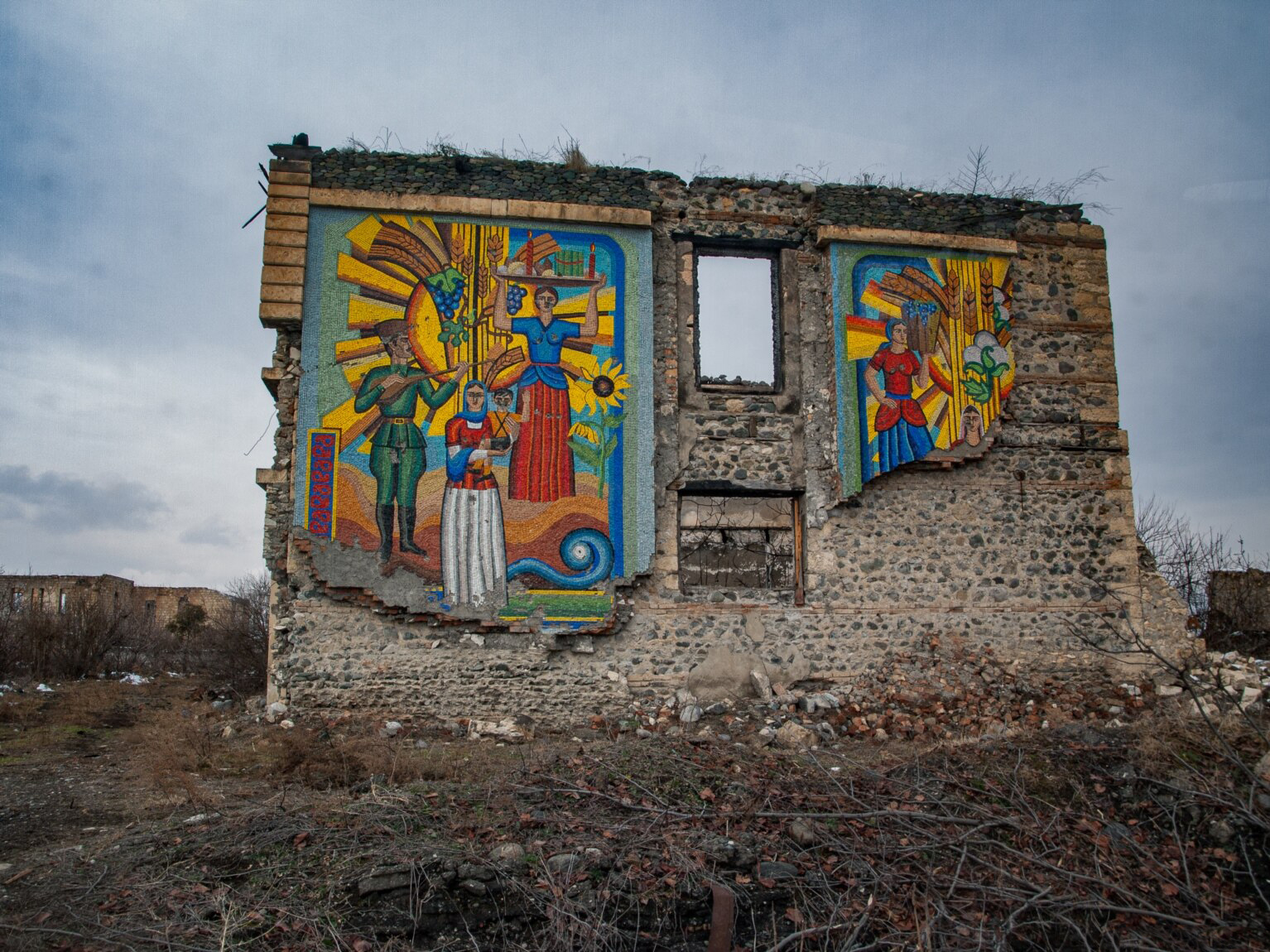
The Soviet system left a strong imprint on the town’s layout and life. Broad avenues and apartment blocks radiated out from the centre. State enterprises produced butter, wine and brandy, and the town boasted machine-building and silk factories. An airport and two railway stations linked Agdam to the rest of the Azerbaijan SSR. Cultural life flourished in the form of schools, clubs and a distinctive local football culture: the Qarabağ FK football club, now famous in European competitions, traces its roots back to the town.
From Periphery to Front Line: War in Nagorno-Karabakh
The peace of Soviet Agdam began to unravel in the late 1980s. As the Soviet Union weakened, tensions over Nagorno-Karabakh – a region internationally recognised as part of Azerbaijan but with a majority ethnic Armenian population – escalated into open conflict. By 1988–1989, inter-ethnic violence, mass displacement and armed clashes were spreading across the region.
With central authority in Moscow fading, local militias and the newly formed armed forces of Armenia and Azerbaijan took over the conflict. Agdam, close to the contested territory, acquired strategic importance. Azerbaijani forces used the town as a base for operations and artillery positions, while surrounding rural areas became staging grounds for both sides.
In July 1993, after months of intense fighting, Armenian and allied Nagorno-Karabakh forces launched a major offensive against the town. Heavy shelling caused widespread destruction, and most of the civilian population fled eastwards into the rest of Azerbaijan before the city was fully captured. Agdam fell on 23 July 1993, marking one of the most dramatic turning points of the war for Azerbaijani society.
Human Rights Watch and later observers described Agdam as a place that suffered both from the fighting and from systematic destruction after its capture. Buildings were looted and stripped for materials; many residential areas were levelled. Thousands of former residents became internally displaced people, resettling in camps and host communities across Azerbaijan where many remained for decades.
A City Emptied: Agdam as a Ghost Town
For nearly three decades after 1993, Agdam lay in a zone controlled de facto by the self-proclaimed Nagorno-Karabakh Republic, though it remained internationally recognised as part of Azerbaijan. The front line ran just beyond the ruins, and the city effectively became a buffer zone between Armenian and Azerbaijani forces.
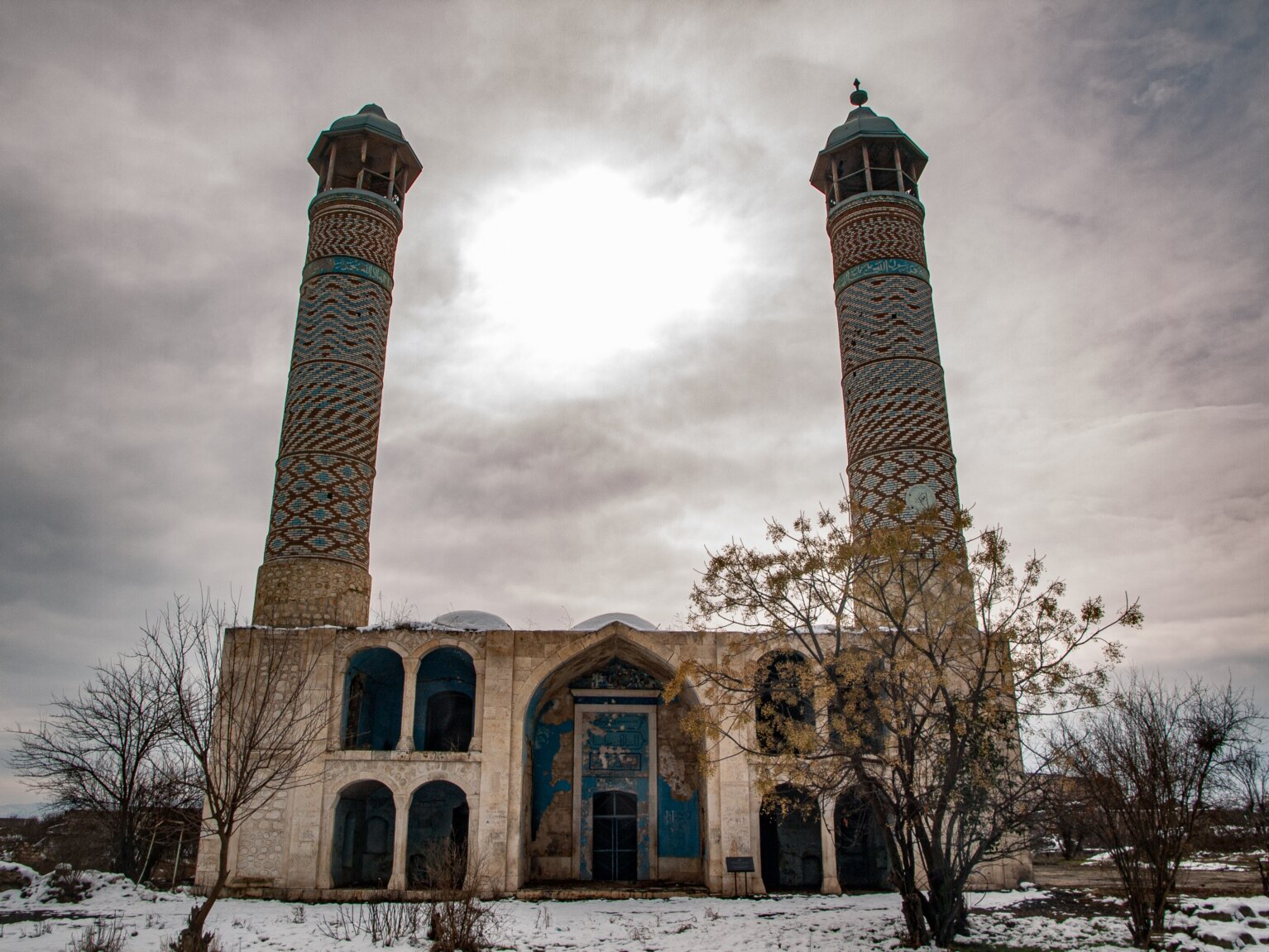
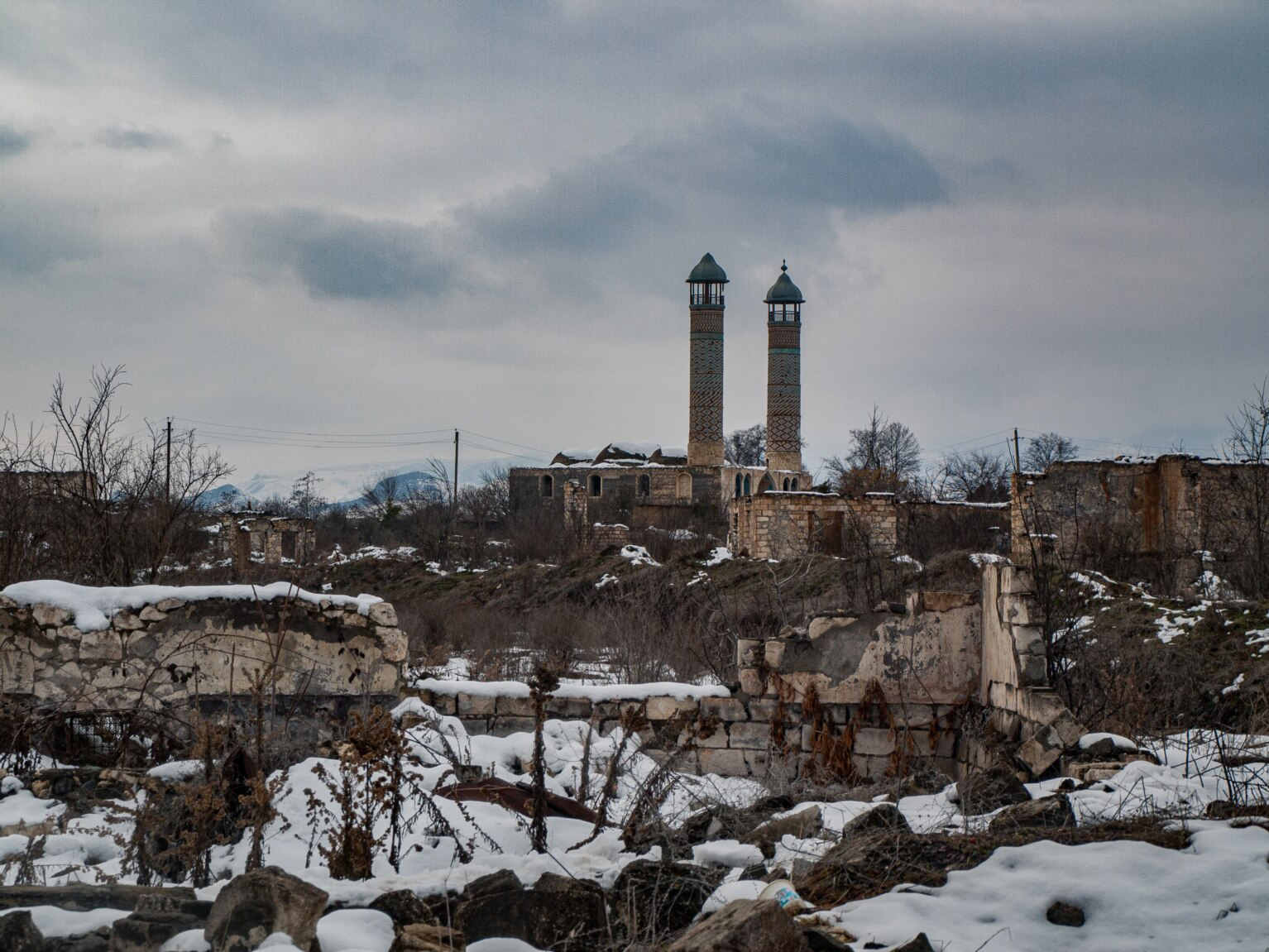
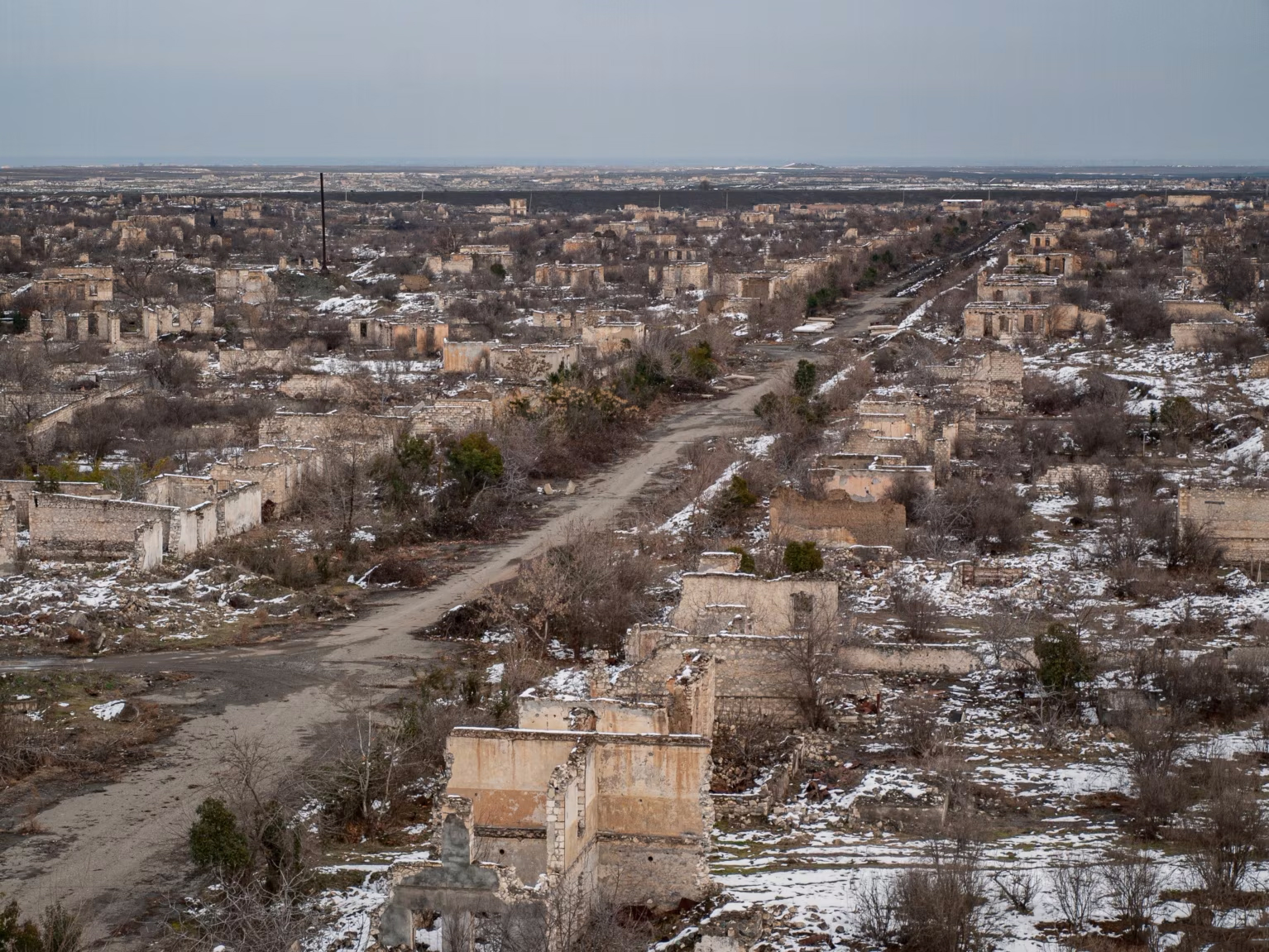
A 2005 fact-finding mission by the OSCE described Agdam as being in “complete ruins” with the notable exception of the central mosque. The report noted widespread scavenging for bricks, metal and other building materials, contributing to the gradual dismantling of whatever war had left standing. Photographers, journalists and a handful of adventurous travellers who visited during these years recorded scenes of extensive devastation: apartment blocks reduced to roofless shells, streets swallowed by vegetation, and public buildings collapsed into heaps of concrete and rebar.
Because access was restricted, especially for outsiders, Agdam acquired an almost mythical status. It was sometimes labelled the “Hiroshima of the Caucasus” in media reports, a grim metaphor pointing to the scale of destruction and the eerie emptiness of a once-busy town.
Despite the desolation, life did not vanish completely from the wider district. Rural areas around the ruins were used for agriculture, and troops or local residents occasionally passed through. Cattle sometimes wandered among the crumbling buildings. One photographer visiting in the 2000s reported that the floor of the mosque had been fouled by livestock, reflecting the general neglect of the site.
Landmarks in Ruin: Mosque, Museums and Cemeteries
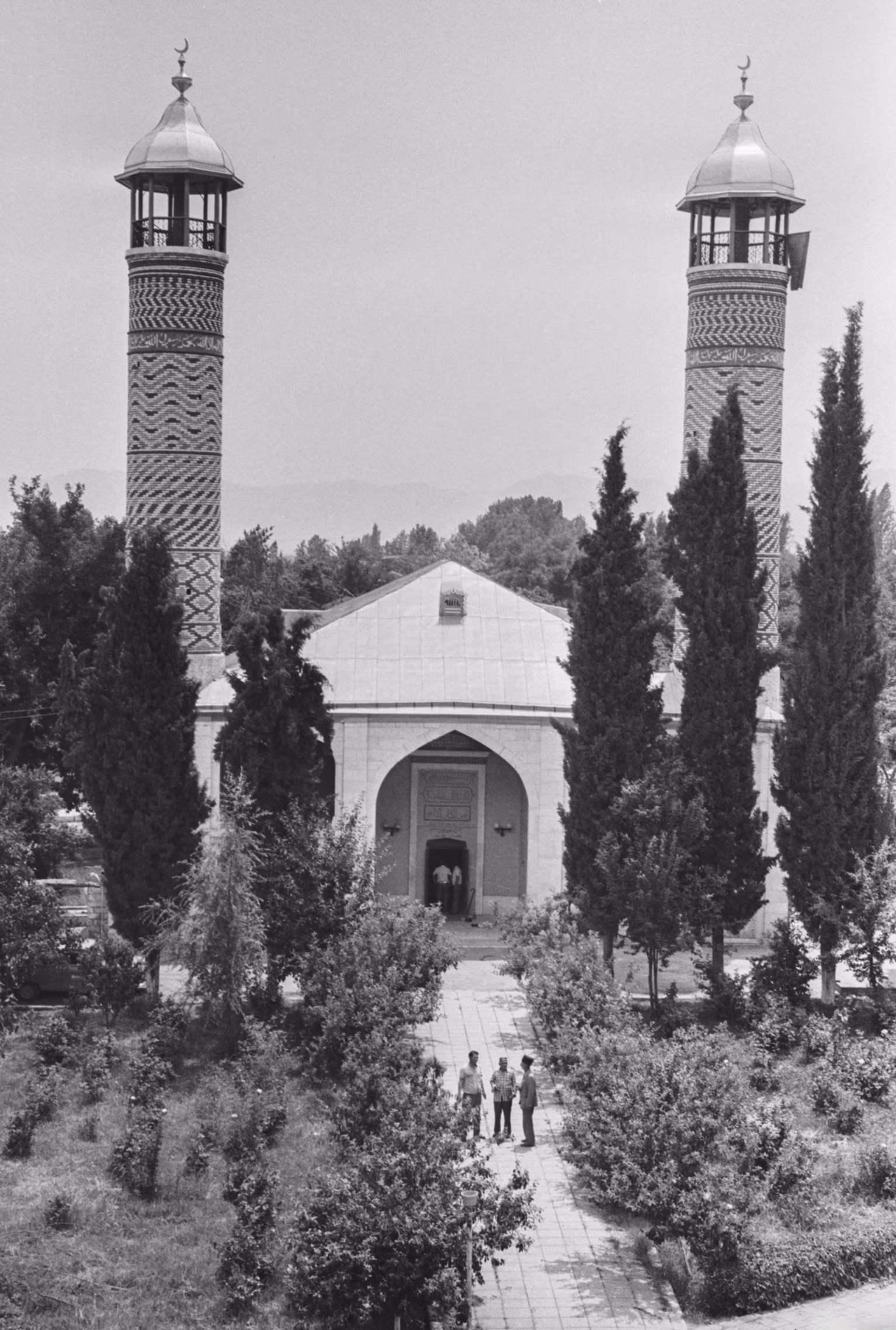
Among the ruins of Agdam, several locations gained particular symbolic weight. The Agdam Juma Mosque, a large nineteenth-century structure with twin minarets, was one of the few substantial buildings left substantially standing. During the occupation period it remained uncared for, its walls covered in graffiti, its interior used as a shelter and, at times, as a cowshed.
Nearby, the remains of the Agdam Bread Museum told another story. Before the war this unusual institution was devoted to the history and cultural significance of bread, displaying ancient tools, artefacts and even a large working bakery. The museum building was badly damaged during the conflict, and what survived was gradually looted or collapsed, leaving only fragmentary structures.
Cemeteries around Agdam also suffered. Reports by Western journalists and diplomats described desecration, broken headstones and even exhumed graves, including at the historic Imarat Garvand cemetery, where several eighteenth-century tombs once stood. For many Azerbaijanis, this damage to the resting places of their ancestors added an extra layer of trauma to the loss of homes and livelihood.
Dark Tourism and the Ethics of Ruins
During the years when Agdam lay in ruins, it attracted occasional attention from photographers, conflict reporters and travellers interested in so-called “dark tourism”: visiting places associated with tragedy, war or disaster. Articles and photo essays described a ghost city where visitors could climb the minarets of the mosque to look out over a sea of ruins.
These accounts often debated the ethics of such visits. On one hand, the empty streets and shattered buildings provided a stark visual record of the human cost of the Nagorno-Karabakh conflict. On the other, visiting a destroyed city whose former residents remained in exile risked turning suffering into spectacle. Because access was controlled by the de facto authorities and the area remained militarised, tourism never became widespread, but Agdam nonetheless became well known on lists of the world’s “abandoned cities”.
Return, Demining and the Challenge of Reconstruction
The status of Agdam changed dramatically after the 2020 Nagorno-Karabakh war. A ceasefire agreement brokered in November 2020 required the withdrawal of Armenian forces from several territories surrounding Nagorno-Karabakh, including Agdam District. On 20 November 2020 the town and its surroundings were returned to Azerbaijani control.
Shortly afterwards, Azerbaijan’s president Ilham Aliyev and First Lady Mehriban Aliyeva visited the ruined city, promising its restoration. Clean-up operations began, but the first and most urgent task was mine clearance. Both during and after the conflict, the wider region had been heavily contaminated with landmines and unexploded ordnance. Azerbaijan’s national mine action agency, ANAMA, together with the armed forces and international partners, undertook extensive surveying and clearance.
In 2022 the government adopted the “Great Return” programme, a state plan to enable tens of thousands of displaced families to go back to the “liberated territories” between 2022 and 2026. The scheme focuses on rebuilding basic infrastructure and housing in selected towns and villages once mine clearance reaches acceptable safety levels.
Agdam features prominently in reconstruction plans. In May 2021 foundations were laid for new public buildings, including a school, a “Victory Museum”, an open-air occupation museum and an industrial park. Official concept designs envision a “smart city” with green energy, modern residential districts, public transport powered by electricity, and a large green belt surrounding the urban area. Eight nearby villages are expected to be administratively merged with the new Agdam, with a projected future population of around 100,000.
At the same time, Azerbaijan has begun to organise limited visits to the area. Since early 2022, bus tours have operated from Baku to Agdam and other retaken locations, allowing former residents and other citizens to see the ruins and observe early reconstruction work. Dark-tourism writers have noted that as the city is rebuilt and repopulated, Agdam’s period as a stark, abandoned ghost town will gradually pass into history.
Memory, Loss and the Future of Agdam
Agdam today occupies a complex place in Azerbaijani memory. For many displaced families, it is the lost hometown etched in childhood recollections: tree-lined streets, busy markets, football matches and harvests. For others, particularly those who visited in the 1990s and 2000s, it is recalled as an eerie ruin where only the mosque’s minarets rose above a flattened landscape.
The city’s reconstruction raises questions about how this layered history will be remembered. Official plans suggest that certain sites, such as the mosque, the Bread Museum and the Imarat cemetery, will be restored or commemorated as cultural heritage. At the same time, entirely new residential districts, parks and industrial zones are being planned on or near the footprints of destroyed neighbourhoods.
Balancing the desire for a modern, forward-looking city with respect for what was lost will be a delicate task. Decisions about which ruins to preserve, which to clear and how to interpret them in museums or memorials will shape how future generations, including the children and grandchildren of today’s displaced families, understand Agdam’s story.
Conclusion: Between Ruin and Renewal
Agdam’s journey from thriving Soviet-era town to ravaged ghost city, and now to a major reconstruction project, encapsulates the broader trajectory of the Nagorno-Karabakh conflict and its aftermath. The shattered buildings and empty streets spoke for decades of unresolved war and displacement. Minefields and ruins testified to how long violence can echo after front lines fall silent.
Now, as roads, utilities and new housing begin to appear, Agdam is also becoming a symbol of return and renewal for Azerbaijanis who have lived in exile within their own country for more than a generation. The transformation will not erase the scars of the past: memories of destruction, depopulation and lost heritage will endure alongside new schools, factories and homes.
In this sense, Agdam is more than just a ghost city or a reconstruction site. It is a living chapter in the region’s ongoing attempt to move from conflict towards a more stable future. Whether the rebuilt Agdam can become a place not only of modern infrastructure but also of shared understanding and lasting peace remains one of the most important unanswered questions of the Caucasus.


