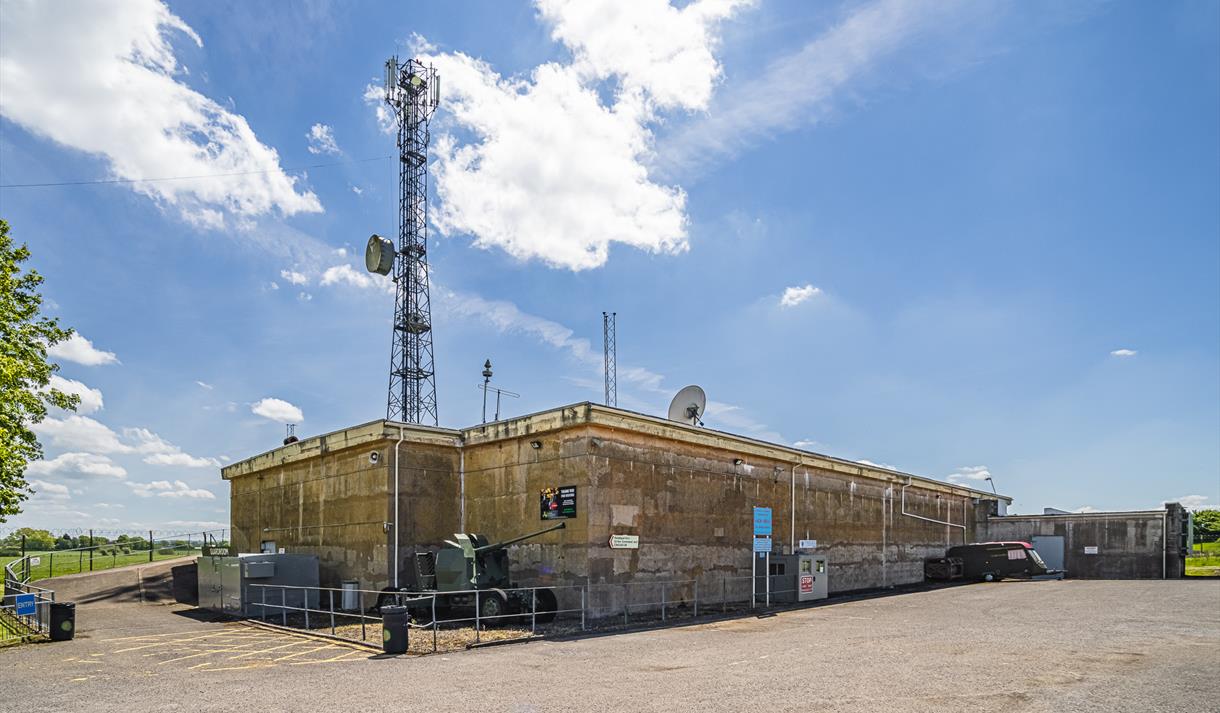
Just outside the market town of Nantwich, in the quiet Cheshire countryside, sits a building that looks, at first glance, rather unremarkable: a low concrete block with a mast, a few neutral signs and a car park. It is difficult, standing there with birdsong and canal boats nearby, to imagine that this was once one of the most secret places in Britain. For decades Hack Green Secret Nuclear Bunker formed part of the United Kingdom’s hidden infrastructure for war, designed to keep government functioning in the aftermath of a nuclear attack. Today it has been declassified, restored and opened as a Cold War museum, allowing visitors to walk through rooms where officials would once have planned for the unthinkable.
From Decoy to Radar Station: Origins in the Second World War
Hack Green’s military story begins not with nuclear missiles but with the Luftwaffe. During the Second World War, the area was selected as a “Starfish” site, a decoy intended to protect the important railway junction at Crewe. Fires and lights could be ignited at Hack Green during night air raids, luring German bombers away from the genuine target and into open countryside.
Soon the decoy site was joined by a ground-controlled interception radar station. This radar post formed part of the air defence network that guided British fighters to intercept incoming enemy aircraft, a technology that was still in its relative infancy but already proving decisive in the skies over Britain.


The ROTOR Era and the R6 Bunker
With the onset of the Cold War in the late 1940s and early 1950s, the perceived threat shifted from piston-engined bombers to high-speed jet aircraft, and Britain embarked on an extensive upgrade of its radar defences under a scheme known as ROTOR. Hack Green was modernised as part of this programme. A substantial semi-sunk reinforced concrete bunker—classified as a type R6—was built to house a new ground-controlled interception station.
This R6 structure extended for over fifty metres, with thick concrete walls and a flat roof protected by an overhanging parapet. The bunker was largely below ground, giving it both physical protection and a measure of secrecy. It formed part of a chain of such sites, each feeding information into the wider air defence system.
The radar station became officially known as RAF Hack Green, and later acquired the call sign “Mersey Radar”. It provided air traffic control services to military aircraft transiting through civil airspace in the North of England, bridging the gap between purely military radar and civil aviation control. The facility remained in use through the 1950s and early 1960s, before being closed and left dormant as technology and defence priorities moved on.
Reinvented for Nuclear Government: RGHQ 10.2
In the 1970s, the site gained an entirely new purpose. The Home Office took over the derelict R6 bunker and set about converting it into a Sub-Regional Headquarters—later redesignated Regional Government Headquarters (RGHQ) 10.2. This was one of a network of hardened bunkers across the country intended to provide continuity of government after a nuclear strike.
The conversion was drastic. The earlier radar interior was stripped out and the structure was rebuilt internally as a three-level complex in parts, thanks to the insertion of a mezzanine floor. New plant rooms, operations centres, dormitories and stores were added, and a separate generator building was constructed to ensure independent power. A tall radio mast, bristling with aerials and dishes, rose above the site to handle communications in a shattered landscape.
Although sources differ on the exact figure, the redevelopment in the 1980s is widely stated to have cost tens of millions of pounds, a substantial investment for a facility that, the government hoped, might never be used in anger.
Built to Withstand the Unthinkable
Hack Green was more than an office block buried in the ground. It was engineered as a fortress against blast, radiation and fallout. The bunker’s reinforced concrete walls were designed to resist the effects of a nuclear detonation some distance away, with calculations suggesting it could withstand the mechanical and radioactive impact of a one-megaton explosion at around 2.6 kilometres, or a 300-kiloton device at shorter range. Heavy blast doors guarded the entrances, capable of resisting high-velocity impacts without spalling fragments into the interior.
Air intakes were shielded by steel baffles to deflect flying debris, and the interior had its own filtered ventilation and decontamination systems. Massive diesel generators in the adjacent plant room could provide power independently of the national grid. In theory, the bunker could be sealed off and sustain a full complement of staff for weeks, if not months, in a world where the surface was contaminated by radioactive fallout.


Life and Work in a Post-Strike Britain
The RGHQ network, including Hack Green, was never activated for a real nuclear emergency; its role remained hypothetical. Nonetheless, exercises and planning documents give some insight into how life inside might have looked. The bunker was intended to house senior regional officials, military staff, communications operators and support personnel. Their task would have been grim: to coordinate emergency services, ration scarce resources, maintain law and order and act as the eyes and ears of central government in a devastated region.
Training exercises in the 1980s, such as the Home Office’s “Brightfire”, tested both the communications systems and the practicalities of living in such close quarters. Reports noted shortcomings that were surprisingly mundane given the apocalyptic context, from inadequate laundry facilities to insufficient dormitory arrangements and even non-functioning lavatory door locks. Officials recommended improvements to morale through recreational items such as newspapers, board games and a table-tennis table—small comforts for people expected to manage the aftermath of nuclear war.
Hack Green Secret Nuclear Bunker
Declassification and a New Life as a Museum
The end of the Cold War in the late 1980s and early 1990s removed much of the perceived need for a dispersed network of bunkers. Around 1992 the government abandoned the RGHQ system and sold off many sites. Hack Green was declassified, purchased by a private owner and, after considerable work, opened to the public in 1998 as the Hack Green Secret Nuclear Bunker museum.
Today the site is run by the Hack Green Cold War & Radar Museum Trust, a registered charity. Visitors pass through the same blast doors that once guarded a top-secret facility and descend into a warren of corridors, operations rooms and sleeping quarters. The museum takes advantage of the bunker’s authenticity: much of the original layout is retained, and period equipment fills the rooms, giving a sense of how it might have looked at high alert during the 1980s.
Exhibits: From Nuclear Weapons to Everyday Objects
One of the most striking aspects of Hack Green today is its extensive collection of Cold War artefacts. The museum claims one of the largest displays of decommissioned nuclear weapons in the world, charting the evolution of the British deterrent and the wider nuclear arms race. Training casings, warhead shells and associated equipment are displayed alongside explanatory material that demystifies their design and purpose.
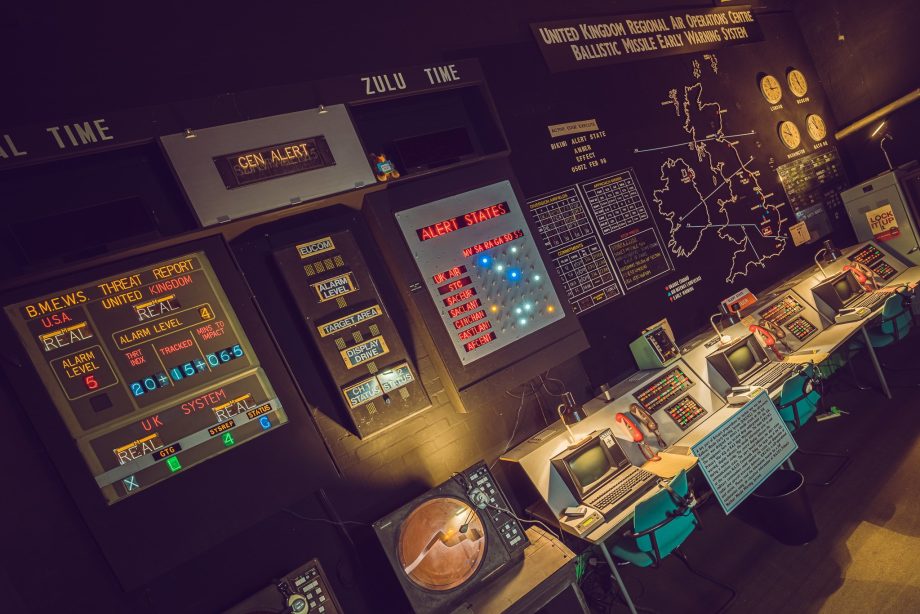
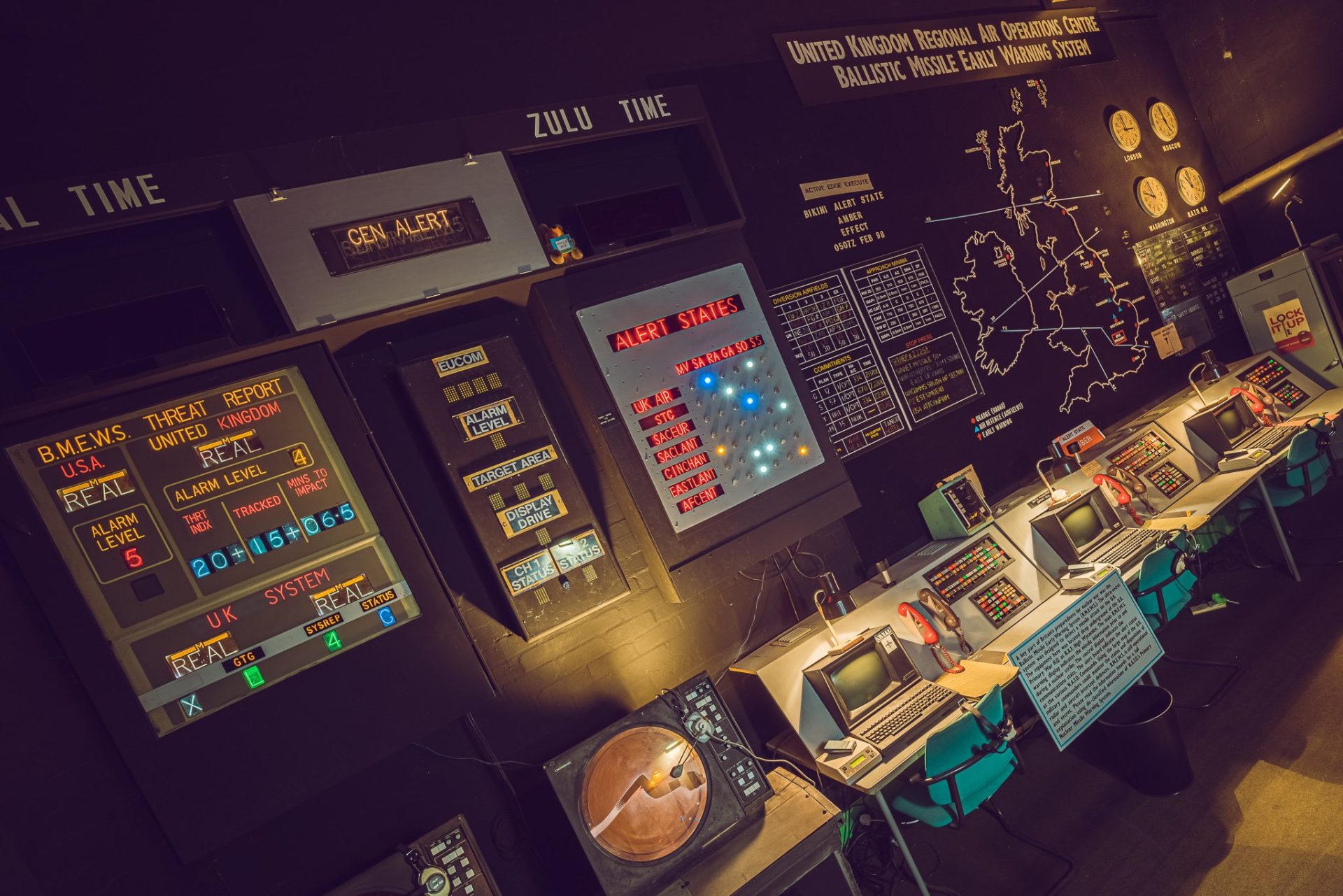
Elsewhere in the bunker, visitors can see original Ballistic Missile Early Warning System (BMEWS) consoles—equipment once used to monitor potential missile launches against the UK. These sit amid banks of analogue telephones, radios, plotting boards and computer terminals, evoking an era when global survival seemed to depend on flickering lights and paper printouts.
Not all exhibits are so grand. Medical rooms show the grim realities of treating blast and radiation injuries with limited resources. A mannequin patient, covered in burns and lesions, gives a sobering sense of the human cost behind the abstract language of megatons and overpressure. Canteens, dormitories and washrooms highlight the cramped and utilitarian conditions in which staff would have lived, far removed from the rural tranquillity above.
For younger visitors, the museum softens some of this darkness with the “Cold War Spy Mice” trail—plush toy mice hidden throughout the complex, which children are encouraged to find and record. This playful element offers a way for families to explore the bunker together without dwelling solely on its more disturbing aspects.


Interpreting the Cold War
Hack Green is not simply a collection of objects; it is a narrative about a period in which the possibility of global nuclear war shaped politics, culture and everyday life. Displays explain civil defence planning, from public information films and pamphlets to the much-debated “Protect and Survive” guidance. Visitors can watch “The War Game”, the once-suppressed BBC drama-documentary that graphically portrayed the likely consequences of a nuclear strike on Britain, and which was considered too disturbing for broadcast for many years.
The museum also explores broader themes such as espionage, proxy wars and the technological competition between East and West. In doing so, it situates Hack Green within a global context, reminding visitors that this quiet bunker in Cheshire was part of a much larger system of confrontation and deterrence stretching from missile silos in the American Midwest to command posts in the Soviet Union.
Hack Green in Popular Culture
Since its declassification, Hack Green has attracted attention beyond the world of military historians and school groups. The bunker has appeared in television programmes such as “Most Haunted: Midsummer Murders”, where its ghostly corridors and wartime associations provided a suitably atmospheric backdrop for paranormal investigations. It also served as a filming location for the music video of “MY KZ, UR BF” by the band Everything Everything, which made use of its stark interiors and vintage technology.
The site has thus entered a second life not only as a museum but as a cultural icon, representing both the secrecy of Cold War government and the fascination that period still exerts on the public imagination.
Legacy and Reflection
Standing today in one of Hack Green’s operations rooms, with its wall maps, telephones and luminous status boards, it is easy to feel a strange tension. On one hand, there is relief that the apocalyptic scenario for which the bunker was designed never came to pass. On the other, there is the sobering recognition of how close the world came, on multiple occasions, to nuclear conflict—and of the resources poured into planning for survival in its aftermath.
Hack Green Secret Nuclear Bunker offers a rare physical link to that era. Unlike many Cold War facilities that remain off limits or have been demolished, it allows the public to step directly into the infrastructure of nuclear planning. As a result, it serves not just as a curiosity or tourist attraction, but as a place of reflection: on secrecy and democracy, on fear and preparedness, and on the fragile nature of the world that lies just beyond its blast doors.