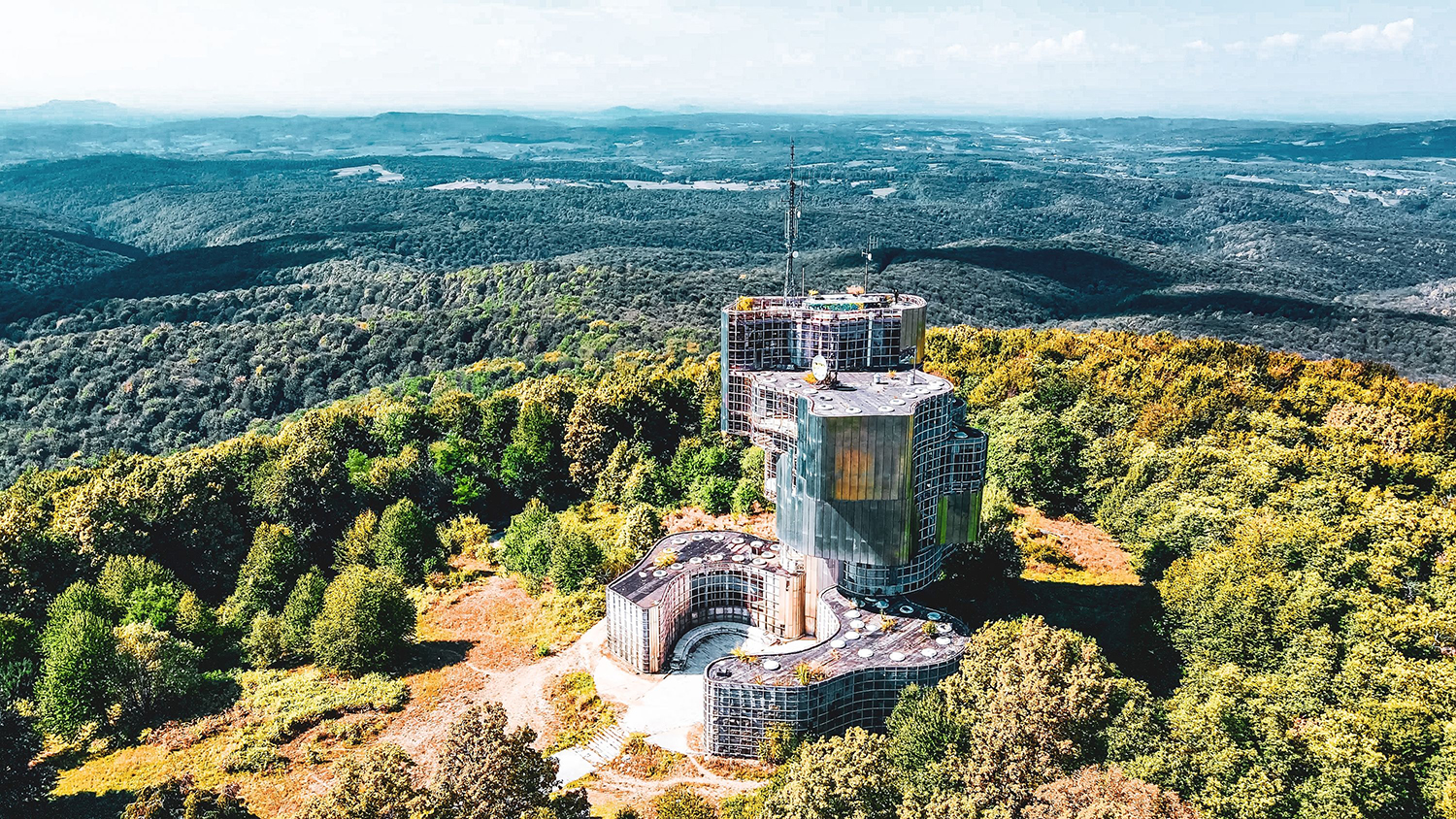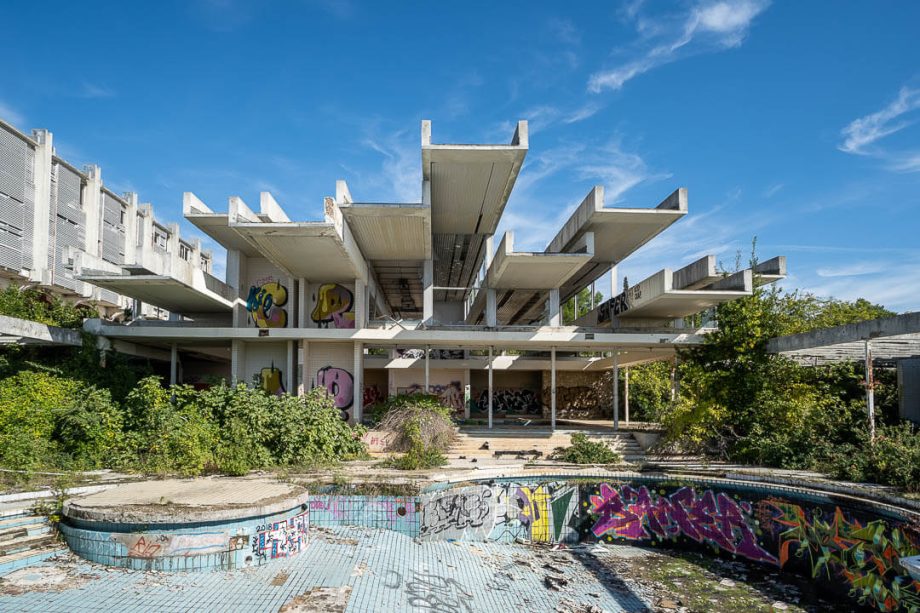
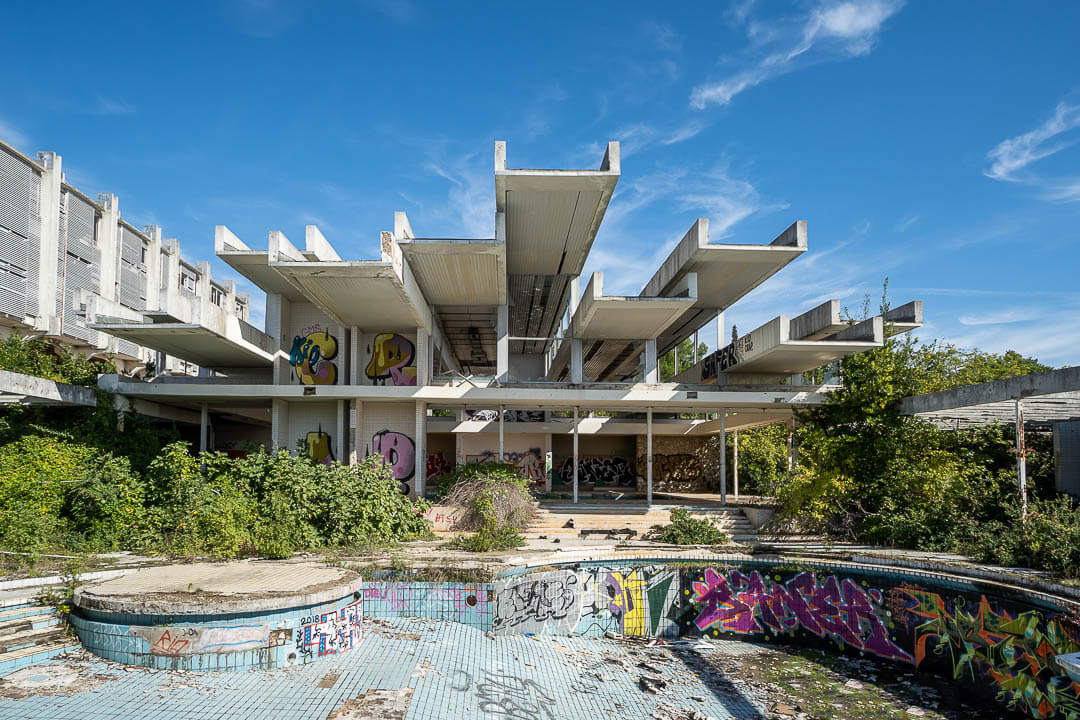
The Haludovo Palace Hotel, perched on the glittering Adriatic shore of Krk Island near Malinska, Croatia, is today a haunting ruin—but what a spectacular saga lies behind its decayed façades. In this blog, we’ll delve deep into the rise, fall, and spectral present of one of Yugoslavia’s most extravagant resorts.
Origins & Grand Vision
Timeline & Architecture
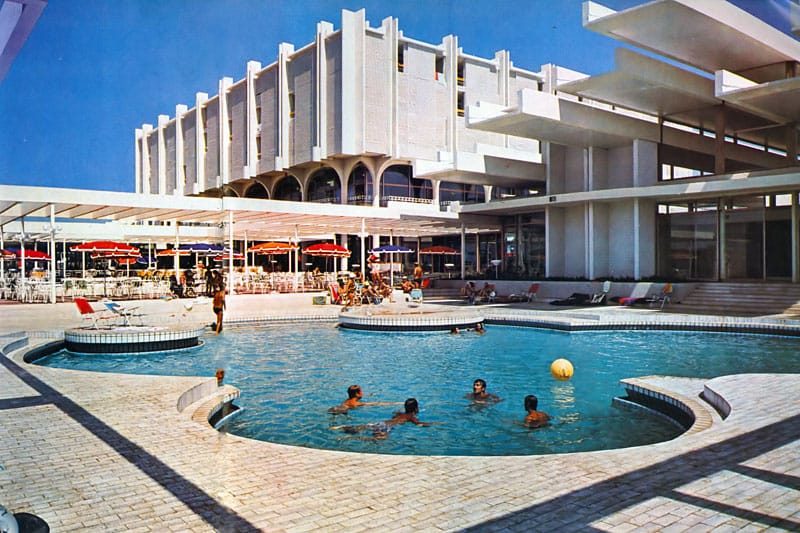
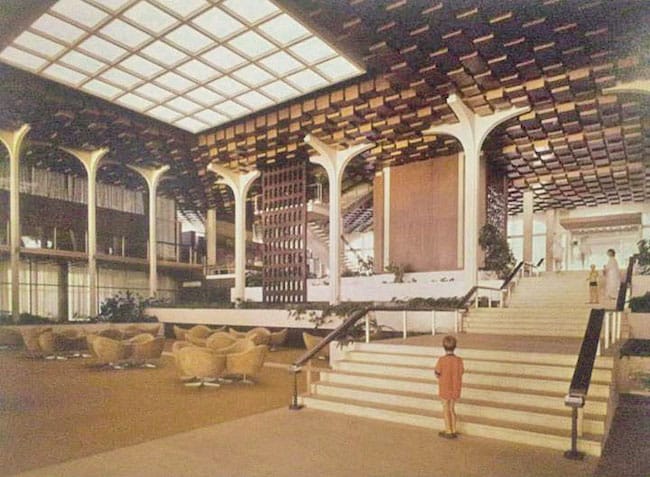
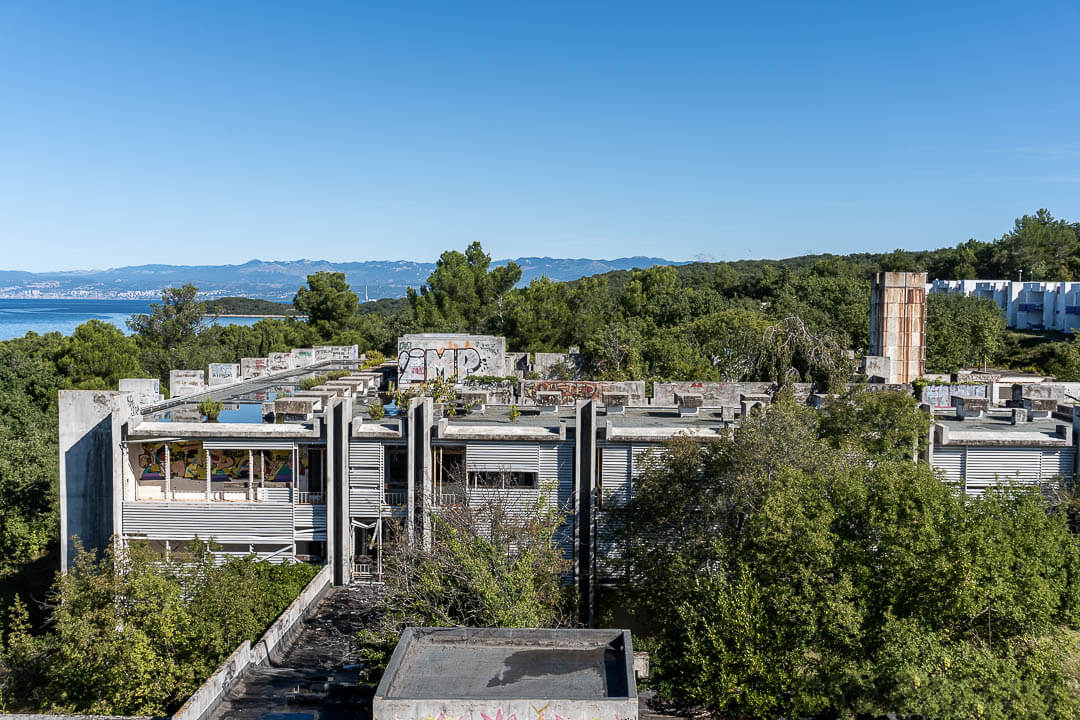
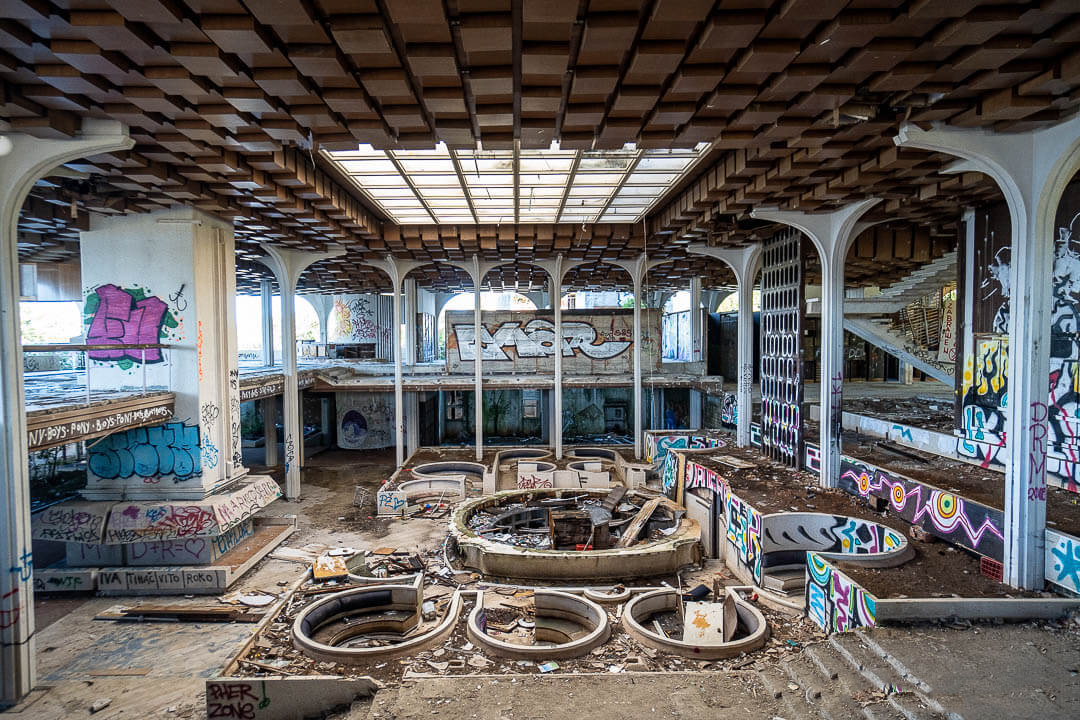
Construction began in 1969 and concluded in 1972. Designed by the celebrated Croatian architect Boris Magaš, the resort reflected mid‑century modernist and brutalist aesthetics—cantilevered canopies, modular concrete beams, wood‑panelled interiors, asymmetries, and a sci‑fi monumentality typical of socialist architecture.
The complex spanned over 100,000 m², including the main Palace Hotel, Hotel Tamaris, clusters of atrium villas, a fishermen’s village with a small port, apartment blocks, beach bar, bowling alley, pools, spa facilities, and sports courts.
State and Foreign Partnership
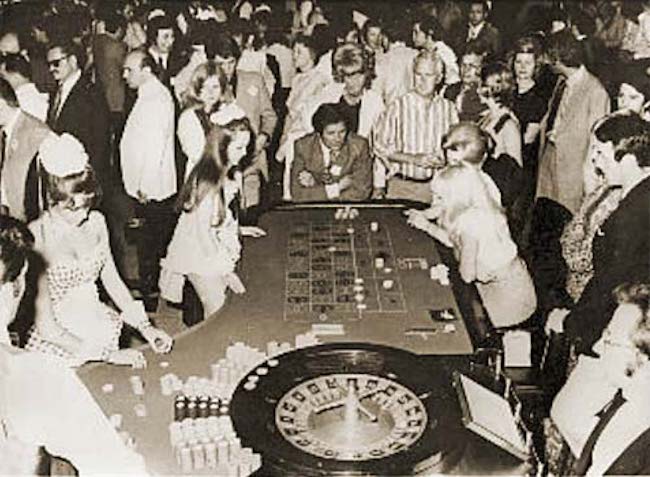
The project was initially state‑backed through Yugoslavia’s Brodokomerc company. In 1971–72, Bob Guccione, founder of Penthouse magazine, invested $45 million to create a luxury destination and opened the Penthouse Adriatic Club Casino within the Palace Hotel in 1972.
The Golden Era: Décadence by the Sea
Luxurious Amenities
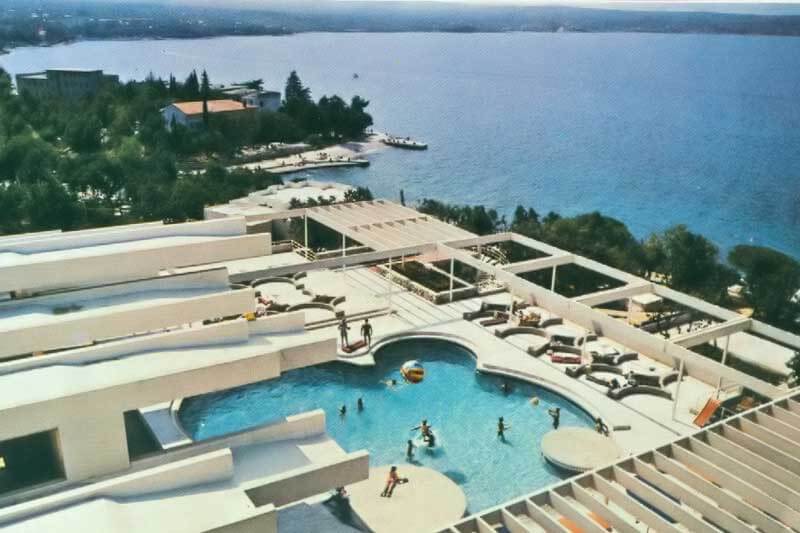
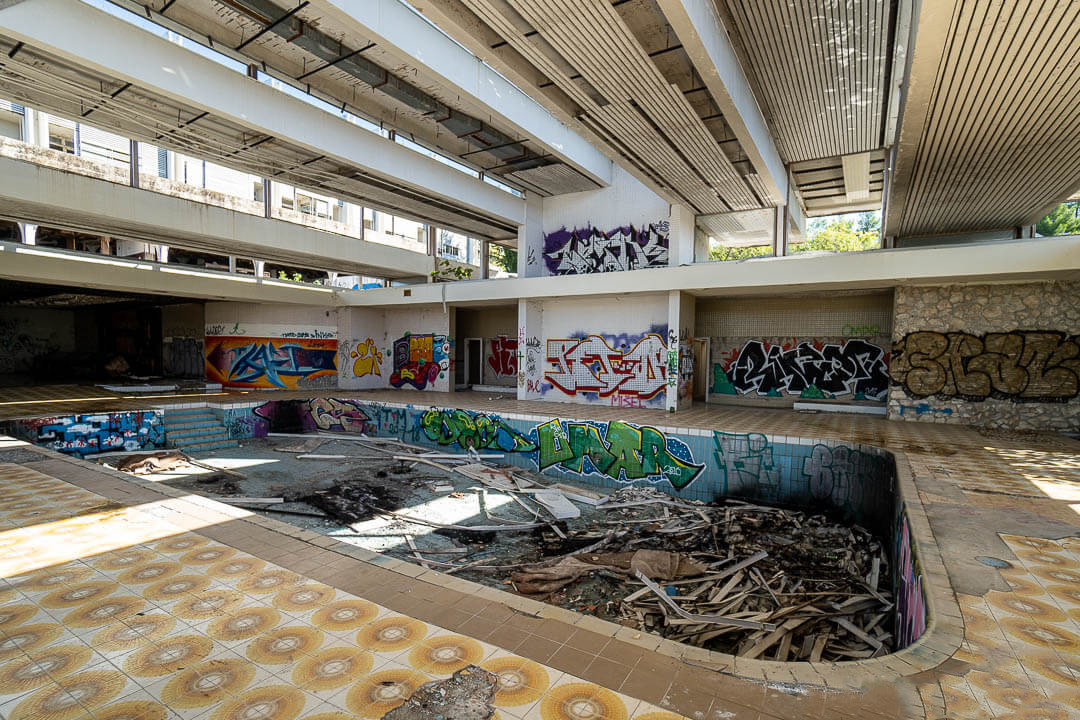
Guests enjoyed indoor and outdoor pools (one legend even claims a pool was once filled with champagne), saunas, spa, cocktail bars, gourmet restaurants, daily entertainment, tennis courts (17 courts!), mini‑golf, watersports, paragliding, diving, a bowling alley, a beauty centre, mini‑football pitch, and fishing trips.
Celebrity Clientele
High-profile visitors allegedly included Saddam Hussein, Olof Palme, and Silvio Berlusconi. The resort was infamous for daily consumption that reportedly reached 100 kg of lobster, 5 kg of caviar, and hundreds of bottles of champagne, served by “Penthouse Pets”, the skimpy-attired hostesses Guccione hired to provide glamorous service—a spectacle dubbed the “new soldiers of the Cold War”.
Diplomatic Fantasy
Guccione promoted the resort as a Cold War bridge, aiming to soften relations between the U.S. and socialist Yugoslavia through tourism and cultural exchange.
Early Downfall
Due to legal restrictions, Yugoslav citizens were banned from gambling—only wealthy foreigners could play. This limited customer base made the casino unprofitable, and it declared bankruptcy within a year, closing in 1973.
Two Decades of Operation and Decline
Hotel Continues
Even after the casino closed, Haludovo remained operational under Brodokomerc, attracting tourists from across Europe and beyond—until the early 1990s.
The Yugoslav Wars Impact
With the outbreak of conflict in 1991, tourism collapsed. Part of the complex was repurposed to shelter refugees during the Balkan conflict.
Privatisation & Mismanagement
In 1995, Haludovo was privatized. Owners included Cypriot-registered Isletta Trading and Armenian-Russian investor Ara Abramyan. Parts of the resort were sold or demolished (e.g. Hotel Tamaris and 13 villas), while interiors were stripped—furniture, appliances, even TV sets disappeared ([Balkan Insight][8]).
Final Closure
Last guests stayed in 2001. The remaining buildings have sat empty and decaying since then.
Present Day: Ghost Hotel on the Coast
Ruins & Urban Exploration
Ruins & Urban Exploration
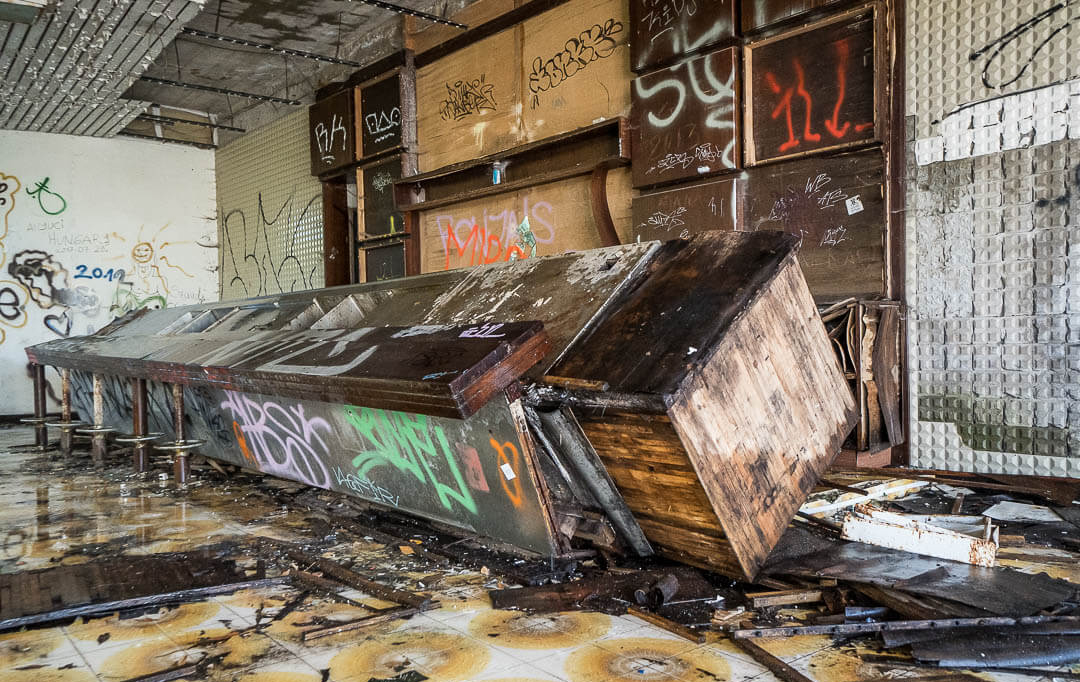
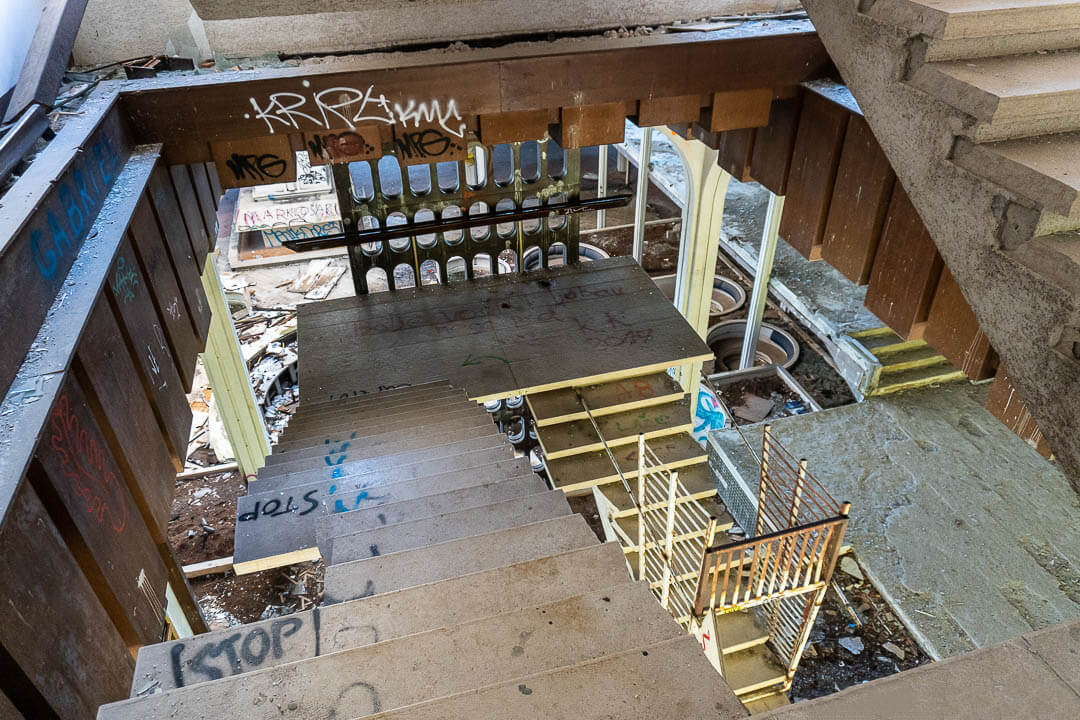
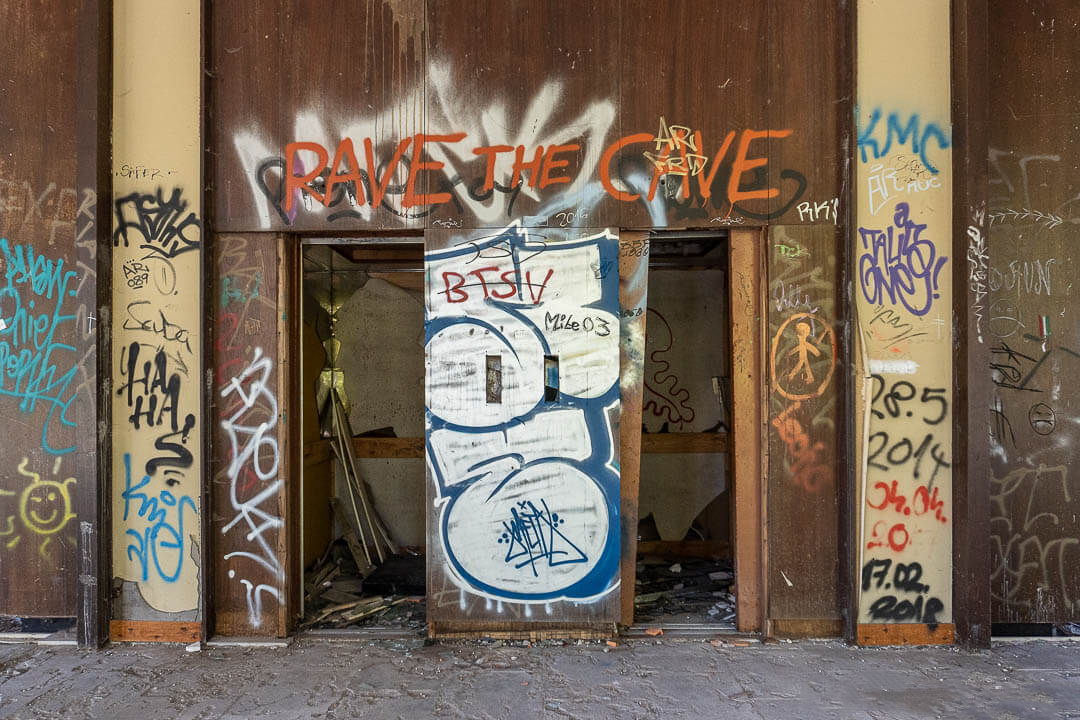
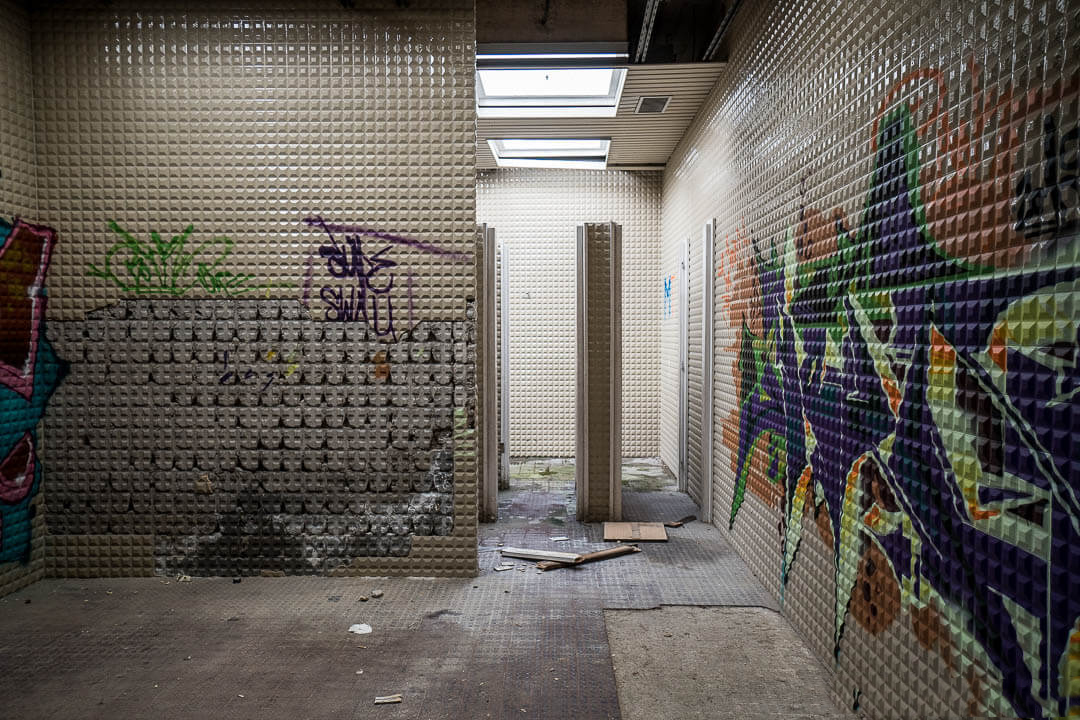
Today Haludovo is a widely photographed ruin: smashed glass, graffiti, collapsed ceilings, and vandalised interiors. The structure stands mostly intact but gutted. It is freely accessible and considered dangerous due to unstable floors and broken railings.
Architectural Heritage & Photographic Magnet
Despite decay, the complex remains a striking example of socialist brutalism and modernist resort design. It has attracted photographers, urban explorers, and architecture enthusiasts. Documentaries like Slumbering Concrete and Exhibitions such as Haludizam / Haluddism have spotlighted it as a cultural artefact.
Legacy, Community Dispute, and Redevelopment Attempts
Failed Revival Plans
In October 2018, new investors proposed redeveloping Haludovo into a closed luxury resort, but locals and Malinska authorities opposed the plan because it would privatise beach access—a move that is not allowed under Croatian tourism law. The project was effectively blocked.
Architect’s View
Boris Magaš, late in life, commented that although Haludovo once felt of monumental importance, the concept would be obsolete in today’s world—and could justifiably be replaced with more functional, modern developments.
Calls for Preservation
Critics argue that Haludovo should be preserved as an emblematic example of Yugoslav-era tourism architecture, while others demand action to prevent hazardous decay and vandalism. For now, it remains a symbol of failed privatisation and ideological tourism ambition.
Why Haludovo Still Fascinates
- Architectural Boldness – It captures a bold fusion of brutalist ideology, modular futurism, Mediterranean luxury, and Cold War spectacle.
- Cultural Juxtaposition – A socialist-state resort funded by a western porn magnate, staffed with glamour hostesses, serving western elites in a communist context.
- Consumer Mythology – Legends of champagne pools, extreme daily consumption, and VIP visits fuel fascination.
- Decay as Narrative – Its haunting, abandoned state speaks volumes about tourism’s rise and fall, political upheaval, and human ambition unmoored.
- Public Access – Unlike many abandoned sites, Haludovo remains accessible to the public, drawing photographers, urban explorers, and planners alike.
Reflections on the Haludovo Story
Tourism & Ideology
Haludovo exemplified Yugoslavia’s experimental openness—hosting capitalist extravagance within socialism, aiming to bridge ideological divides through leisure.
Over‑reliance & Hubris
Its failure emerged not from underinvestment, but flawed economics: reliance on elite gambling tourists in a jurisdiction where domestic play was illegal, limited clientele, lavish expenditures, short‑lived returns.
Decay & Memory
The resort’s ruin is a powerful metaphor: unfulfilled promises, political collapse, and the fragility of grand ideologies. It is at once eerie and beautiful—a time capsule of opulence turned to dust.
The Haludovo Palace Hotel stands today as a ghostly testament to ambition, ideology, excess, and eventual decline. From ultra‑modernist Brutalism and champagne‑filled swimming pools to refugee shelter and ruin, its story mirrors the trajectory of a socialist state flirting with capitalist fantasy. Whether considered for redevelopment, preservation, or artistic inspiration, Haludovo remains one of the most fascinating relics of Adriatic tourism history.
Its cracked façades whisper stories of jet-set glamour and political dreams. And while its future remains uncertain, the spectre of Haludovo continues to haunt both memory and photograph—inviting us to ponder what happens when utopian tourism meets reality.
Feel free to let me know if you’d like me to expand on any particular aspect—architectural features, notable guests, or preservation debates.