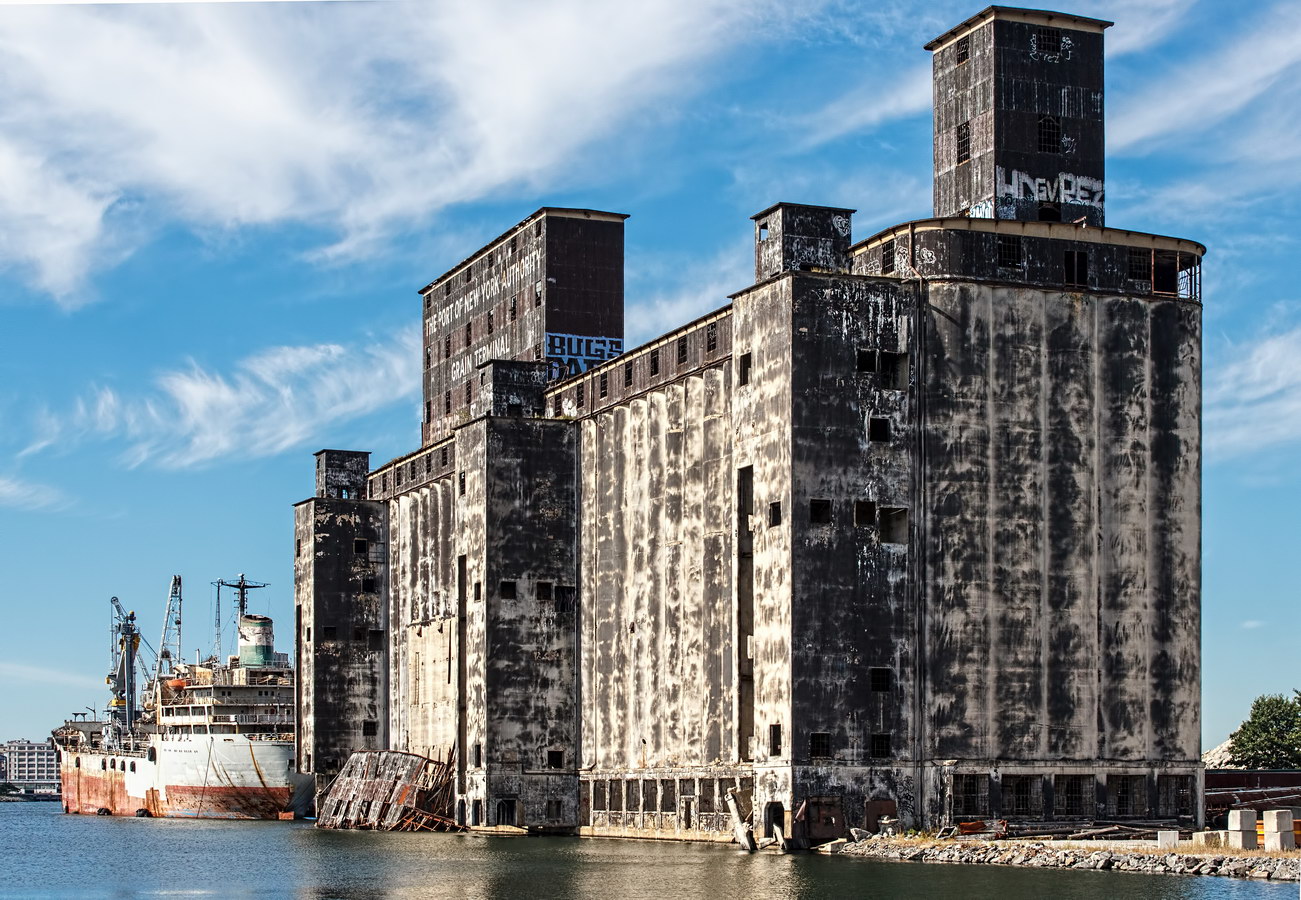
At the mouth of the Gowanus Canal, where the murky water meets the Brooklyn waterfront, stands a hulking, brooding structure that many New Yorkers know by sight but few know by history: the Red Hook Grain Terminal. Its long, windowless façade and towering concrete silos dominate the shoreline with an unmistakable industrial silhouette — an emblem of a bygone era of maritime commerce, and today a subject of speculation, photography and contested plans for renewal.

Built in 1922 as part of the New York State Barge Canal project, the Red Hook Grain Terminal was conceived to be a modern hub for moving grain between the Erie Canal system and the Atlantic shipping lanes. The structure was a product of early 20th-century attempts to keep New York competitive in the grain trade by providing large, mechanised storage and transhipment facilities right at the water’s edge. The terminal’s reinforced-concrete silos, long storage bins and dockside configuration allowed grain arriving by barge to be loaded into ocean-going vessels, or vice versa, with unprecedented speed for the era.
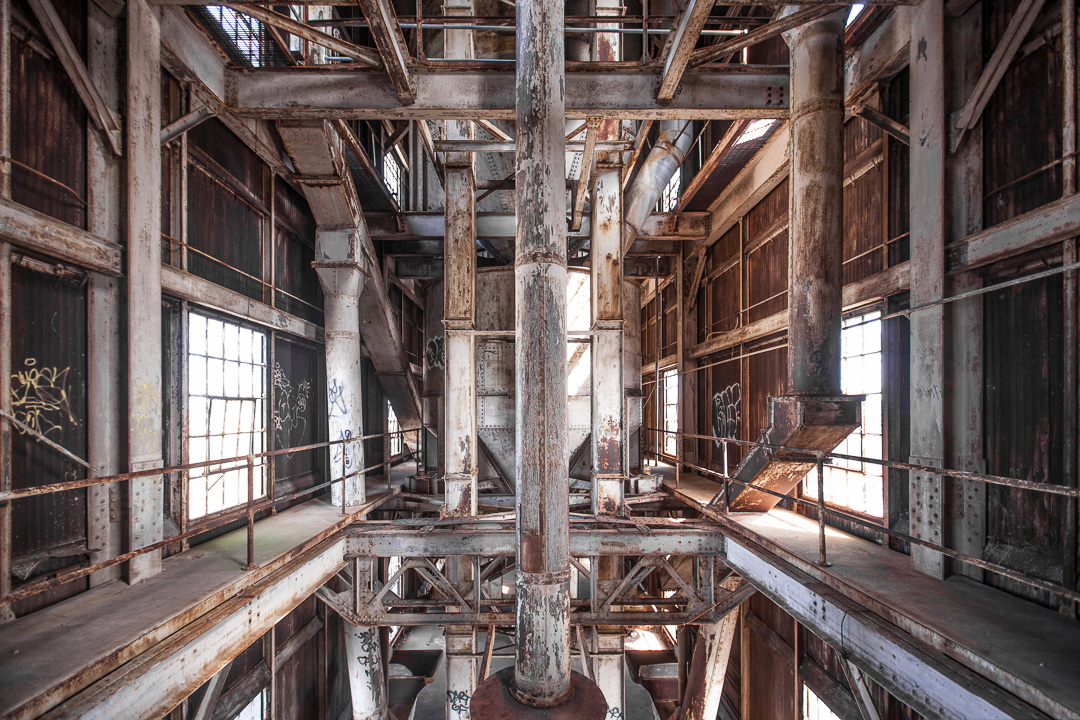
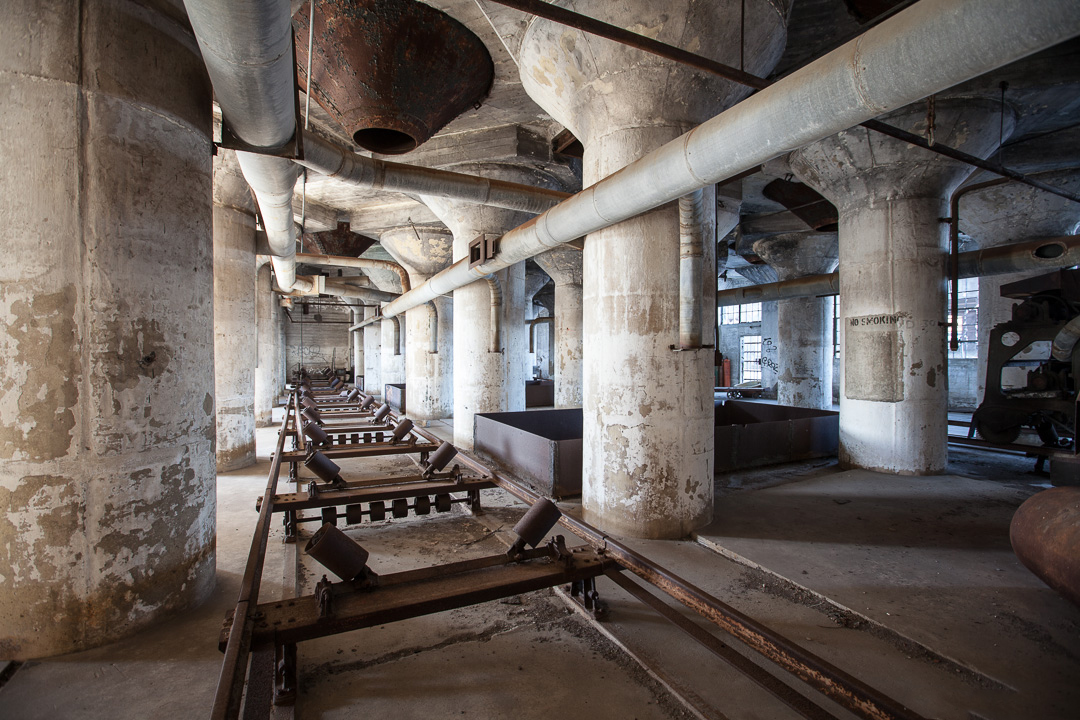
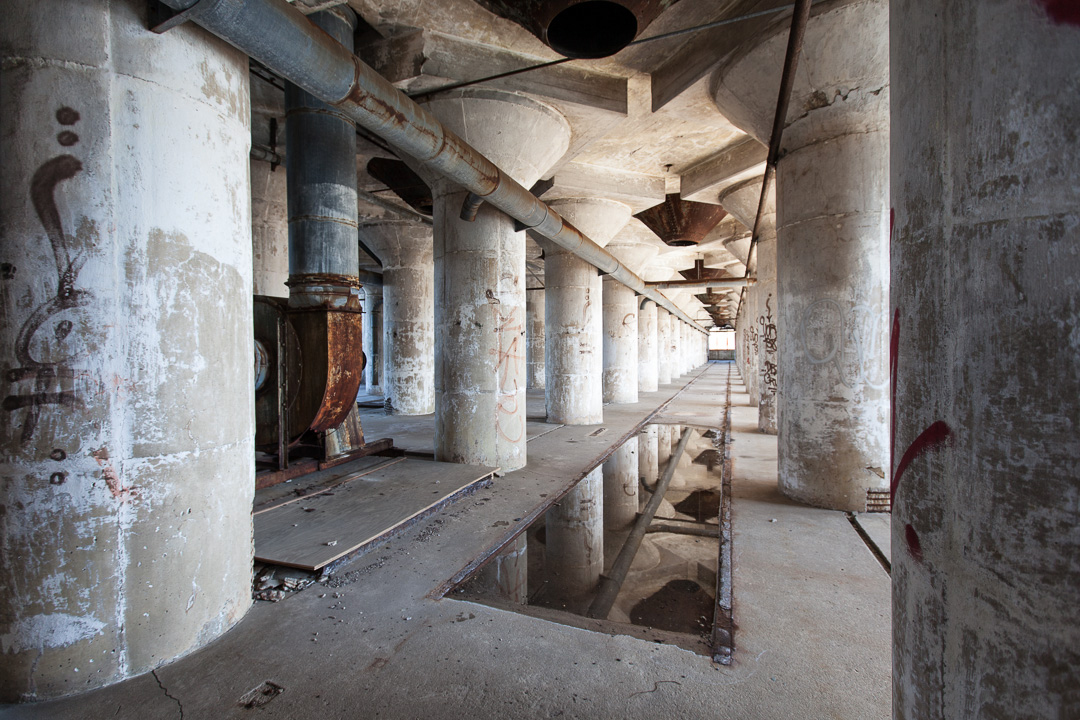
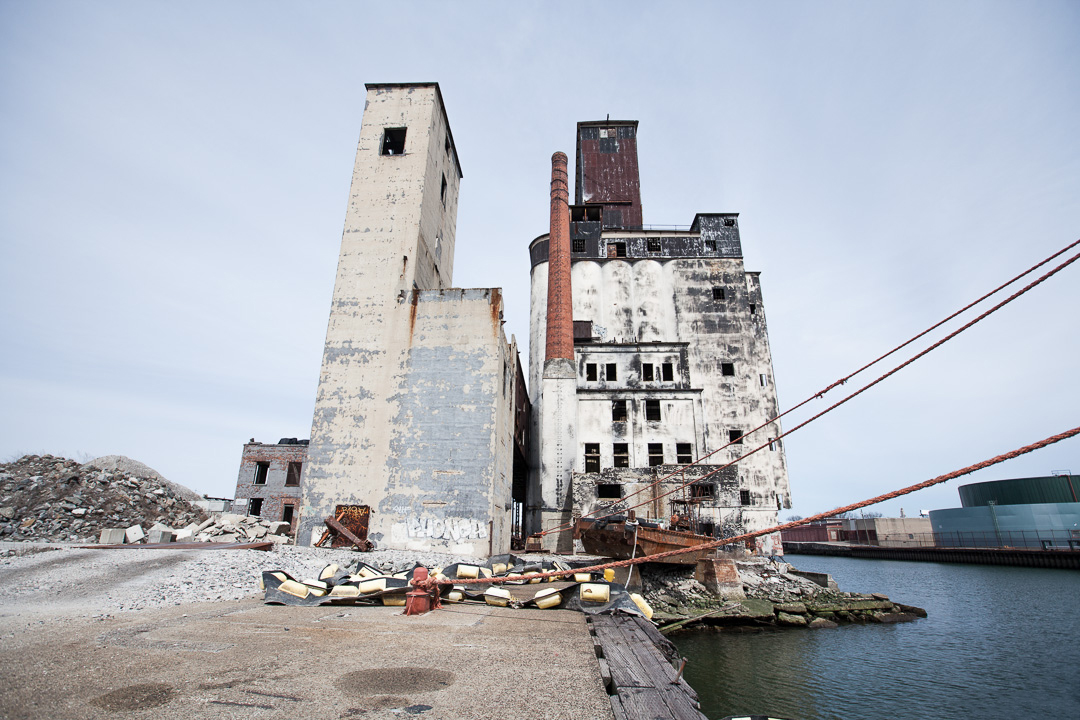
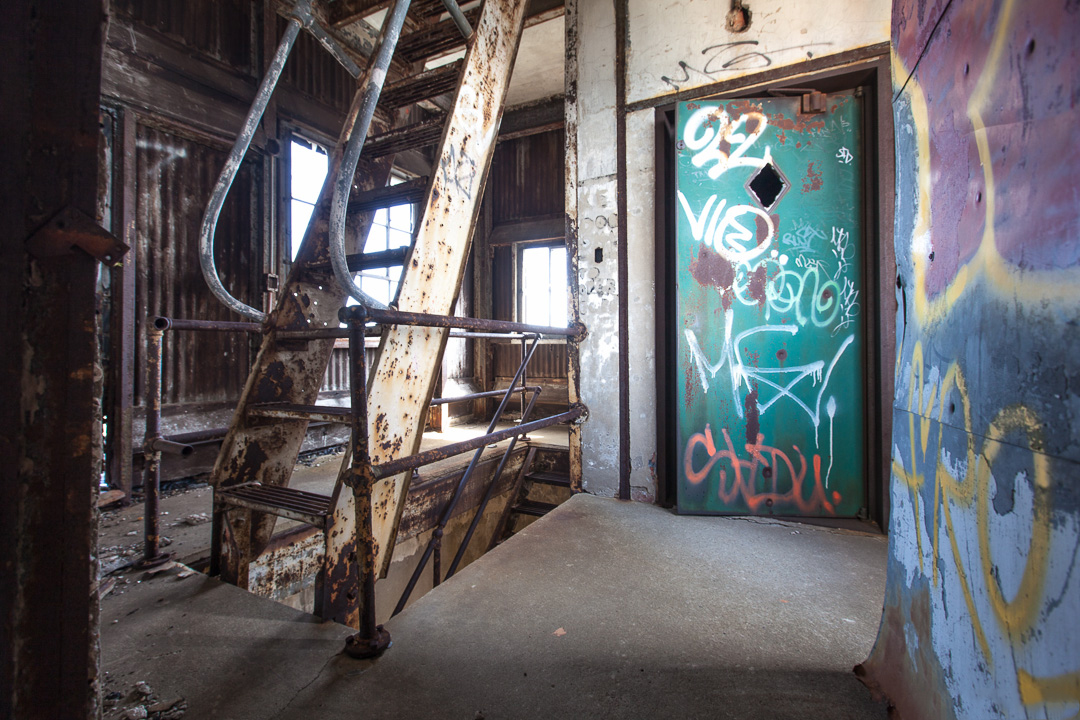

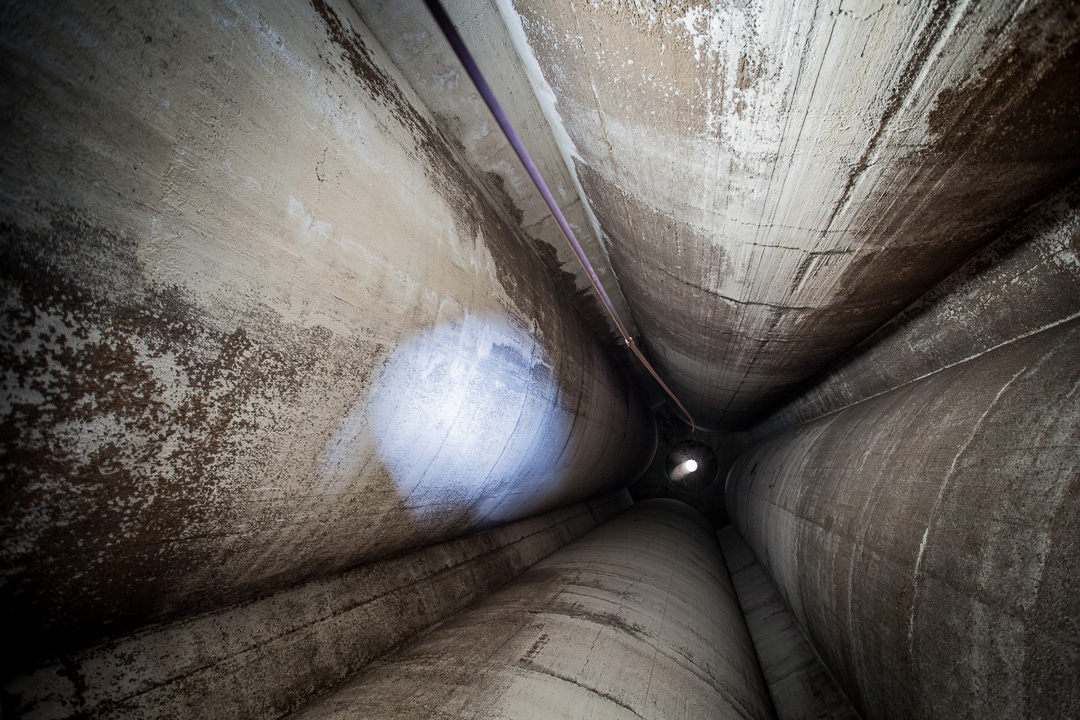
Architecturally, the terminal is a study in functional monolithism. Its mass is articulated not by ornament but by scale and rhythm: rows of vertical bins, catwalks and loading towers that read like a city block compressed into industrial geometry. The 54-bin elevator and the long, low bin house were constructed rapidly — contemporary reports remark on how the concrete pours for the silos were achieved in a matter of days — and the whole complex cost a substantial sum for its day. The terminal’s plainness is deceptive; it is precisely the structural integrity and the specificity of industrial design that have made it so evocative to today’s artists, photographers and urban explorers.
Despite its ambitious beginnings, the terminal’s commercial fortunes waned through the mid-20th century. Shifts in shipping patterns, the rise of other transport hubs and changes in grain distribution meant that the facility never quite realised the strategic importance its planners had envisaged. By the 1960s the terminal was largely decommissioned for its original purpose, and over ensuing decades the structure became effectively abandoned, an industrial relic whose concrete surfaces weathered and darkened, and whose interiors accumulated the detritus of neglect. This decline mirrors the story of much heavy industry on New York’s waterfronts: sites that once pulsed with commodity flows now sit empty or are reimagined for other uses.

Outsiders and locals alike have treated the terminal as a landmark of alternative meaning. For photographers and urban archaeologists, the terminal offers dramatic vistas: the mass of concrete against water, the granular decay of inner spaces, and the contrast between looming industrial scale and the domestic streets of Red Hook. Popular culture and online communities have fed the structure’s mystique; pieces in photo blogs, urban exploration sites and travelogues depict it as a “spectral” presence on foggy mornings, while museums and local archives preserve photographs and records that anchor the site in the borough’s maritime history. The terminal’s visual power is doubled by the relative scarcity of contemporary development on that stretch of shoreline, making it an arresting subject for essays about memory, industry and urban transformation.
Yet the grain terminal’s future is uncertain rather than legendary. For decades various ownerships and proposals have been floated — from wholesale redevelopment to adaptive re-use schemes that would stabilise the structure and convert it to new civic, cultural or commercial functions. In recent years public authorities and private developers have intermittently discussed plans for the broader Red Hook waterfront that would affect the terminal indirectly: pier repairs, pier modernisation and broader port planning initiatives have been announced, and the city has earmarked funds for pier renovation and port infrastructure that could change the calculus for redevelopment. At the same time, the physical difficulties of converting a vast, specialised industrial building — with environmental remediation needs, challenging floorplates and waterfront access constraints — complicate any straightforward plan. As a result, while the terminal is often invoked in civic planning discussions, it remains largely intact and underused, a stubborn presence on a changing waterfront.
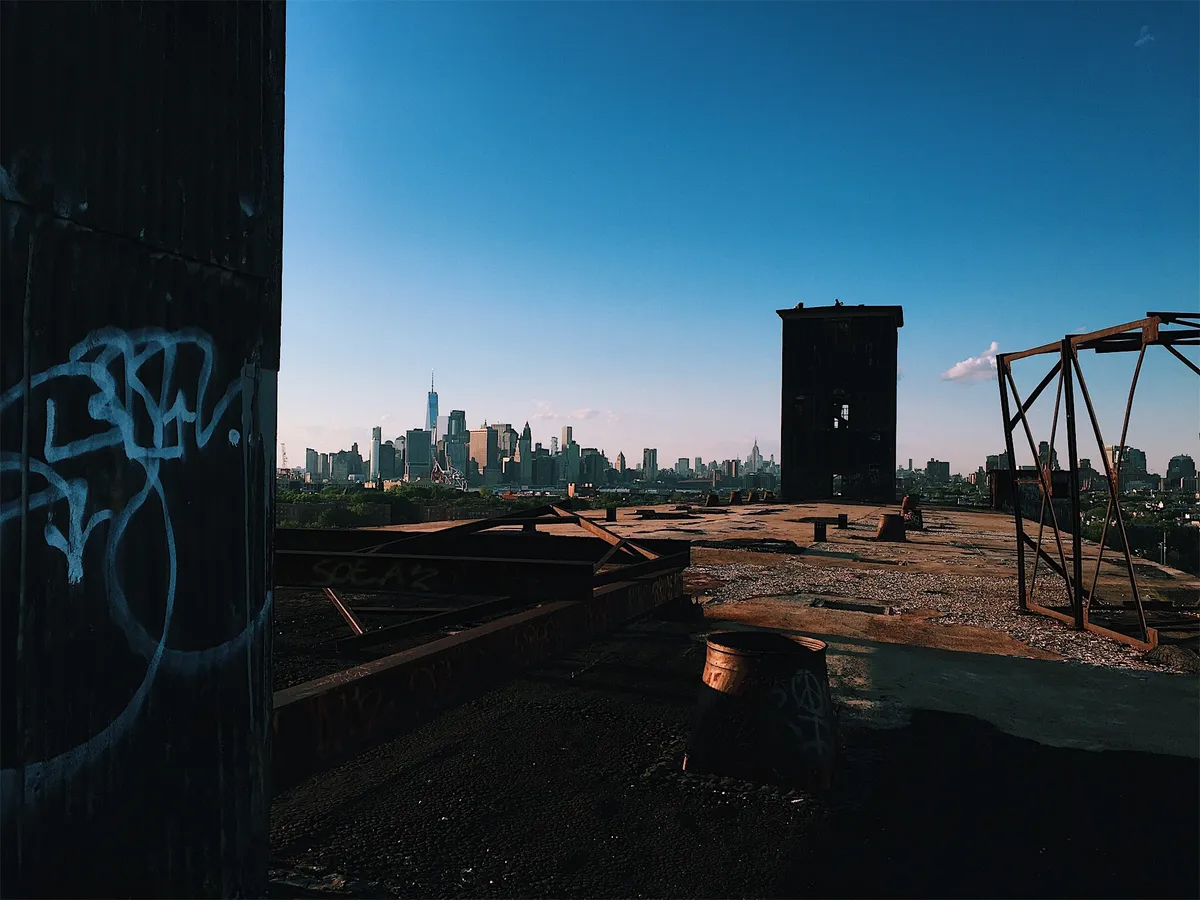

Conversations about what to do with the terminal reflect deeper tensions about the waterfront itself. On one hand, environmental advocates and urban resilience thinkers have argued for reusing existing concrete and embodied carbon as a sustainable alternative to demolition and new construction; projects that reinterpret the terminal for public access, cultural programming, or urban ecology are presented as ways to celebrate the structure’s materiality while addressing climate change and rising sea levels. On the other hand, economic development proposals emphasise modern maritime logistics, cold-storage for food distribution, or mixed-use redevelopment that would bring jobs and revenue. Each approach implies both physical interventions and social trade-offs: opening the terminal to the public would require significant safety and remediation work, while converting it into a logistics hub would prioritise industrial uses over open, community-oriented space.
Local communities see the terminal through the lenses of history, identity and everyday life. Red Hook has long been a distinct neighbourhood, shaped by shipping, immigrant labour, and later, artistic communities. For residents, the terminal has been alternately an eyesore, a point of curiosity, and a symbol of lost industrial jobs. Community groups have been active in planning conversations around the waterfront, insisting that any redevelopment include public benefits: access to the waterfront, jobs for locals, and protections against displacement. These social dynamics are crucial to understanding why the terminal cannot be treated purely as a parcel of land — it is embedded in networks of local memory, economic need and municipal responsibility.


The practical challenges of rehabilitation are non-trivial. Any scheme must confront environmental remediation — the Gowanus Canal itself has a history of contamination, and waterfront industrial sites often carry legacy pollutants — as well as the sheer engineering task of adapting silo spaces and long narrow bays into habitable, code-compliant rooms. Nevertheless, designers and activists continue to propose imaginative possibilities: market halls that exploit the building’s grain-market history, maritime museums, art spaces, vertical farms, or even flood-resilient public parks that incorporate the terminal’s mass into defensive landscapes. Such proposals marry conservation of industrial heritage with inventive urban design.
Perhaps most interesting is what the grain terminal reveals about how New York manages its legacy infrastructure. Across many waterfronts, the city faces choices about what to preserve and what to reinvent: warehouses and piers can become cultural anchors, luxury housing or logistic centres; choices about individual sites reverberate through neighbourhoods and markets. In the case of the Red Hook Grain Terminal, the structure’s stubborn physical presence forces stakeholders — municipal agencies, private owners, designers, and residents — to negotiate a future that balances history, ecology, economy and equity.


For now, the grey giant continues to stand. It is a palpable reminder that cities are palimpsests: layers of function and meaning accumulate, then are partially erased and rewritten, but the traces remain. Whether the Red Hook Grain Terminal is eventually transformed into a community asset, primed for maritime commerce once more, or left as a deliberate ruin preserved for its enigmatic value, it will remain an important marker on Brooklyn’s waterfront, a place where the industrial past and speculative future meet at the water’s edge.