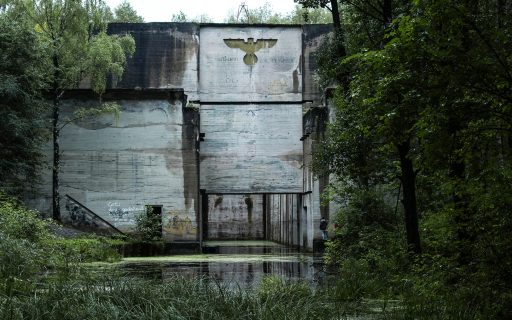
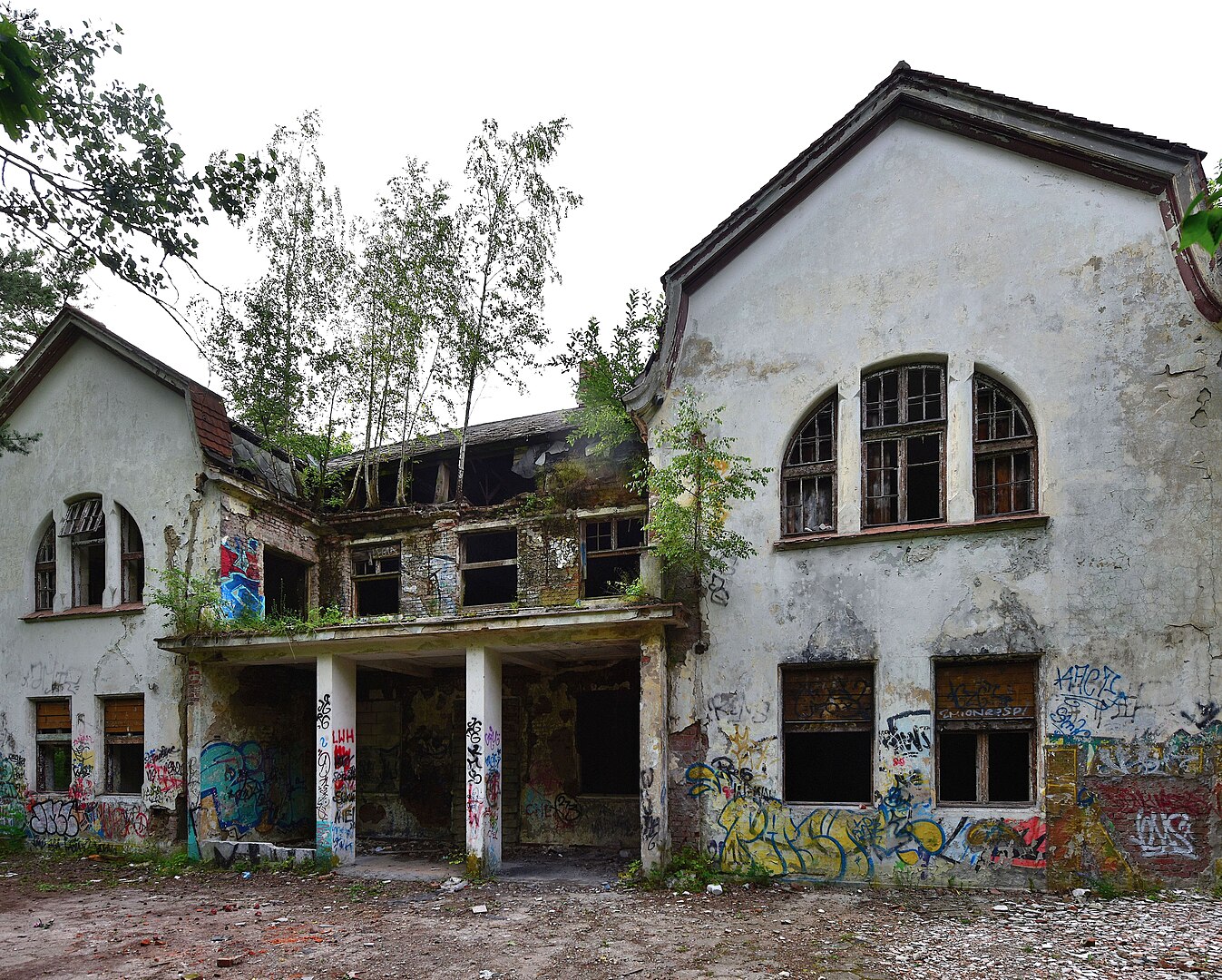
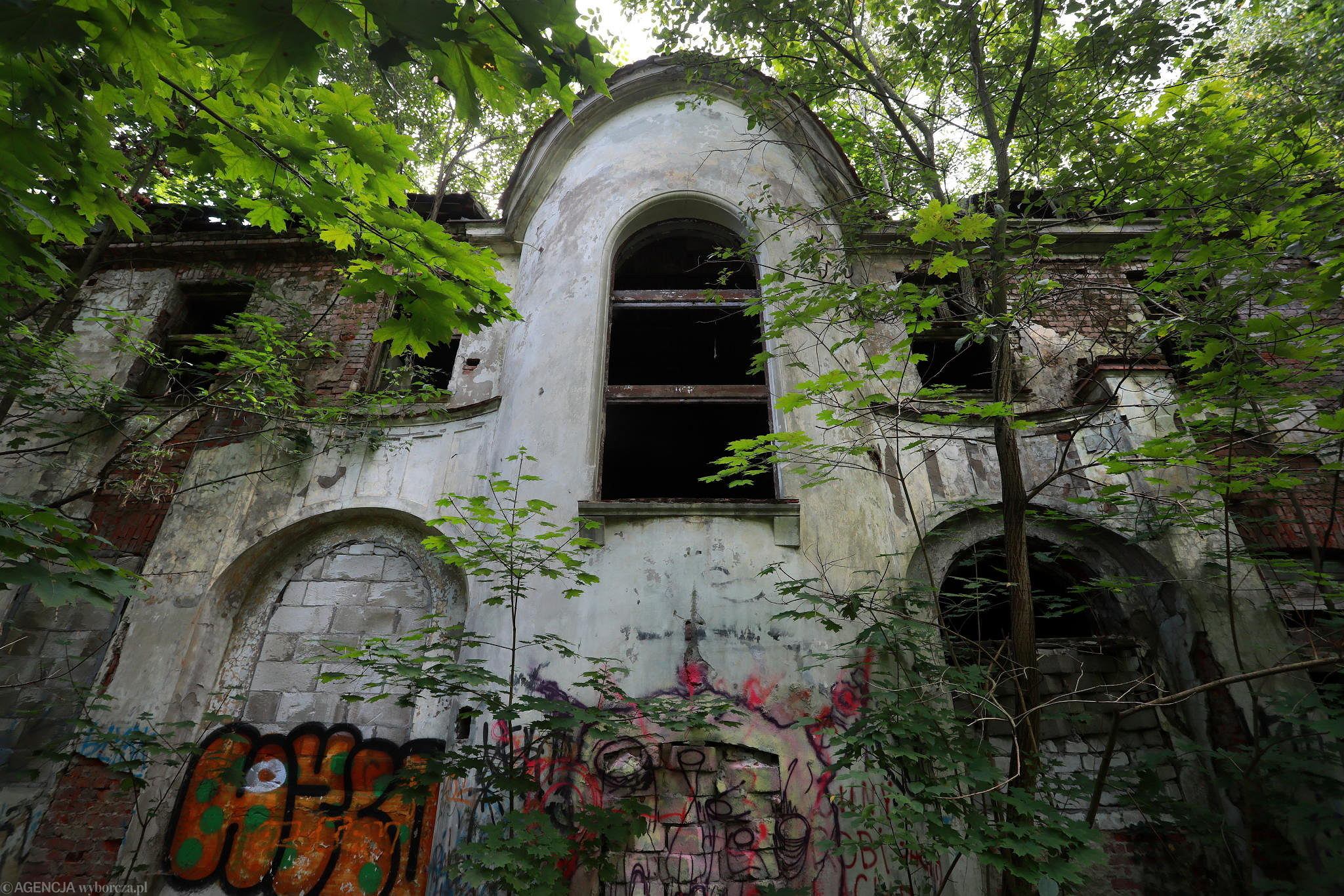
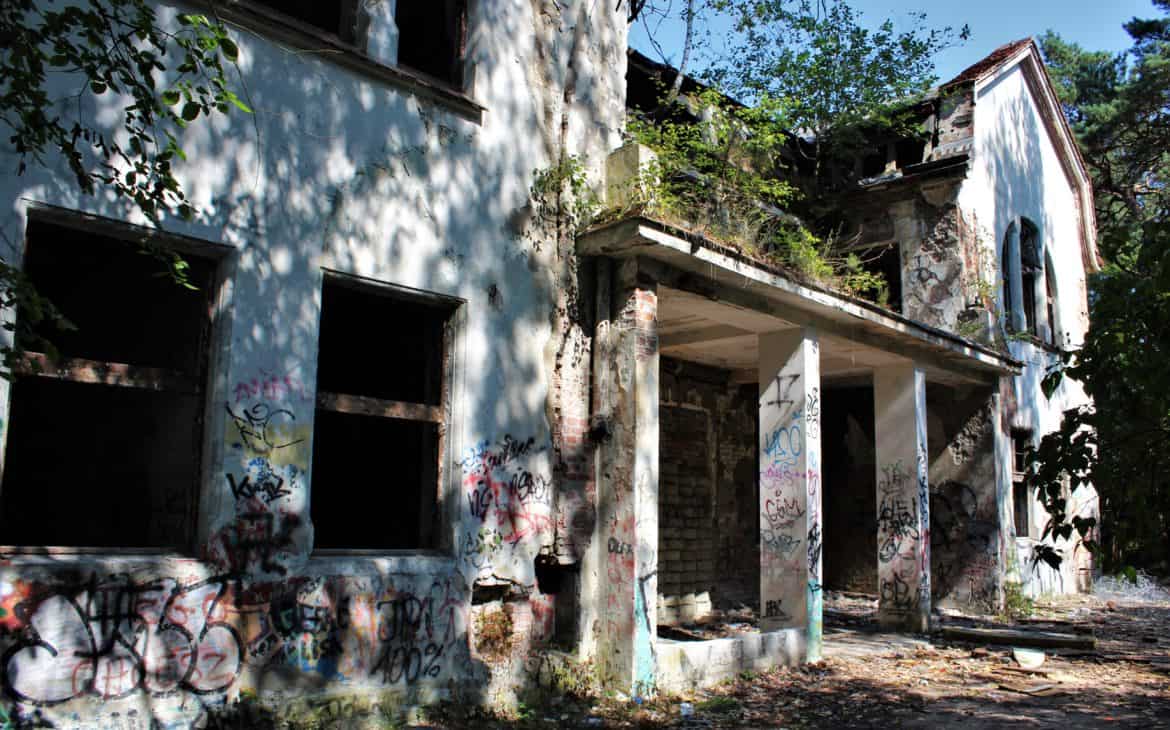
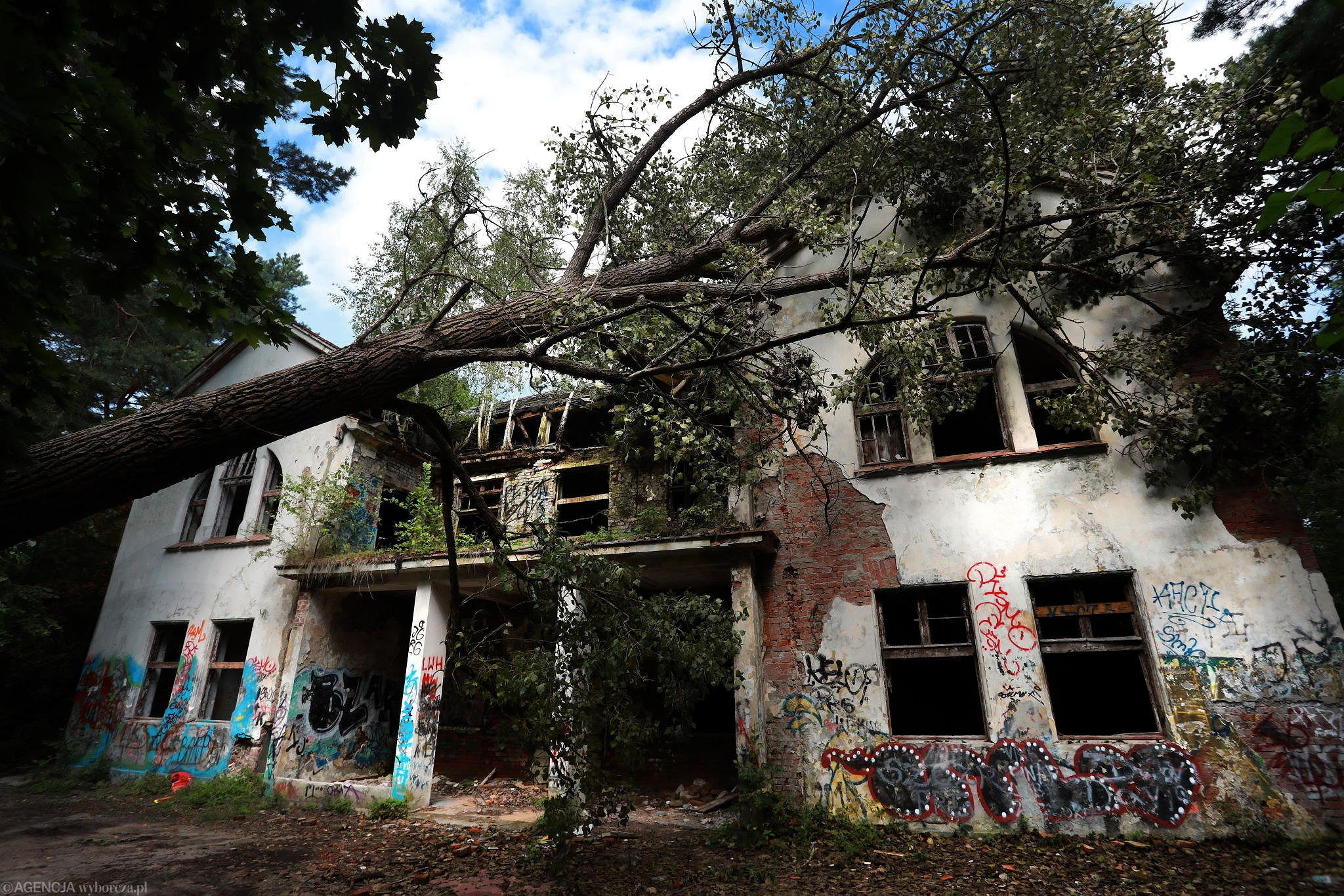
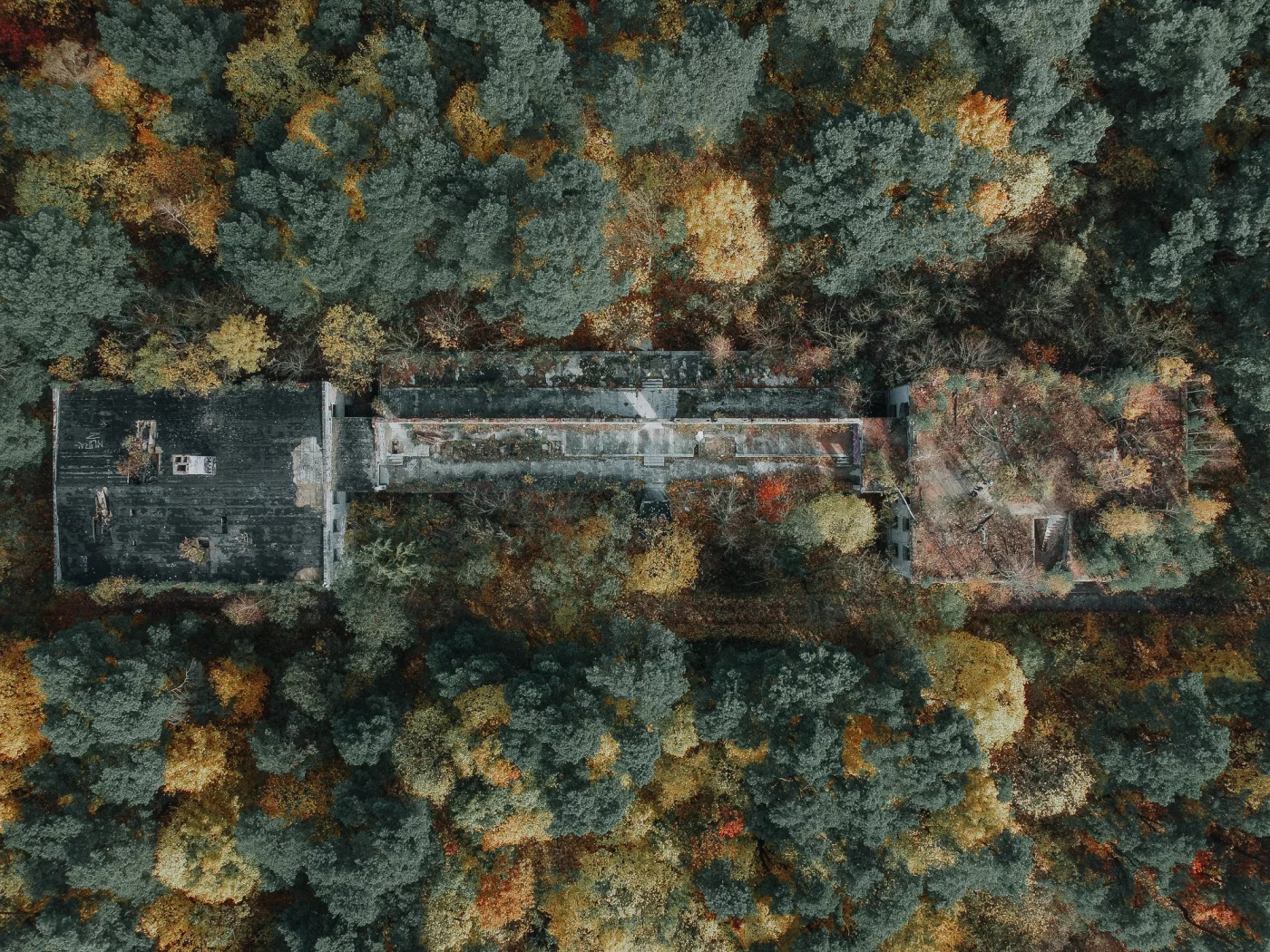
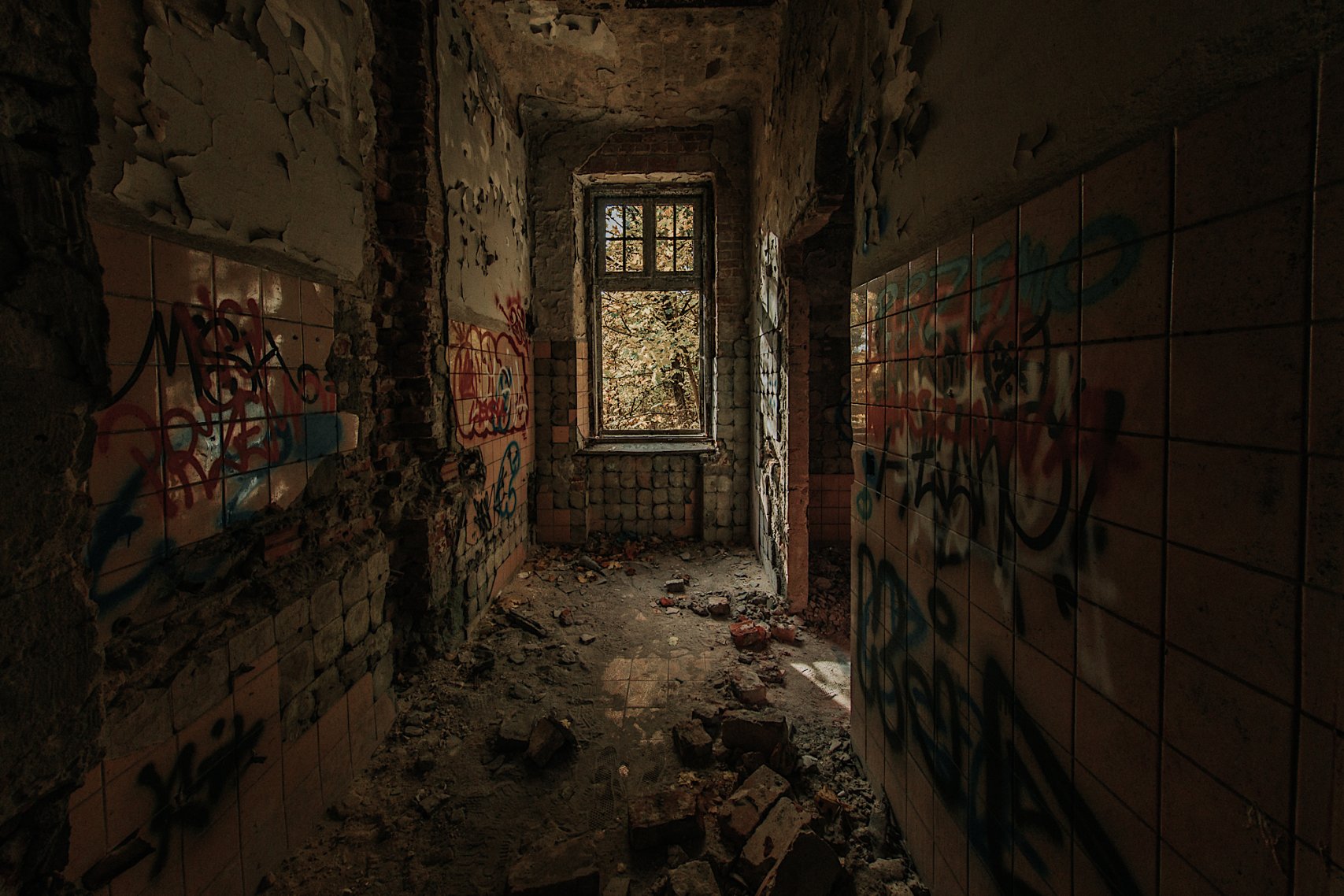
Hidden among the pine forests of Otwock, just south-east of Warsaw, stand the crumbling remains of Zofiówka Sanatorium. Today it is an eerily beautiful shell: smashed windows, peeling plaster, graffiti and fallen trees, all slowly being reclaimed by the woods. Yet behind this picturesque decay lies a history that is unusually intense, combining medical innovation, Jewish community life, wartime atrocity and post-war neglect.
A Vision of Modern Jewish Psychiatry
The story of Zofiówka begins in the early twentieth century, when psychiatry was still a relatively young discipline. In 1906 a group of prominent Polish-Jewish doctors and community leaders founded the Society for Poor Jews with Nervous and Mental Illnesses with the aim of creating a modern institution dedicated specifically to Jewish patients. Among the key figures were neurologists Adam Wizel and Samuel Goldflam, together with other professionals such as Ludwik Bregman and Adolf Weisblat.
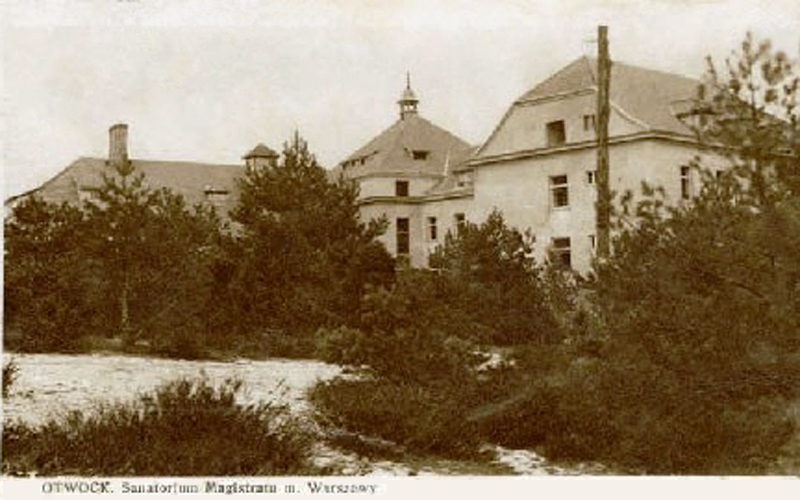
A year later, the project received a decisive boost. The philanthropist Zofia (Sophia) Endelman donated her jewellery to fund the purchase of land in Otwock, a growing spa town known for its clean air and pine forests. In her honour, the new institution would bear the name Zofiówka. By 1908 the first pavilion of the sanatorium had opened, set within roughly seventeen hectares of woodland.
Zofiówka was conceived not simply as a place of confinement, but as a progressive psychiatric hospital. Initially it had around ninety-five beds, divided into separate men’s and women’s pavilions, each with day rooms, dormitories and basic medical facilities. Over time it expanded with new wings and buildings; by the mid-1930s, the capacity had grown to approximately 275 beds, making it one of the largest and most modern Jewish psychiatric facilities in Europe.
Life and Treatment Before the War
In the years of the Second Polish Republic, roughly between the First and Second World Wars, Zofiówka became a respected centre of psychiatric care. The director, Dr Stefan Miller, together with his colleagues, pursued treatment ideas that now read as remarkably humane for their time. An important element of therapy was work and engagement with everyday life. Patients who were calm and capable were encouraged to participate in light labour, gardening or simple workshops, not as punishment but as a way of restoring a sense of purpose.
The institution operated on a largely charitable basis. Many patients were treated free of charge, the costs covered either by the Society itself or by Jewish communal funds; only a minority were supported directly by their families. This was a hospital with a social conscience, aimed particularly at poor Jews who had little access to specialist care elsewhere.
Some well-known names passed through Zofiówka’s wards. Adela Tuwim, mother of the celebrated Polish poet Julian Tuwim, spent time in the hospital’s isolation ward, which housed the most difficult and disturbed patients. Her stay, recorded in later accounts, reflects both the hospital’s reputation and the stigma surrounding mental illness even in relatively enlightened circles.
On an ordinary day in the 1920s or 1930s, Zofiówka would have felt like a self-contained world in the woods: patients strolling the grounds, nurses and doctors moving between pavilions, the routine of meals, medication, rest and occupational therapy. The forest and the fresh air were considered part of the cure. It was, for many, a genuine refuge.
War, Occupation and the Holocaust
That refuge was shattered with the German invasion of Poland in September 1939. Otwock fell under Nazi occupation, and in December 1939 a Jewish ghetto was established in the town. Zofiówka, now enclosed within what the Germans termed a “medical zone” of the ghetto, continued to operate for a time, but under conditions that deteriorated rapidly. Supplies were scarce, food was limited and the staff struggled to maintain even basic care.
The situation worsened as Nazi policy towards psychiatric patients hardened. Across occupied Europe, mentally ill people – and Jewish patients in particular – were subjected to murder programmes inspired by the German Aktion T4 euthanasia scheme. Zofiówka’s patients, already vulnerable, became targets. Accounts suggest that nearly four hundred patients were effectively condemned to slow death by starvation, trapped in an institution stripped of resources.
The final catastrophe came in August 1942, during the liquidation of the Otwock ghetto. On the morning of 19 August, German forces and their Ukrainian auxiliaries surrounded the sanatorium. Patients and staff were rounded up and herded into one of the pavilions. Between one hundred and one hundred and forty people were shot on the spot within the grounds of Zofiówka itself; the remainder were marched to the railway siding and deported by train to Treblinka extermination camp, along with thousands of other Jews from Otwock. Very few survived.
A handful of doctors managed to escape, reportedly using an ambulance to flee to Warsaw. Some members of staff, faced with the horror of what was unfolding, chose suicide. When the trains had gone and the shooting stopped, Zofiówka as a Jewish institution effectively ceased to exist. Its buildings, once a symbol of communal care and medical progress, had become a crime scene.
A Nazi “Charitable” Institution
After the murder and deportation of its Jewish patients, the site did not remain empty. In 1943 the buildings were repurposed by the German authorities as part of the Lebensborn programme. The plan was to create a home for mothers and children – a seemingly benevolent façade for a deeply sinister project of racial engineering. One building was to function as a maternity hospital, the other as a nursery and children’s home. The institution would also handle the forced “Germanisation” of Polish children deemed racially suitable, preparing them for adoption by German families.
These plans were only partially realised as the war’s tide turned. Nevertheless, the transformation of Zofiówka from a Jewish psychiatric hospital into a Nazi racial facility encapsulates the ideological violence of the era: a space dedicated to caring for marginalised people was first turned into a place of murder, then refitted to serve a project of selective breeding and cultural erasure.
Post-war Sanatorium and Final Closure
With the end of the war and the imposition of a Soviet-backed communist government in Poland, Zofiówka once again changed identity. The shattered buildings were repaired and repurposed as a state sanatorium. This time the focus was on children and adolescents suffering from tuberculosis and other respiratory illnesses, as well as psychiatric and neuropsychiatric conditions. Over the decades, different departments operated there, including units for adult patients with pulmonary disease, psychiatric wards and, later, facilities for people struggling with alcohol and drug addiction.
In the later communist period, especially from the 1970s and 1980s, Zofiówka became associated with the treatment of young people suffering from substance dependency and related mental health problems. Even then, the place retained a somewhat ambiguous aura: part hospital, part remote institution at the edge of the forest, far from the bustle of Warsaw but close enough to feel haunted by its past.
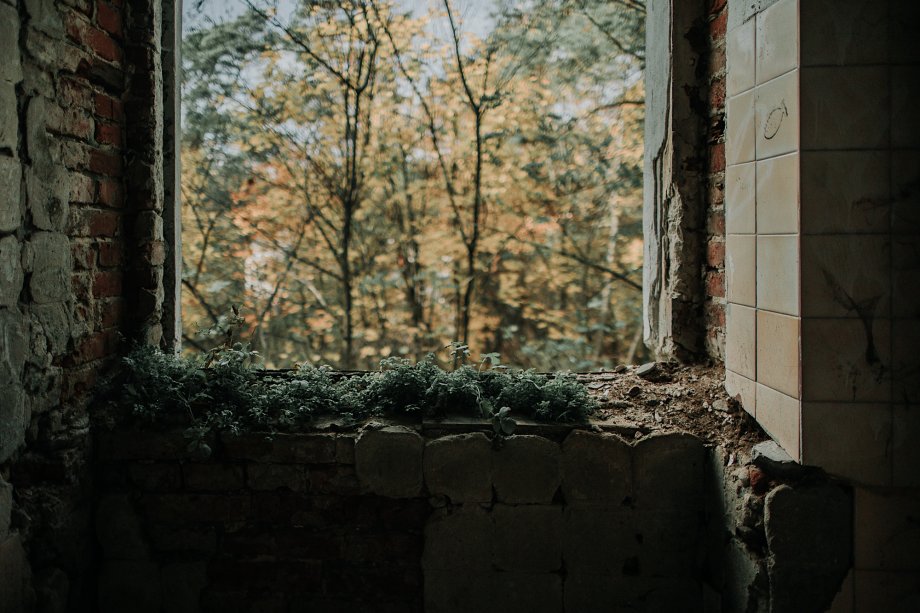
By the mid-1990s, the decision was finally taken to close the facility. Services were moved to other hospitals, and the pavilions were left to decay. Windows were smashed, roofs began to leak, vegetation pushed its way into corridors and stairwells. What had once been carefully maintained grounds became a tangle of undergrowth and fallen branches.
Decay, Urbex and Internet Myth
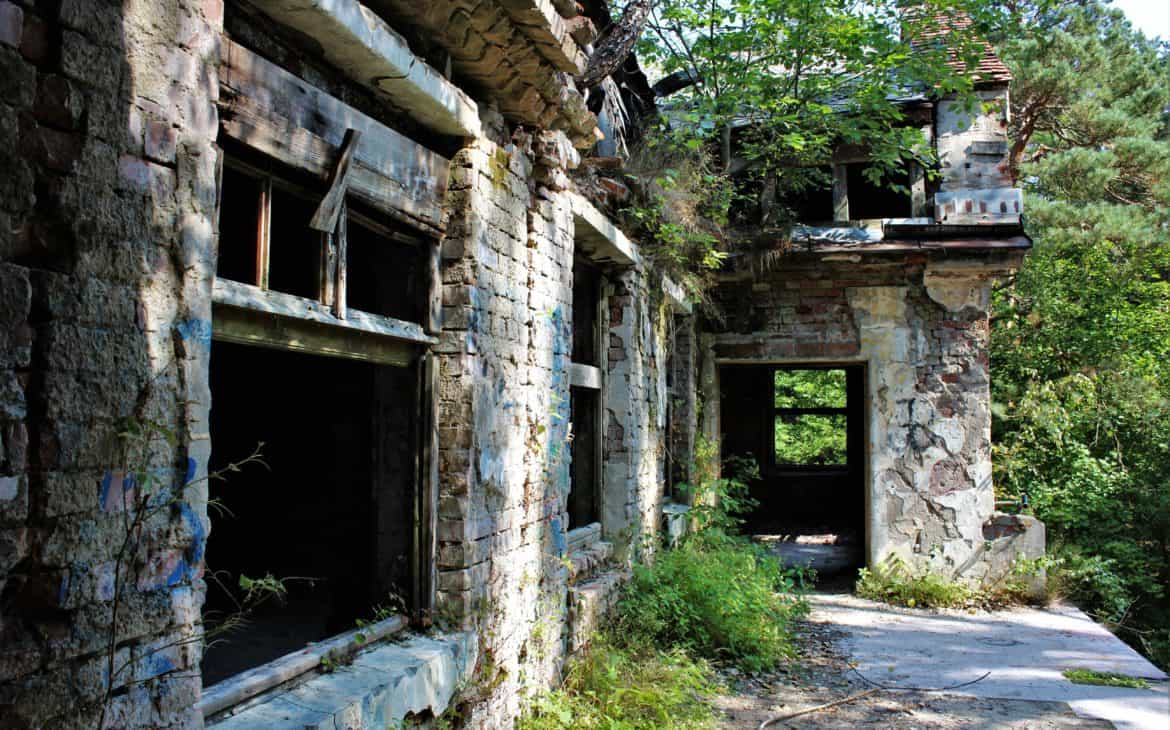
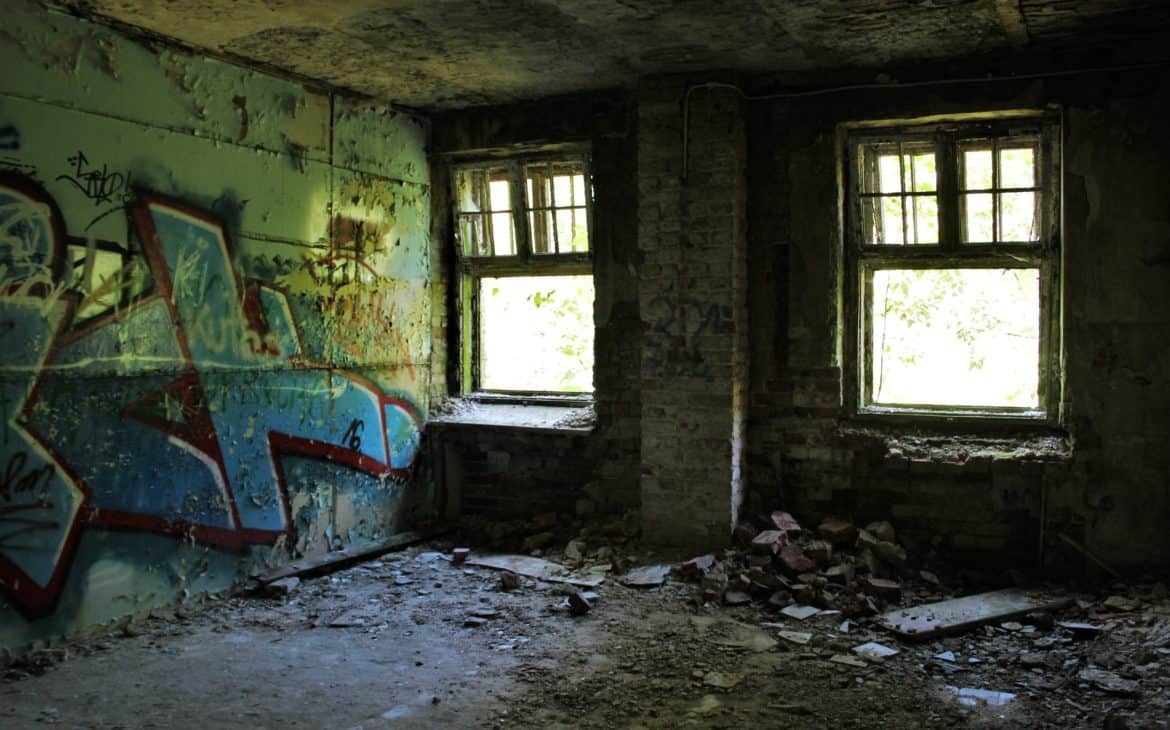
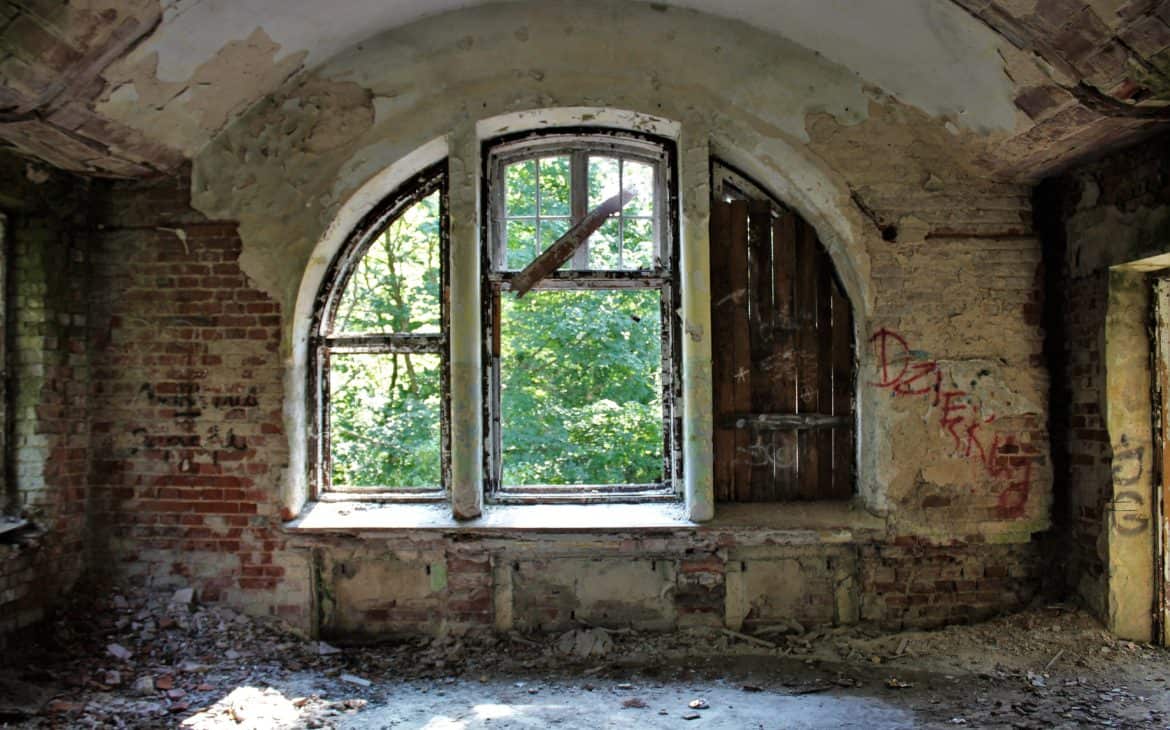
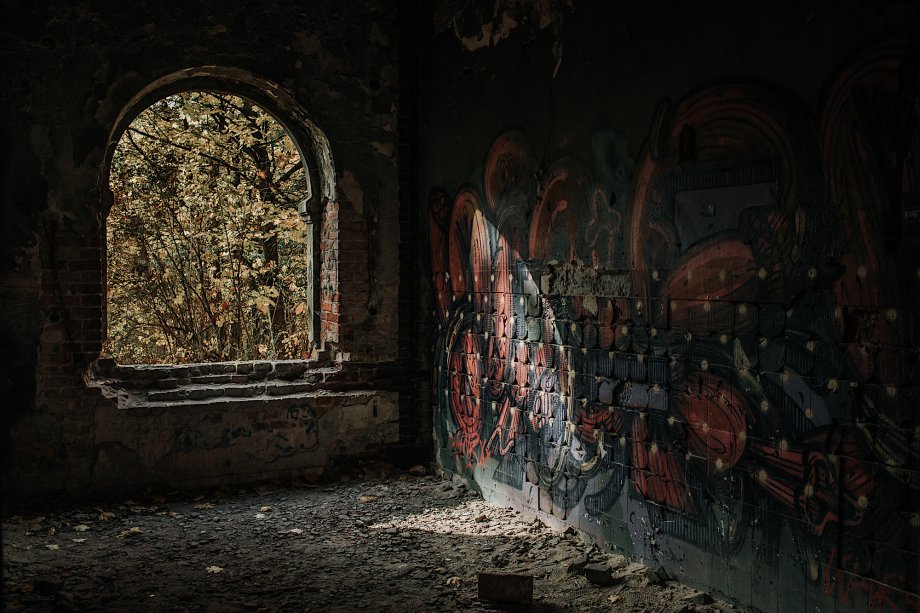
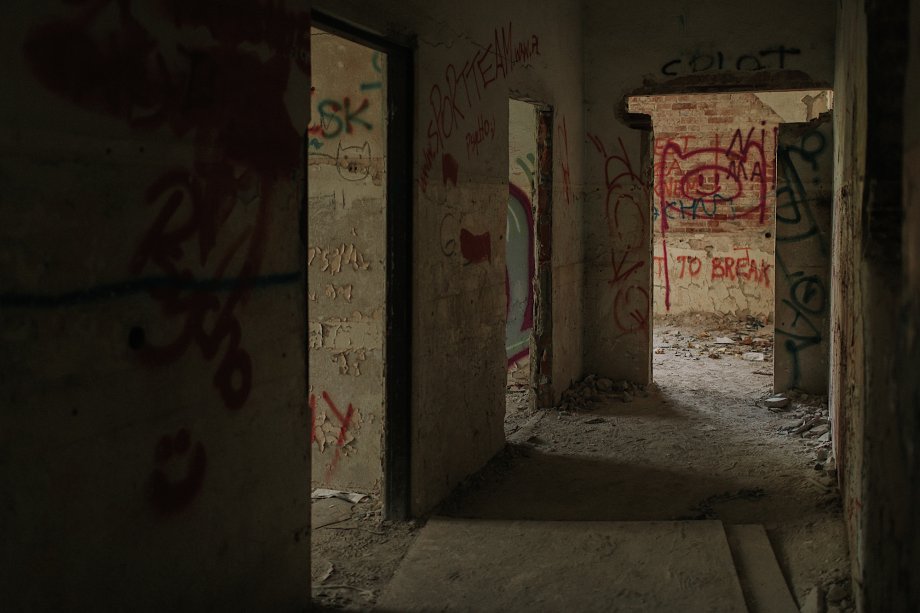
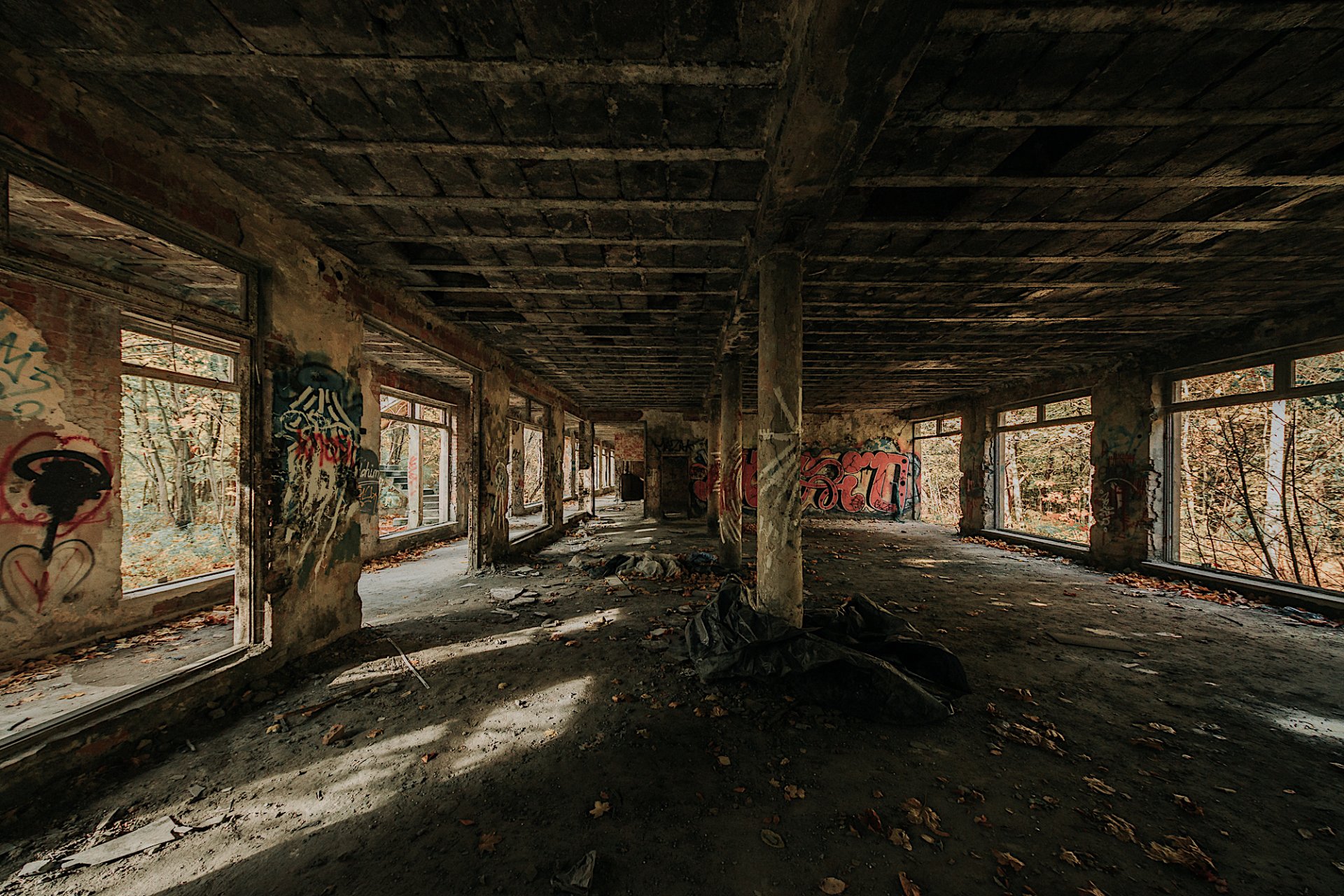
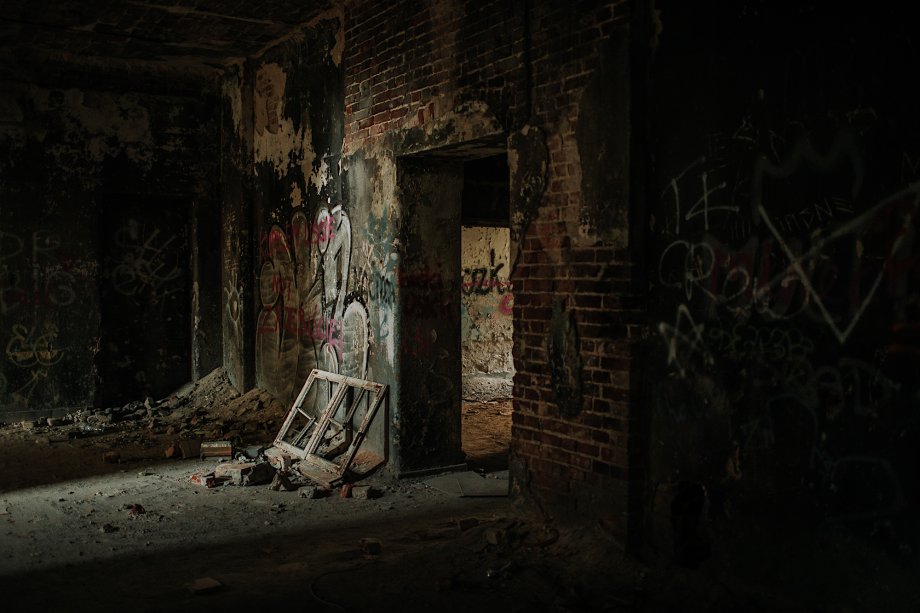
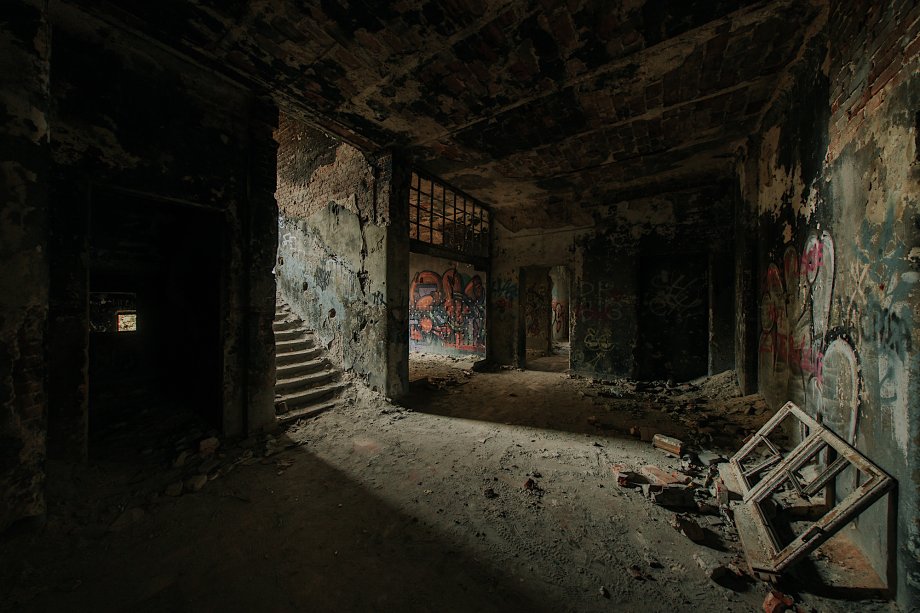
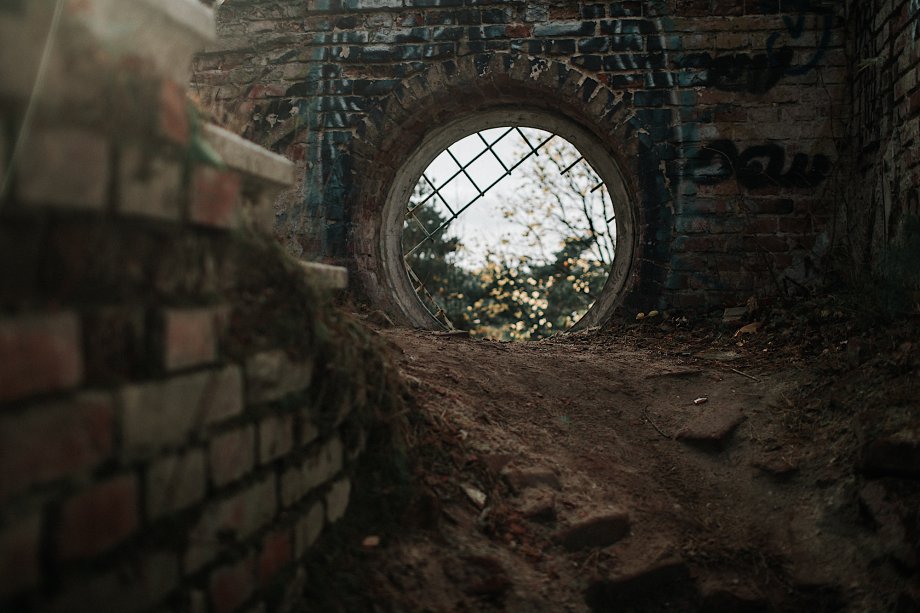
Today, Zofiówka stands as a complex of forlorn, heavily vandalised buildings. Bricks are exposed where plaster has fallen away, floors are littered with debris, and almost every reachable wall bears graffiti. Trees lean dramatically against façades, some having crashed straight through roofs and upper floors. Entering the pavilions, visitors find long corridors with flaking paint, empty doorframes and the occasional relic of hospital equipment.
Despite – or because of – its derelict state, the site has become popular with urban explorers, photographers and seekers of dark tourism. Numerous blogs and travel sites describe clandestine visits, often warning about the hazards of unstable structures, open shafts and low-hanging beams. The surrounding forest adds to its atmosphere, particularly in the short, grey days of Polish autumn and winter.
In the 2010s, Zofiówka briefly achieved global notoriety for a very different reason. A cryptic, unsettling video known by its file name “11B-X-1371” appeared online and quickly went viral. Filmed in part within the abandoned pavilions, it featured a masked figure, distorted audio and a series of visual and numerical ciphers that viewers around the world attempted to decode. Only later did an artist step forward to claim responsibility, describing it as an experimental art piece rather than a genuine threat. Regardless of intent, the video reinforced the sanatorium’s reputation as a haunting, almost cinematic location.
Memory, Ethics and the Future of the Site
Standing in Zofiówka’s ruined corridors, it can be easy to forget that this is more than a picturesque ruin. It is also a graveyard of sorts, one of many locations in Poland where the Holocaust intersected with the history of psychiatric care. For historians of medicine and the Shoah alike, Zofiówka is a case study in how vulnerable groups – here, mentally ill Jews – were “doubly cursed”, targeted both as Jews and as psychiatric patients.
In recent years, scholars such as Mary V. Seeman and Rael Strous have attempted to reconstruct the institutional life and destruction of Zofiówka from surviving documents, testimonies and archival fragments. Their work places the hospital within the broader narrative of Nazi euthanasia policies and the extermination of Jewish communities in and around Otwock. Local heritage initiatives and Jewish memory projects have also drawn attention to the site, though it remains largely unprotected and in private hands.
This raises difficult questions about how such sites should be treated. On the one hand, many urban explorers experience Zofiówka primarily as an adventurous backdrop: a spooky abandoned asylum that makes for striking photographs and thrilling stories of trespass. On the other hand, the grounds are a place where real people suffered and died, their names largely forgotten. Balancing the desire for exploration with respect for the dead is an ongoing ethical challenge.
Some argue that Zofiówka should be stabilised, minimally restored and formally commemorated, perhaps with interpretive boards or a small memorial dedicated both to its patients and to the broader Jewish community of Otwock wiped out in the Holocaust. Others note the practical difficulties: the cost of conservation, the fragmented ownership of the land and buildings, and competing priorities in a town with many other needs. For now, the sanatorium remains in limbo, decaying a little more each season.
Zofiówka in the Landscape of Abandoned Places
Among the many abandoned sites in Central and Eastern Europe, Zofiówka stands out because of the layers of meaning embedded in its walls. It is at once a monument to early twentieth-century Jewish philanthropy and medical ambition, a stark reminder of how psychiatric patients were treated in times of war, a symbol of Nazi racial policy and a relic of the communist health system. Its present-day ruinous state adds a further chapter: the story of post-communist transition, in which former state institutions were often left without clear purpose or funding.
For visitors, whether physical or virtual, Zofiówka prompts reflection. The cracked plaster and quiet corridors invite the imagination to roam, but behind any aesthetic appreciation lies a more sober question: what does it mean when places of care become sites of horror, and later tourist curiosities? The sanatorium in the woods of Otwock offers no easy answers, only the stubborn presence of its decaying brickwork and the memory of those who once lived, worked, suffered and died there.