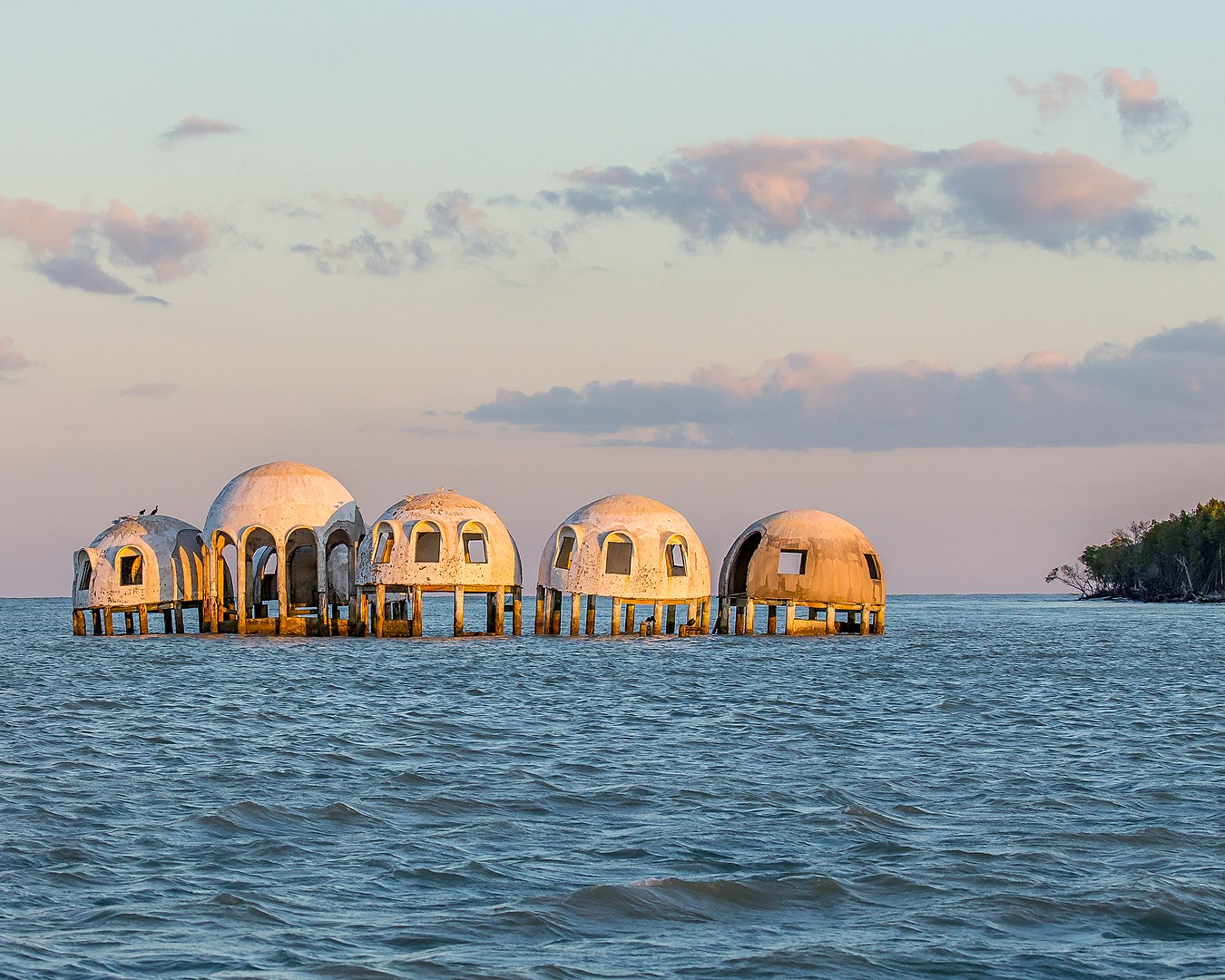
A Vision Born of Isolation and Innovation
In the late 1970s, Bob Lee—a retired, independent oil producer from Tennessee—set out to build a self-sustaining dream home on a remote beach near Cape Romano, Florida. Between 1978 and 1979 he acquired multiple beachfront plots on Morgan Island, seeking solitude and adventure. By 1980 he had transported a barge, steel dome forms, concrete mixers, and supplies to begin construction of his radical residence.
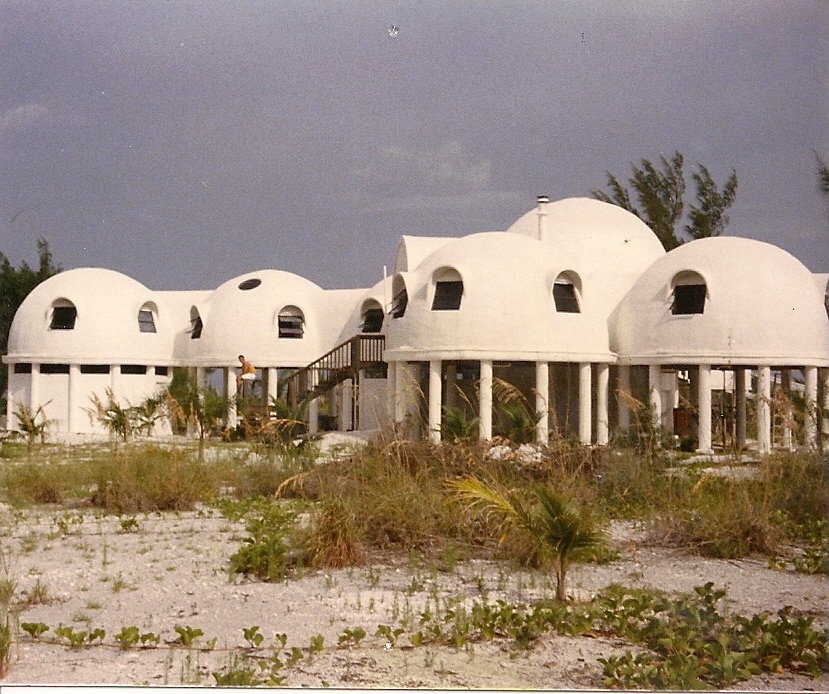
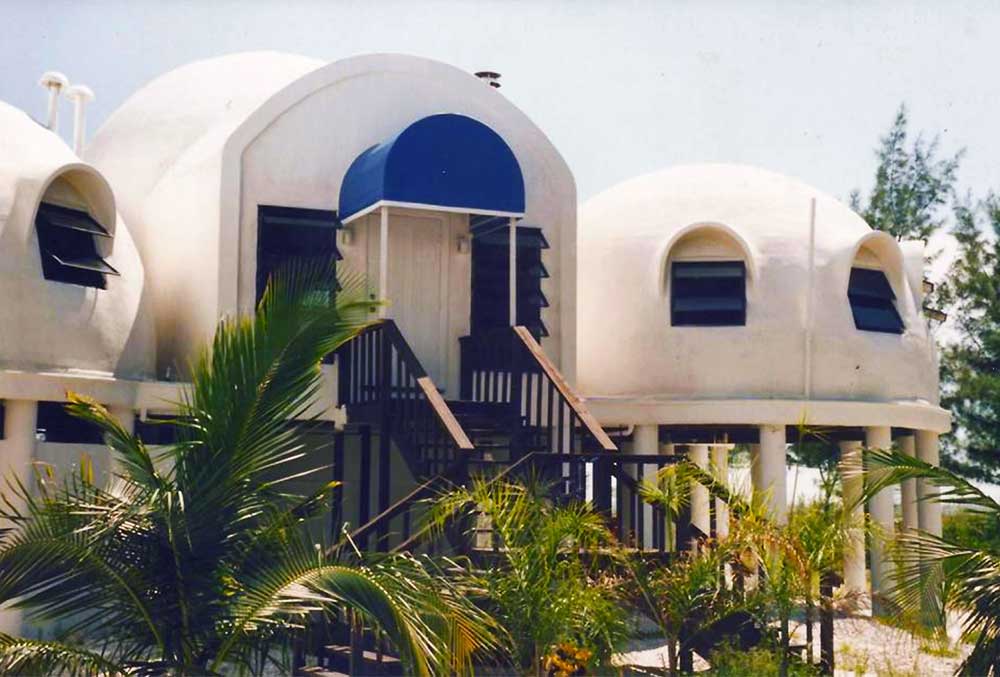
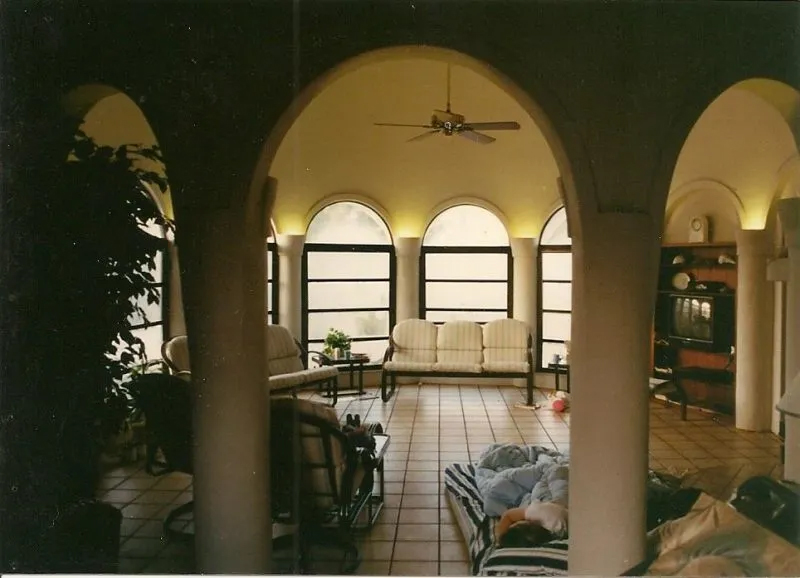
Completed in 1982, the Cape Romano Dome House was a six‑module structure spanning approximately 2,400 sq ft , comprised of interconnected domes—some two-story—with three bedrooms, three bathrooms, a living room, a den, and a sunroom . Lee replaced conventional corners with sweeping curved ceilings, believing they offered more openness. His daughter called it “very large and open” inside.
Sustainable Design Ahead of Its Time
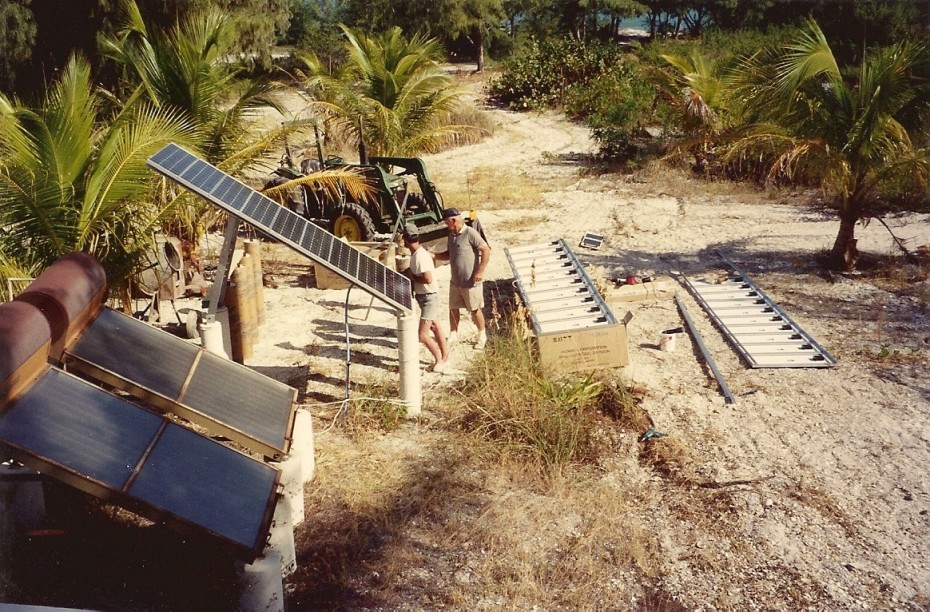
Lee built the home to operate entirely off the grid. He used island sand mixed into local concrete, and installed solar panels feeding a 24‑volt battery system, paired with backup generators for cloudy days. An Amcor Solon solar water heater powered hot water needs, while an innovative gutter system funneled rain and dew from the domes into a 23,000‑gallon cistern beneath the center module. Purified water served kitchens and baths—all without municipal sources .
Elevated on sturdy pilings, the house offered shaded outdoor areas underneath and built-in flood resilience. Its aerodynamic dome shapes were structurally strong: the walls stood up to hurricane-force winds, although windows proved vulnerable.
Early Years and First Sale
The Lee family lived in the domes until 1982, then sold the home in 1984. Financial difficulties forced them to repossess it in 1987, and they fully moved in again until 1992. That year Hurricane Andrew struck: the concrete dome structures withstood the storm, but devastating wind shattered windows and destroyed the interior.
That storm also accelerated natural coastal erosion. Over the next decade, the shoreline receded dramatically, putting the house gradually farther offshore.
Decline and Red Tape
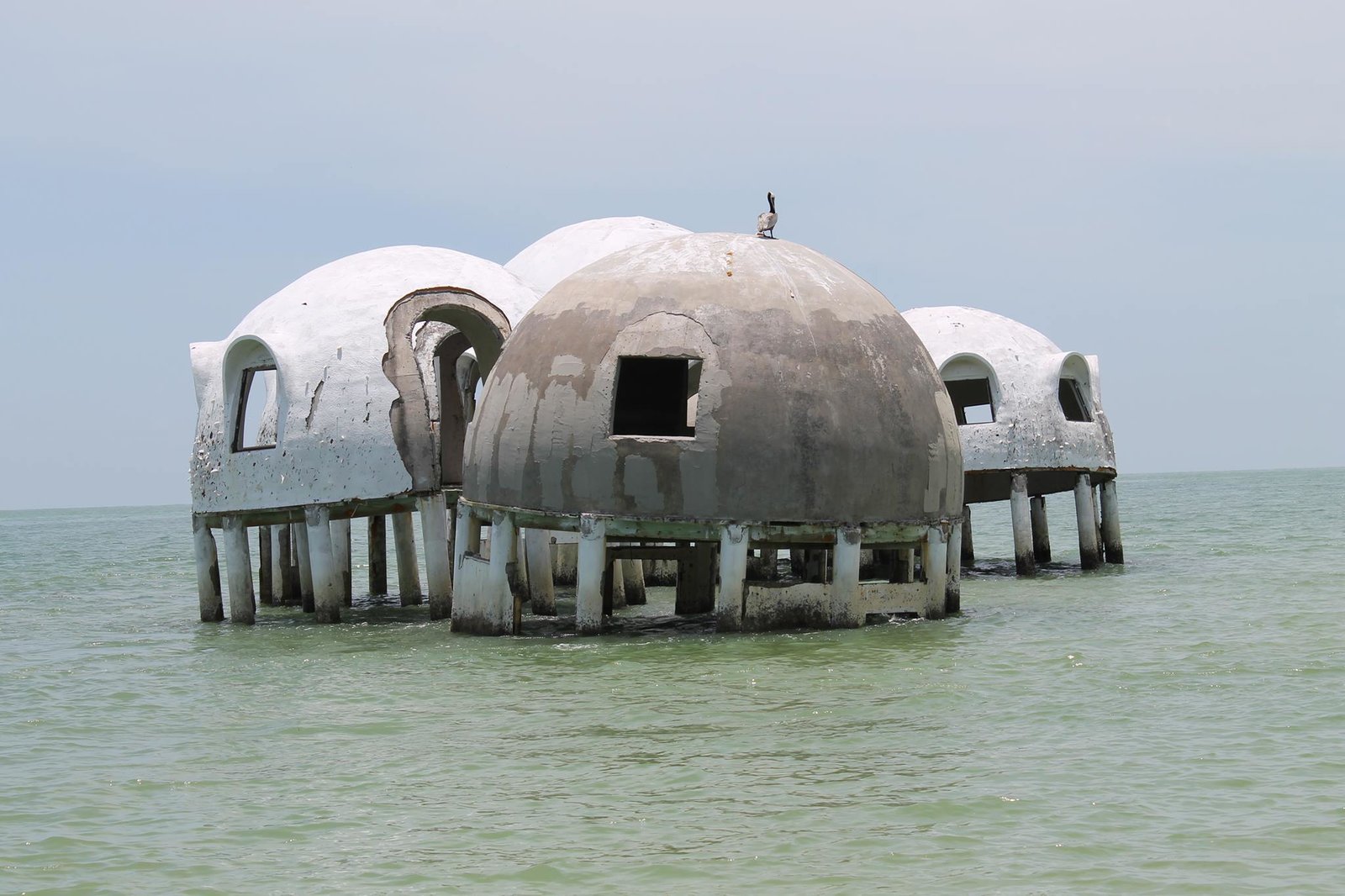
By 2004, water lapped at the pilings supporting the domes. In 2005, Naples resident John Tosto purchased the property for roughly $300,000, hoping to relocate the domes inland via crane and to restore them. Lee warned a seawall was essential, but Tosto chose relocation instead, estimating a project of few months—but struggled to secure necessary environmental and building permits.
By 2007, Collier County ordered the house demolished within two years due to safety concerns. Tosto refused; fines mounted—reported at $187,000 by 2009, with estimates placing restoration cost at up to $900,000. The home remained abandoned, perched above water, visited occasionally by fishermen and explorers.
Marine Habitat and Tourist Landmark
By 2013, the undermined structure had become a makeshift reef. Snorkelers reported remarkable biodiversity beneath the domes: baitfish swirling, rays gliding, tropical fish congregating—the architecture serving as habitat for marine life.
Boat tours from Marco Island treated the Dome House as a famed sight: locals offered narrated cruises through the 10,000 Islands with views of the domes, dolphins, mangroves, and shelling beaches.
As waters continued advancing, photographers, explorers, and visual artists were drawn to the surreal sight of white domes perched offshore like futuristic islands.
Collapse: Hurricanes Irma and Ian
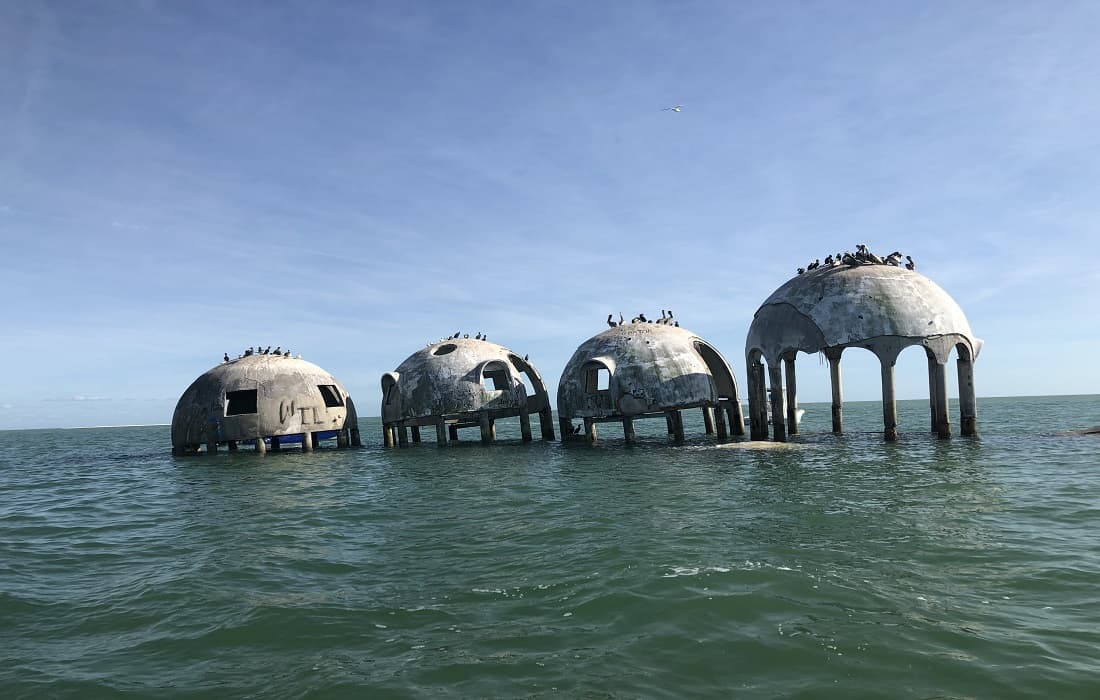
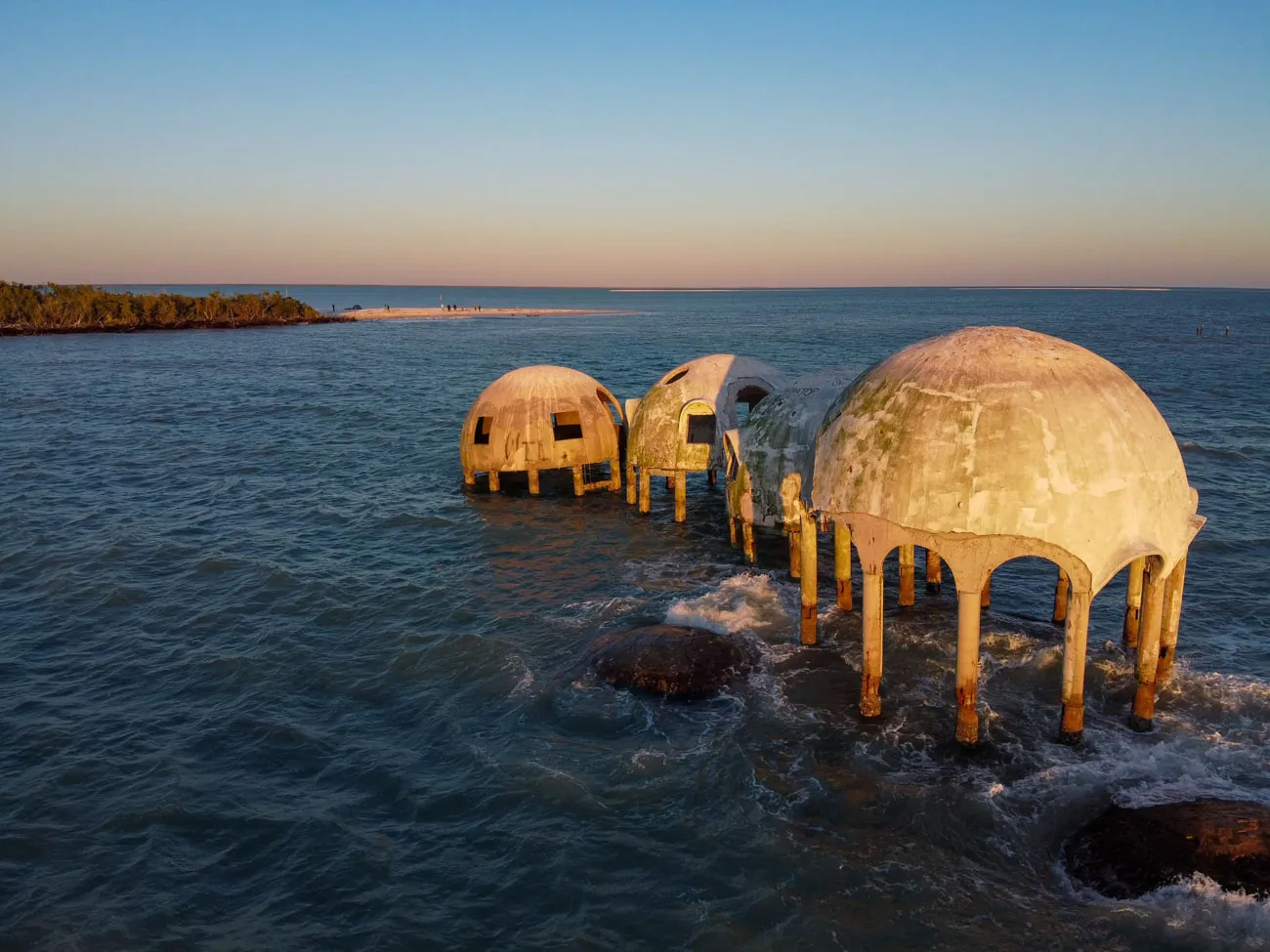
Hurricane Irma removed two western domes; only four remained afloat. By then the entire structure floated some 300 ft offshore in open water as part of the Rookery Bay Aquatic Preserve.
Finally, on September 28, 2022, Hurricane Ian—a near Category 5 storm—hit the region. Torrential winds and storm surge collapsed the remaining domes, washing much of the structure beneath the Gulf. Today only pilings remain above the waterline.
Legacy and Lessons
An Architectural Fable
The Dome House inspired eccentric lore: rumor claimed it was built by a secret cult or aliens. But its real story—a test of human ingenuity, sustainability, and personal vision—captured more hearts than myths ever could.
Environmental Warning
The rise and fall of the structure spotlights coastal erosion, hurricanes, and sea‑level rise. Researchers have cited it as a visible case study in the consequences of climate change, showing how rapidly built environments can be reclaimed by nature.
Eco-Rest Reef Talk
There were ideas in 2015 to sink domes intentionally to become artificial reefs—protecting marine life and preserving the landmark in underwater form. That proposal lacked funding and didn’t materialize.
Today its remains continue to attract snorkelers, marine biologists, photographers, and boaters.
Reflections on Human Endeavor and Nature’s Power
Bob Lee’s Dome House stood as an audacious venture—one man’s dream to live sustainably, creatively, and in harmony with nature. Yet despite its forward-thinking systems and hurricane resilient form, decades of environmental change conspired to swallow it whole.
The domes evoke tenderness now: relics of idealism lost to shifting sands. They still stand in memory—and beneath the waves—as a poetic testament to creativity, resilience, and the limits of permanence where sea levels rise and storms reshape shorelines every season.
Final Thoughts
The Cape Romano Dome House was more than just a quirky, futuristic beach home—it was a visionary experiment in design, engineering, and self-reliance. Built to stand the test of storms, it ultimately succumbed to relentless erosion and rising tides. Though the physical domes have vanished, the story remains vivid—in the sea life clustering where pillars once stood, in aerial photographs and local legend, and especially in the memory of a site that blended ambition, sustainability, and the sublime unpredictability of nature.
Its legacy lives on: a cautionary tale for coastal development, an inspiration for off-grid architecture, and a beacon for storytellers drawn to the meeting point of human fantasy and elemental force.